Reverse Osmosis System in Las Vegas: Is It Worth It, and What Installation Involves
By American Brothers Plumbing · 2026-11-13 · 6 min read
An under-sink reverse osmosis (RO) system is worth it in Las Vegas if you want better tasting drinking and cooking water at the kitchen tap, or want to reduce specific contaminants, without paying for a whole-house system. It does not soften the water for the rest of the house, so it will not protect your water heater, pipes or fixtures from our hard water.
Here is what an RO system does and doesn't do, what installation involves, and the questions to ask before you choose a unit.
What Reverse Osmosis Does
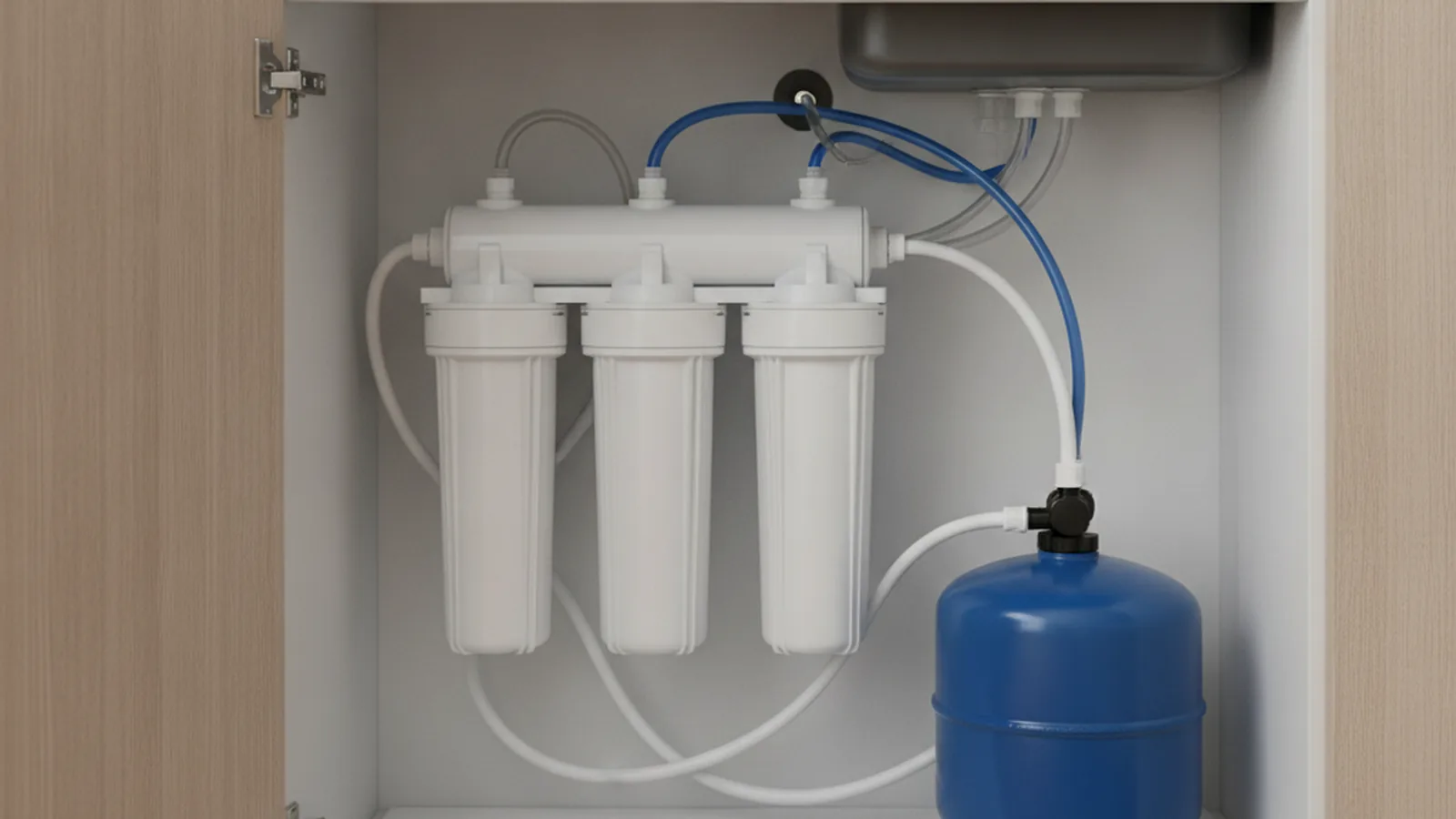
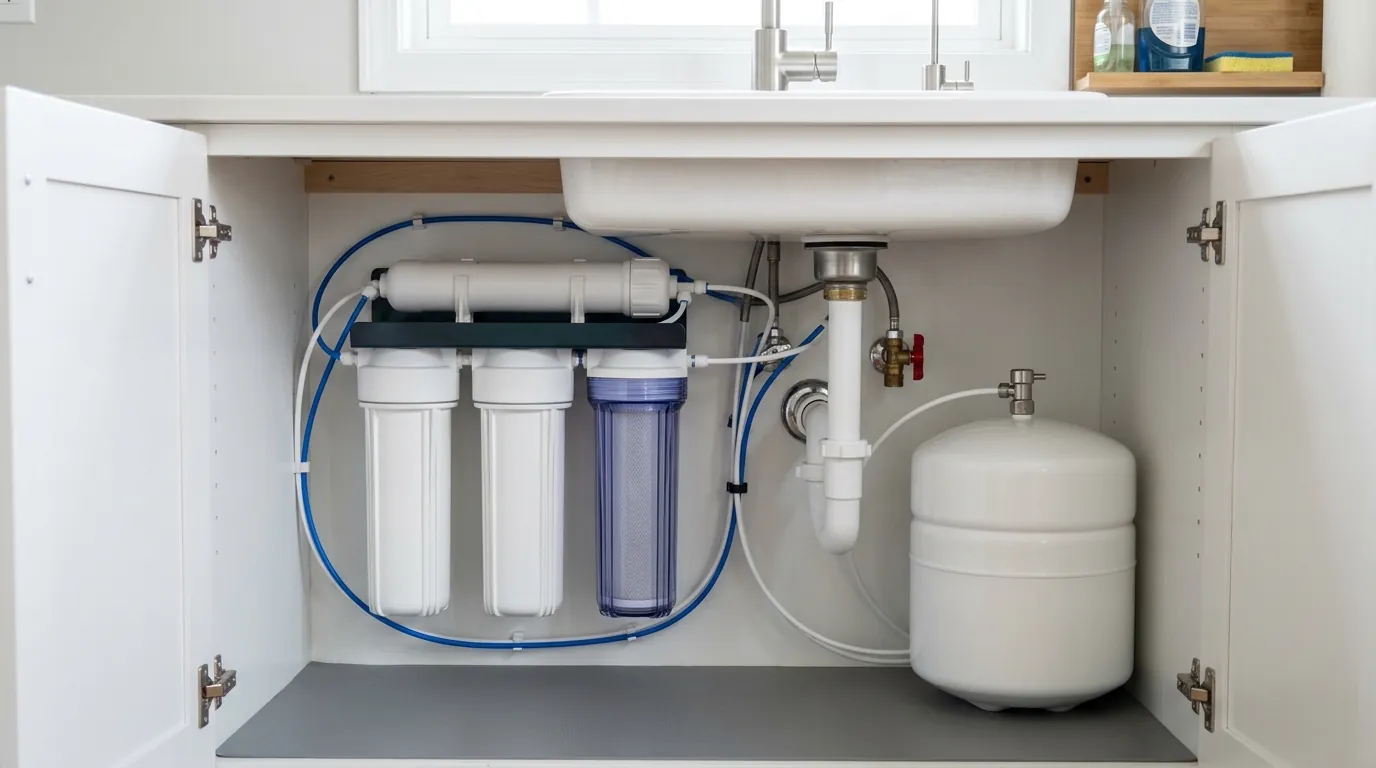
An RO system pushes water through a very fine membrane that lets water through and holds back most of what is dissolved in it. A typical under-sink unit has several stages: a sediment filter and a carbon filter before the membrane, a small storage tank or a tankless pump, and often a final carbon filter before the water reaches its own faucet on the sink.
The U.S. Environmental Protection Agency says point-of-use RO systems "can potentially remove water contaminants such as lead, volatile organic compounds (VOCs), PFAS, arsenic, bacteria, and viruses." How much a given unit removes depends on the model and its certification, so check the unit's performance data sheet rather than the box.
The carbon stages also deal with the most common complaint about valley tap water. The Las Vegas Valley Water District notes that "most people complain about the taste of chlorine," which it adds as water leaves its treatment facilities.
What It Doesn't Do
It doesn't soften the house. The water district puts our hardness at 291 parts per million, or 17 grains per gallon, which it classifies as "very hard." An RO system only treats the water going to its own faucet. The water heater, shower heads, dishwasher and every other fixture still get hard water. That scale problem is what a water softener solves.
It doesn't fix a plumbing problem. If water tastes metallic only from one tap, or looks rusty, that can point to old pipes or a failing water heater, not the water supply. That is worth a look before buying a filter.
It isn't a medical device. The water district advises that people with specific medical conditions talk to their physician about home water treatment options.
The Wastewater Question
RO units send some water down the drain to flush away what the membrane holds back. The EPA says a typical point-of-use RO system "will generate five gallons or more of reject water for every gallon of treated water produced." Systems that earn the EPA's WaterSense label must "send just 2.3 gallons of water or less down the drain for every gallon of treated water," and the agency says a labeled model reduces water use by more than 3,100 gallons a year on average compared with a typical unit.
In the desert, that is worth paying attention to. When comparing units, ask about the reject ratio and whether the model is WaterSense labeled.
How Installation Works
A standard under-sink installation is usually done in about half a day. It involves:
- Testing the water and checking the space. We look at what is under the sink: the disposal, the dishwasher connections and how much room is left for filter housings and a tank.
- Tapping the cold supply. The system gets its own feed from the cold water line with a shut-off valve, so it can be isolated for filter changes.
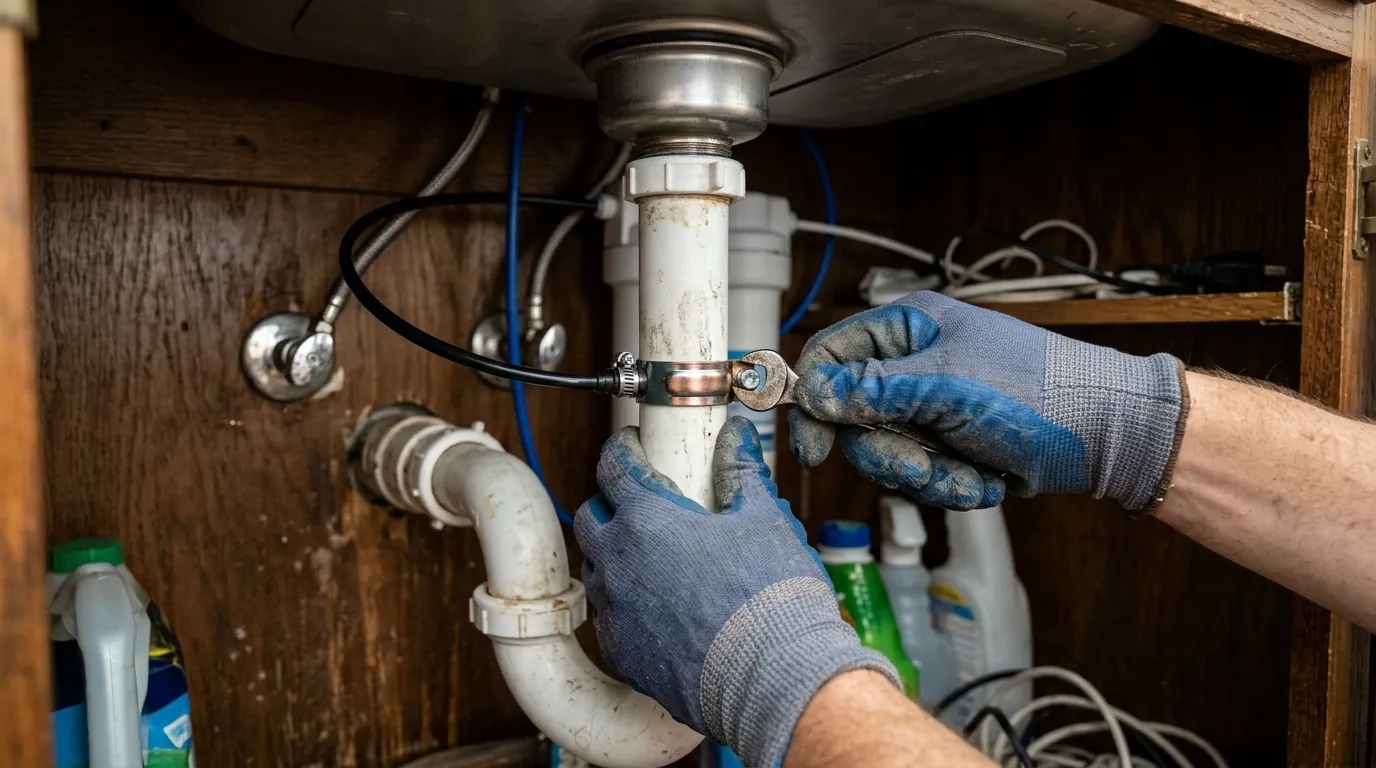
- Connecting the drain line. The reject water runs to the sink drain through a drain saddle above the trap, set up so it can't siphon back.
- Mounting the faucet. The RO faucet goes in an existing sink hole, such as a soap dispenser or sprayer hole, or a new hole in the countertop.
- Optional connections. A line to the refrigerator's water and ice maker can be run from the same system.
- Flushing and leak checks. New filters and membranes are flushed before the first glass, and every fitting is checked under pressure.
A small leak under a sink can go unnoticed for weeks inside the cabinet, so the fittings and the drain connection matter as much as the unit itself.
Keeping It Working
An RO system needs filter changes to keep doing its job. As a general guide, the pre-filters are changed every 6 to 12 months and the membrane lasts 2 to 3 years, depending on how much water you use. Follow the schedule in the unit's manual. A system with clogged filters slows to a trickle, and an old membrane lets more through.
Hard water shortens membrane life. If you also have a softener, the RO system is fed softened water, which is easier on the membrane. Signs it is due for service:
- The RO faucet fills a glass much more slowly than it used to
- The water starts to taste like the tap again
- The system keeps running or draining when no one is using it
- Water in the cabinet or a drip at the drain saddle
Questions to Ask Before You Buy
- What contaminants is this unit certified to reduce, and to what standard?
- What is its reject ratio, and is it WaterSense labeled?
- Does it fit under my sink with the disposal and dishwasher in place?
- What do replacement filters and membranes cost, and how often are they due?
- Can it feed the refrigerator and ice maker too?
- Do I also need a softener for the rest of the house?
Frequently Asked Questions
Is Las Vegas tap water safe to drink without RO? The water district treats and tests the water it delivers. Most people who add RO do it for taste or to reduce specific contaminants. The district's annual water quality report lists what it tests for.
Will an RO system help my water heater? No. RO only treats the water at its own faucet. A whole-home water softener is what reduces scale in the water heater and pipes.
Can an existing RO system be repaired? Often, yes. Slow flow, leaks and bad taste are usually filters, the membrane, the tank or a fitting. We repair existing units and change filters.
Can I have both a softener and RO? Yes, and in the valley it is a common pairing: a softener for the house and RO at the kitchen sink for drinking water.
Get a Free Water Treatment Estimate
American Brothers Plumbing is a locally owned, family-operated plumbing company, licensed, bonded and insured (NV License #0082700). We install and repair under-sink reverse osmosis systems and whole-home water softeners across Las Vegas, Henderson, Summerlin and North Las Vegas. We test your water first, estimates are free and upfront, and financing is available. See our water treatment systems service or call (702) 704-1776.
Need a Plumber in Las Vegas?
Our licensed team is ready to help, with same-day service and free estimates.
Call (702) 704-1776