
Slab Leak Repair Options: Spot Repair, Reroute or Repipe?
By American Brothers Plumbing · 2026-10-15 · 5 min read
There are three ways to repair a slab leak: a spot repair through the concrete, a reroute that abandons the leaking line and runs a new one through the walls or attic, or a repipe of the house. Which one is right depends on where the leak is, the condition of the rest of the pipe, what flooring sits above it, and whether this is the first leak or the third.
None of them starts until the leak is located precisely. Here is how each option works and how to choose between them.
First, Find the Leak Exactly
Every repair decision depends on knowing which line is leaking and where. A plumber pinpoints a slab leak with acoustic listening equipment, which picks up the sound of pressurized water escaping, and thermal imaging, which shows the warm spot a hot-water leak leaves in the floor. Accurate leak detection is what makes a small, targeted repair possible instead of opening up a whole room.
If you are still at the "is it a slab leak?" stage, start with our guide to the signs of a slab leak.
Option 1: Spot Repair Through the Slab
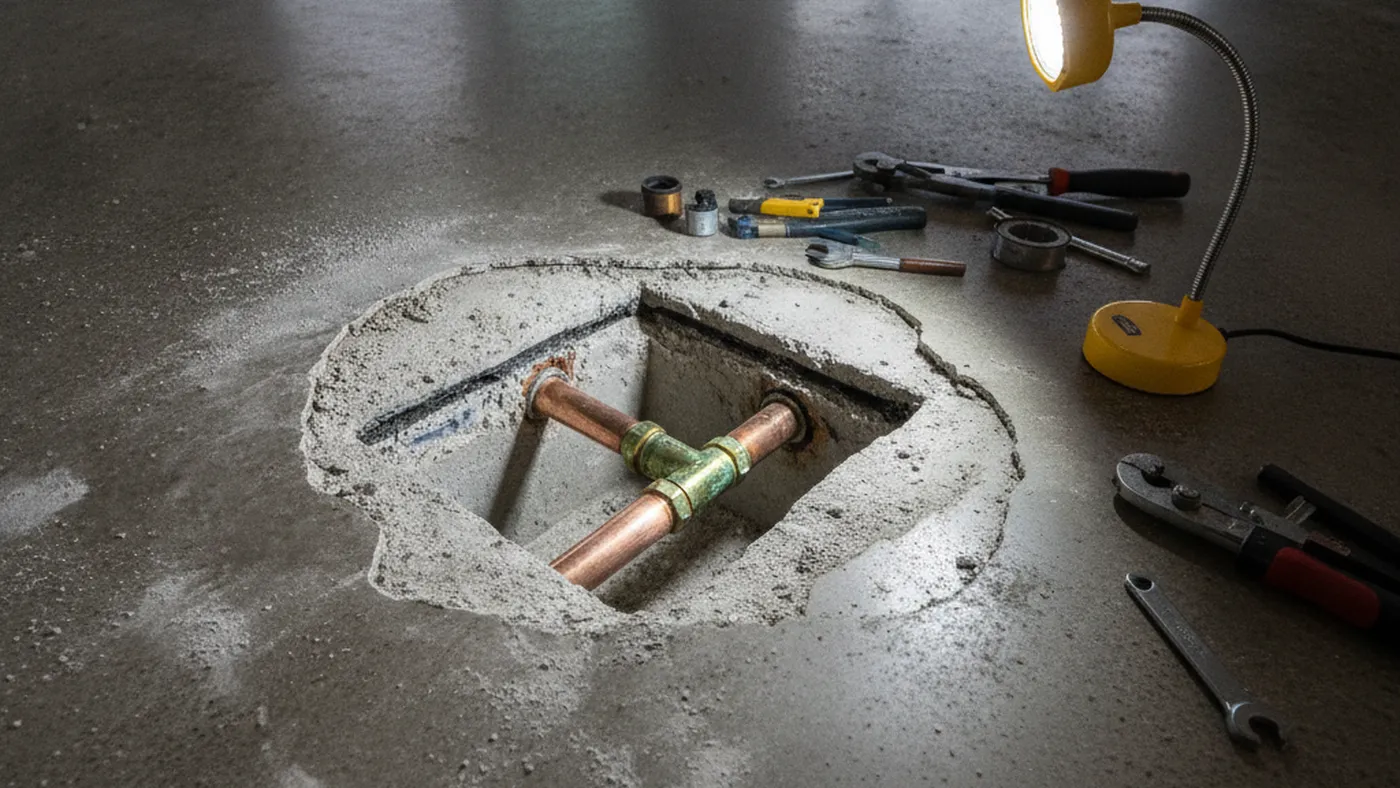
A spot repair goes straight to the leak. The plumber opens a small section of the concrete above the break, repairs or replaces the damaged length of pipe, and the slab is patched.
It fits when:
- It is the first leak, and the pipe on either side is in good condition
- The leak sits under a floor that is easy to lift and replace, or in a garage or closet
- The line would be very long or hard to reroute
The trade-offs: opening the slab means removing and replacing the flooring above it, and tile or hardwood can be hard to match. The rest of the line stays under the concrete, so if the pipe is corroding along its length, another leak elsewhere on it is a real possibility.
Option 2: Reroute the Line
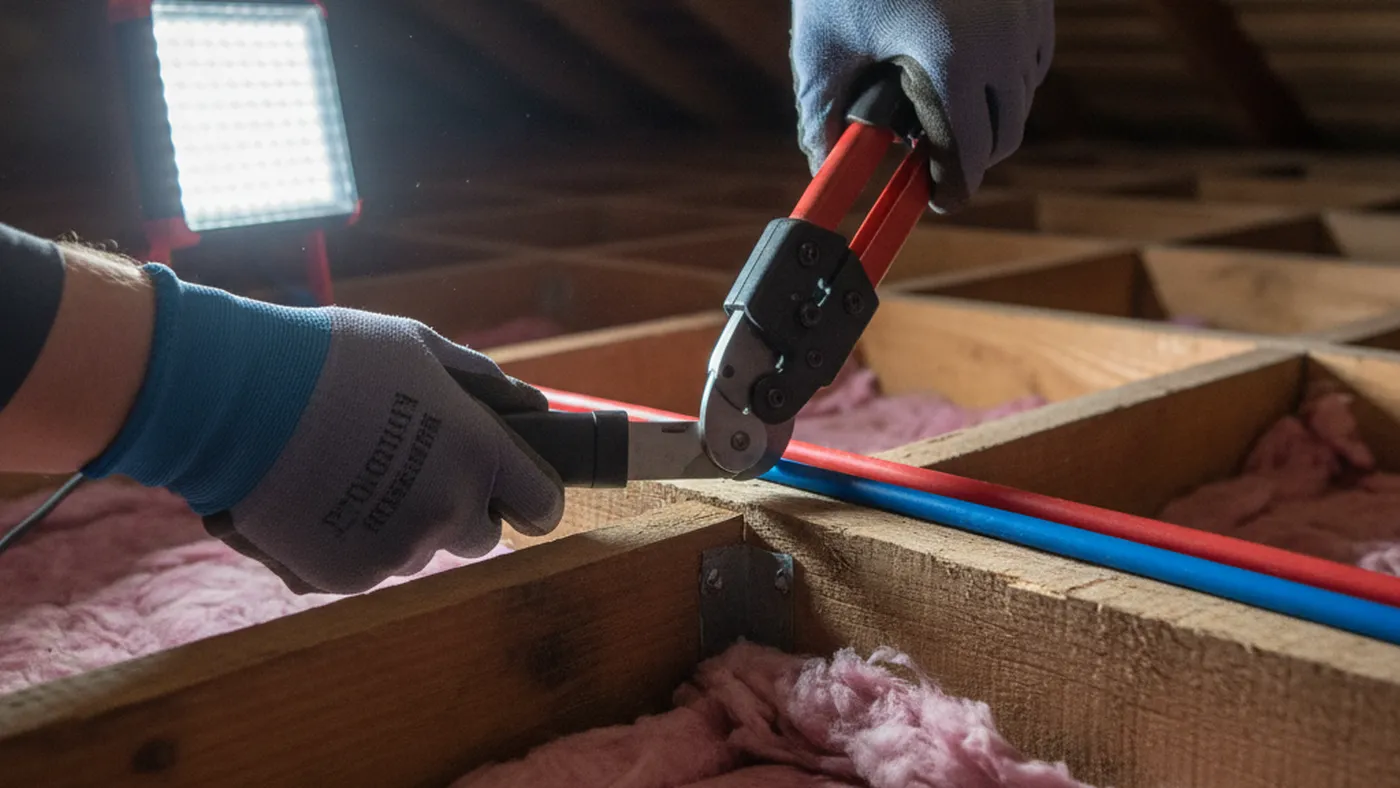
A reroute leaves the leaking pipe where it is. The plumber shuts it off, caps it, and runs a new water line, usually PEX, through the walls or attic to the same fixtures. The floor is never opened.
It fits when:
- The flooring above the leak is expensive or hard to replace
- You would rather not risk another leak on the same line under the slab
- The line is reachable from the attic or walls without long, awkward runs
The trade-offs: some drywall has to be opened and patched where the new line drops down to the fixtures. In exchange, that line is out of the concrete for good, so it cannot leak under the slab again. In many homes this is the cleaner option, and the repair is usually finished within one to three days.
Option 3: Repipe the House
Sometimes the leak is a symptom of piping that is failing throughout the house. If you have had more than one slab leak, have leaks in other parts of the house too, or the pipe shows corrosion wherever it is exposed, patching one more section only buys time. A whole-home repipe replaces the supply lines throughout the house and takes them out of the slab entirely.
It fits when:
- This is the second or third leak in a few years
- The house has aging copper with pinhole leaks, galvanized or polybutylene pipe
- You are already planning a remodel that opens walls
Our post on whether to repipe or repair covers the pipe materials common in valley homes and the signs that point to a repipe.
Comparing the Three
| Spot repair | Reroute | Repipe | |
|---|---|---|---|
| Floor opened | Yes, a small section | No | No |
| Walls opened | No | A few small openings | More openings, in more rooms |
| Fixes | The one break | The whole leaking line | Every supply line |
| Risk of another leak on that line | Possible if the pipe is aging | None (line is abandoned) | None |
| Best for | A first leak in sound pipe | Most single-line leaks | Repeat leaks, failing pipe |
Why Valley Homes See Repeat Slab Leaks
Many homes across the valley are built on concrete slabs with water lines running beneath them. Those pipes expand and contract against the concrete every time hot water runs, and Las Vegas's very hard water and the soil around the pipe add corrosion over time. When one line has worn through, the others under the same slab are the same age and have lived through the same conditions. That is why the second leak is the moment to ask whether a reroute or repipe makes more sense than another spot repair.
What About Insurance?
Policies vary, so check yours. Many policies cover the cost of accessing the leak, such as breaking and restoring the floor, and the water damage it caused, but often do not cover the plumbing repair itself. Ask your insurer before work starts, and keep the leak detection report, because it documents where the leak was and what caused the damage.
Get a Clear Recommendation
American Brothers Plumbing locates slab leaks with acoustic and thermal equipment and then walks you through the repair options for your home, with a clear, upfront estimate before any work begins. We serve Las Vegas, Henderson, Summerlin, North Las Vegas and nearby towns. See our slab leak repair service or call (702) 704-1776.
Need a Plumber in Las Vegas?
Our licensed team is ready to help, with same-day service and free estimates.
Call (702) 704-1776