Tub-to-Shower Conversion in Las Vegas: What the Plumbing Involves
By American Brothers Plumbing · 2026-11-20 · 7 min read
A tub-to-shower conversion replaces a bathtub with a walk-in shower in the same space, and in most Las Vegas homes the plumbing changes are the drain, the shower valve and the showerhead supply. The drain is the part that decides the cost, because on a slab home it usually means cutting into the concrete floor.
Here is what each part of the plumbing involves, what moves the price, and what to plan before the tile goes up.
Why the Drain Is the Big Decision
A bathtub drain sits at one end of the tub, close to the wall. A shower pan needs its drain in a different place, often the centre of the pan or along a linear drain at the back, and many codes and pan makers call for a larger drain than a tub uses.
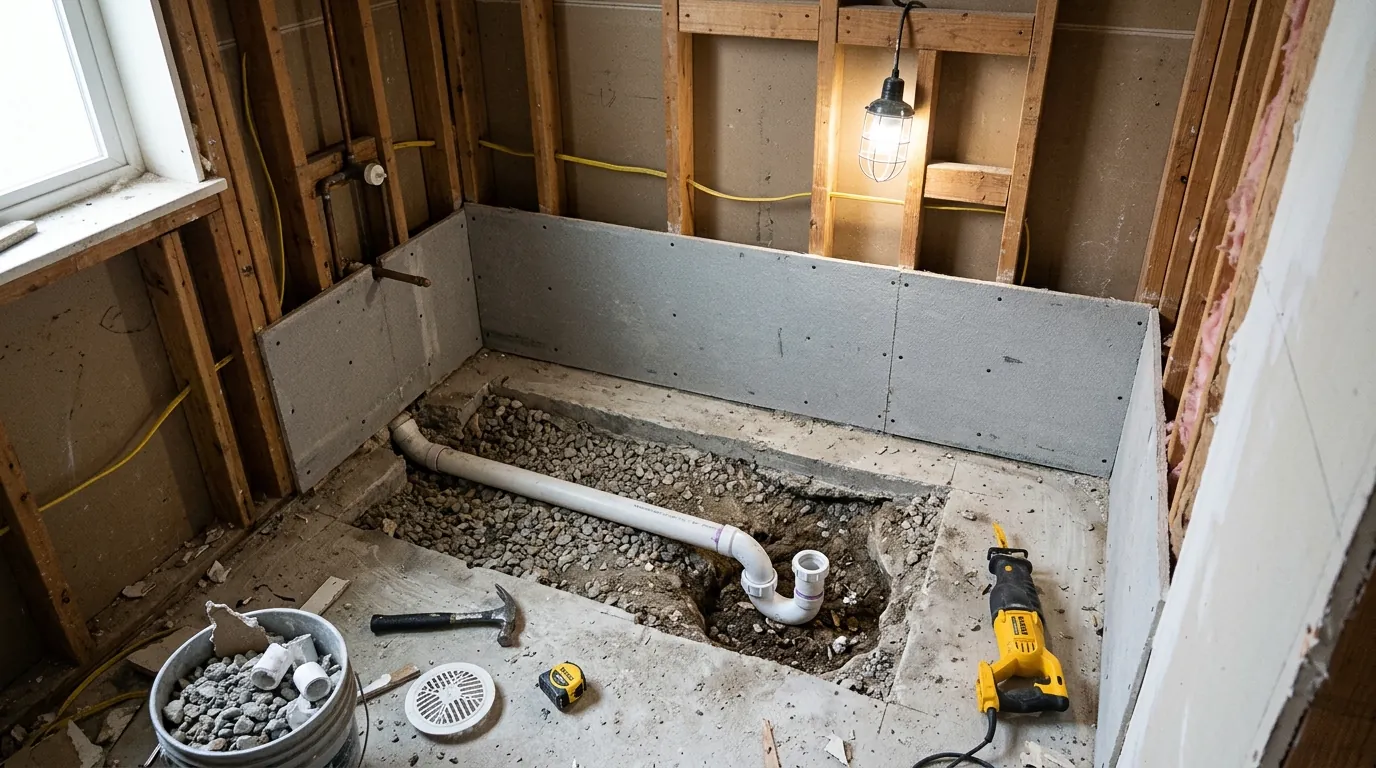
Most homes in the valley are built on a concrete slab, so the tub drain and its trap run in a box-out or trench in the slab under the tub. Moving the drain usually means:
- Cutting and removing concrete where the new drain and trap will sit
- Re-routing the drain line to the new location with the right slope back to the existing pipe
- Fitting a new trap at the new drain
- Patching the slab before the shower pan or mortar bed goes down
If the new pan can use a drain in the same spot as the old tub drain, the job gets much simpler. That is worth asking about before you choose a pan or a design.
The Shower Valve
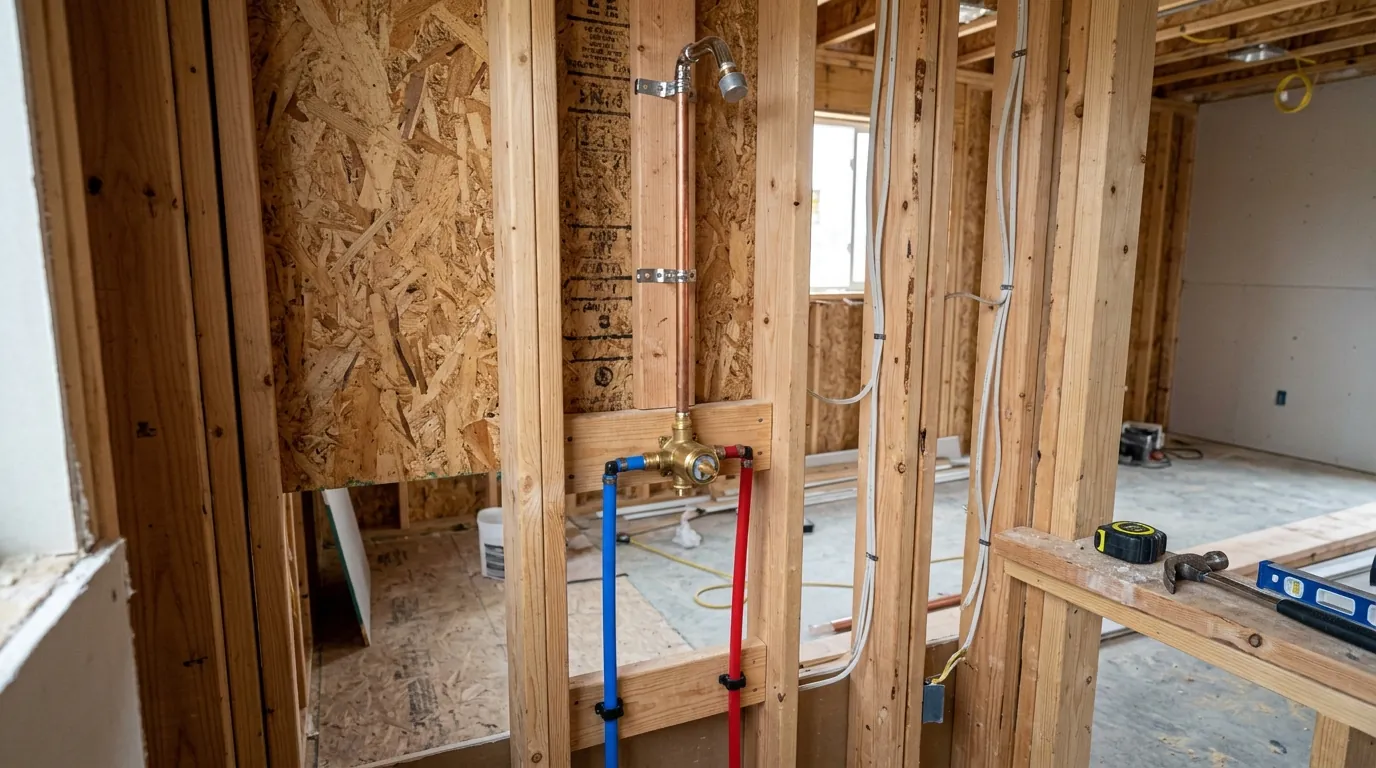
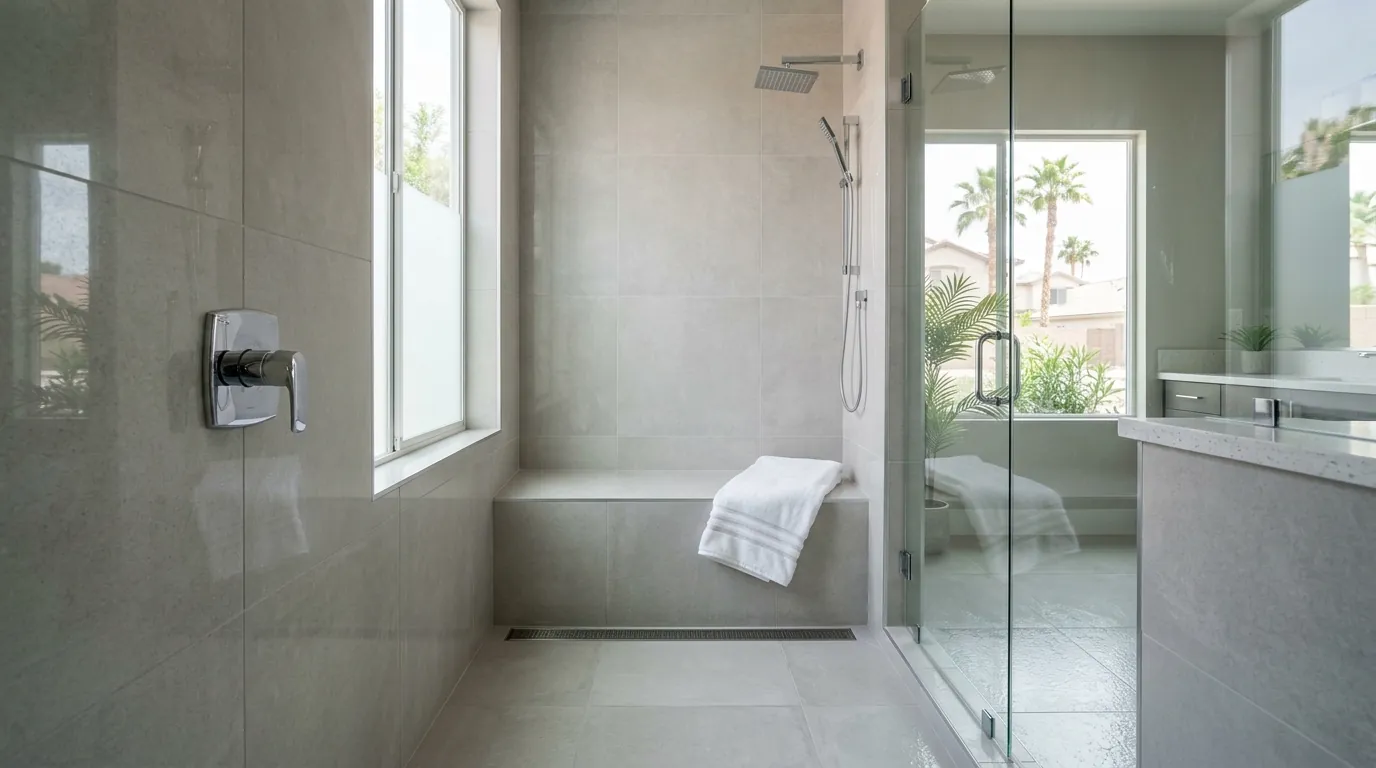
The tub's valve usually sits low on the wall, set for filling a bath, and many older valves are a tub and shower combination with a diverter. A walk-in shower needs the valve at a comfortable standing height, and it is the right time to replace it rather than reuse it.
A new shower valve should be a pressure-balancing or thermostatic type. Both hold the water temperature steady when someone flushes a toilet or runs the dishwasher, and both have a limit stop that caps how hot the water can get. If you want a handheld shower, a rain head and a wall head, the valve has to be chosen for that from the start.
Our shower valve repair or replace guide explains how cartridge and pressure-balance valves differ and what hard water does to them.
Supply Lines and Showerhead
With the wall open, the hot and cold lines to the valve and the riser to the showerhead can be replaced or extended. In older valley homes it is a good moment to check what the supply pipe is made of and what shape it is in. If the lines are corroded, replacing that short run now costs far less than opening new tile later.
The showerhead affects water use more than most people expect. The U.S. EPA's WaterSense program says standard showerheads use 2.5 gallons per minute, while WaterSense labeled models use no more than 2.0, and that the average family could save 2,700 gallons per year by installing them. In the desert, that is an easy choice to make while the wall is open.
Planning for Las Vegas Hard Water
Our water is very hard, and a walk-in shower shows it fast: white scale on glass, clogged showerhead nozzles and a stiff valve cartridge. A few choices made at the plumbing stage help:
- Pick a valve with replacement cartridges that are easy to find
- Choose a showerhead with flexible rubber nozzles that are easy to wipe clean
- Put the valve where it can be reached for service without removing tile
- Consider a whole-home water softener if you are fighting scale everywhere
Our hard water damage guide covers what scale does to fixtures and water heaters.
What Sets the Cost
There is no flat price for a tub-to-shower conversion, and the plumbing is one part of the total. On the plumbing side, these are the things that move the number:
- Whether the drain moves. Keeping the drain where it is costs far less than cutting the slab to move it.
- The drain type. A linear drain or a curbless, roll-in shower needs more slab work than a standard centre drain with a curb.
- The valve and fixtures. A single-function valve is simpler than a thermostatic system with several outlets.
- The supply lines. Replacing corroded lines adds a little now and saves a lot later.
- Permits. Changing a drain and valve usually needs a permit and inspection.
We give a free, upfront estimate after looking at the bathroom. If you are working with a remodeling contractor for the tile and glass, we can handle the plumbing phase and work to their schedule.
How Long It Takes
The plumbing happens in two visits:
- Rough-in. After the tub is out, we cut the slab if needed, move or upsize the drain, set the new valve and run the supply lines. Everything is pressure-tested, and the slab is patched. This is usually one to two days.
- Finish. After the pan, tile and glass are in, we return to install the valve trim, showerhead and drain cover, then test the shower.
The time between those two visits depends on the tile work and any inspection, so the whole project often takes one to two weeks from start to finish.
Questions to Ask Before You Start
- Can the new shower drain stay where the tub drain is now?
- Does the design need the slab cut, and how much?
- Which valve will be installed, and is it pressure-balancing or thermostatic?
- What are the supply lines made of, and should they be replaced while the wall is open?
- Who pulls the permit, and when is the inspection?
- Who handles the plumbing if a separate contractor does the tile?
Frequently Asked Questions
Is it worth converting a tub to a walk-in shower? For many households, yes, especially if nobody uses the tub or someone finds stepping over a tub wall difficult. If it is the only tub in the house, think about whether you may want one later.
Do I have to move the drain? Not always. If the shower pan you choose can use a drain in the same spot, the slab work is much smaller. We check this before you order a pan.
Can I keep my old shower valve? It is rarely worth it. The valve will be behind new tile for years, and an older valve may be at the wrong height or be hard to find parts for.
Do you do the tile and glass? We handle the plumbing for remodels and work alongside your remodeling contractor on the rest. Ask us about the project and we will explain what we cover.
Get a Free Estimate for Your Shower Conversion
American Brothers Plumbing is a locally owned, family-operated plumbing company, licensed, bonded and insured (NV License #0082700). We handle the plumbing for bathroom remodels and tub-to-shower conversions across Las Vegas, Henderson, Summerlin and North Las Vegas, with free upfront estimates and financing available. See our bathroom and kitchen remodel plumbing service and our shower and bathtub repair and installation service, or call (702) 704-1776.
Need a Plumber in Las Vegas?
Our licensed team is ready to help, with same-day service and free estimates.
Call (702) 704-1776