
What Actually Happens on Water Heater Replacement Day
By American Brothers Plumbing · 2026-09-23 · 5 min read
Replacing a water heater is one of the few plumbing jobs most homeowners will book knowingly rather than in a panic — and yet almost nobody knows what the day actually involves until it is happening.
Here is the sequence, what makes it take longer, and the things worth deciding before anyone arrives.
Before the Truck Arrives
Two things get settled on the phone, and getting them right avoids the most common source of delay.
What is actually in there now. Gas or electric, tank size, and roughly how old. The data plate on the side has it. A photo of that plate, plus one of the space it sits in, tells a plumber more than a paragraph of description and means the right unit comes on the truck the first time.
Where it lives. Garage, interior closet, or attic. In the valley, garage installations are the common case and the easiest. An attic install is a different job with different access and different consequences if it ever leaks.
If you are considering switching type — tank to tankless, gas to electric — say so before the day, not on it. That changes venting, gas sizing or electrical supply, and it is not a same-visit decision.
The Sequence
Isolate and drain. Water and fuel off, then the old tank has to empty. This is the part that takes real time and nobody can speed it up much. A tank full of years-old sediment drains slowly, and on an older unit the drain valve sometimes will not cooperate at all.
Disconnect and remove. Supply lines, gas line or electrical, venting. Then the old unit comes out — awkward rather than difficult, unless it is going down an attic ladder.
Set the new unit. Position, level, and on a drain pan where one is required or sensible.
Reconnect. New flexible supply lines rather than reusing old ones, a new temperature and pressure relief valve with its discharge piped correctly, and the gas or electrical connection remade. Venting reconnected and checked for draft on a gas unit.
Fill, purge and fire. The tank fills, air is purged through the fixtures, and only then does it get powered or lit. Firing a unit that is not full is how elements get destroyed.
Check. Connections under pressure, the relief valve, combustion and draft on gas, and the temperature setting.
For a straightforward like-for-like garage swap, that is usually a half-day. Hot water is back the same day.
What Turns a Swap Into a Bigger Job
These are the things that move the number, and they are worth knowing before rather than after.
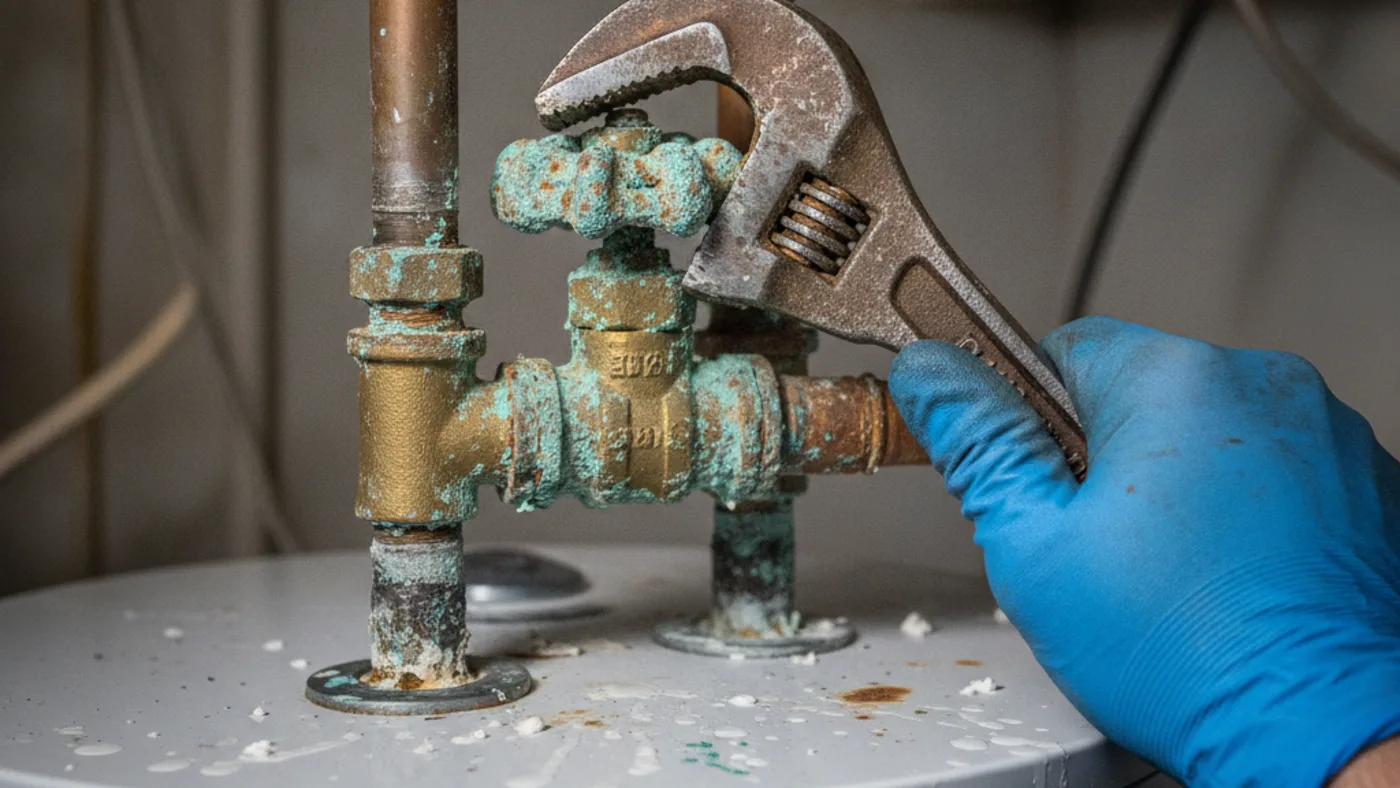
The shut-off valve will not shut off. Old gate valves seize. If the valve above the heater will not hold, it has to be replaced first, which sometimes means shutting off the whole house.
The connections are the wrong size or the wrong material. Older installs turn up with corroded nipples, mismatched fittings, or dielectric unions that have done their job and fused anyway.
Code has moved on. Requirements around seismic strapping, drain pans, expansion tanks and venting change over time, and a replacement generally has to meet current requirements rather than match what was there. An expansion tank in particular is a common addition on a system with a pressure regulator or check valve.
Access. An attic or a tight interior closet adds time to every step.
The old unit failed messily. If it let go rather than simply stopped working, there may be water damage to deal with before anything new goes in.
The Questions Worth Asking
Ask these when you get the quote, not afterwards:
- Is the permit included, and who pulls it? Water heater replacement is permitted work. Confirm it is in the price rather than assumed away.
- Does the quote include hauling the old unit away? It usually should.
- What is covered if something adjacent fails? The seized valve scenario above is common enough that a good quote addresses it up front.
- Whose warranty is whose? The tank carries a manufacturer warranty; the labour carries the plumber's. They are different lengths and different things.
- Does this install need an expansion tank? If the answer is vague, press.
On Deciding Between Tank and Tankless
Worth its own conversation rather than a decision made in the driveway. A tankless changes venting, gas supply sizing and sometimes electrical, so it is a larger first install with different running costs afterwards. Our piece on whether tankless is worth it covers that trade-off properly.
The practical rule: if the existing unit has just failed and you need hot water today, replacing like-for-like is usually the sensible move. Switching type is a planned job.
Hard Water Shortens All of This
Valley water is hard, and that is the single biggest factor in how long a water heater lasts here. Sediment accumulates faster, insulates the bottom of the tank, and makes the unit work harder for the same output.
Which is why a replacement is a reasonable moment to ask whether water treatment makes sense, and why an annual flush is worth more here than it would be somewhere with softer water. More on that in our hard water piece.
Booking It
American Brothers Plumbing handles water heater replacement across Las Vegas, Henderson, Summerlin and the rest of the valley. We are licensed, bonded and insured, open 7 days a week, and we will tell you on the phone what the photo of your data plate means for the job.
Call (702) 704-1776 for a free estimate.
Need a Plumber in Las Vegas?
Our licensed team is ready to help, with same-day service and free estimates.
Call (702) 704-1776