Clogged Drain in Las Vegas: Sink Clog or Main Line? How to Tell
By American Brothers Plumbing · 2026-11-11 · 8 min read
If only one sink, tub or shower in your Las Vegas home drains slowly, the clog is almost always in that fixture's own drain line, close to the trap. If two or more drains back up at the same time, gurgle when another fixture runs, or water rises in a tub when the toilet flushes, the blockage is further down in the main line that carries everything out to the sewer.
That difference decides what the fix involves, how long it takes and who should do it. Here is how to tell the two apart, what we do for each, and what to tell the plumber when you call.
How Your Drains Connect
Every fixture in the house has its own short drain with a trap under it. Those small drains join larger branch lines inside the walls and under the slab, and the branches all feed one main drain that leaves the house and runs under the yard to the city sewer or the street connection.
A clog in a fixture drain only affects that fixture. A clog in a branch line affects the fixtures on that branch, often a bathroom group or the kitchen. A clog in the main line affects everything, and the lowest fixtures in the house show it first, usually a shower or a tub, because water backs up to the lowest opening it can find.
Signs the Clog Is in One Fixture
- Only one drain is slow. The bathroom sink drains slowly but the tub and toilet next to it are fine.
- It came on gradually. A sink that has been getting slower for weeks is usually hair, soap and toothpaste building up in the trap and the first few feet of pipe.
- Plunging helps for a while. A plunger or a hand auger moves it, and it comes back a month later.
- The kitchen sink is slow but the dishwasher drains. Food scraps and grease have narrowed the sink's own drain line, not the main.
Signs the Clog Is in the Main Line
- More than one drain is slow or backing up at once, especially in different rooms.
- Water comes up somewhere else. Running the washing machine sends water up the shower drain, or flushing a toilet makes the tub water rise.
- Gurgling. A toilet bubbles when you run the bathroom sink, or a floor drain gurgles when the dishwasher empties.
- The lowest drain backs up first. A shower or tub on the ground floor fills with dirty water.
- Sewage smell from drains or from the yard, or a wet patch near the cleanout outside.
If you see any of these, stop running water. Every load of laundry, shower or flush adds to what is already sitting in the line, and the next place it goes is your floor.
Why Las Vegas Drains Clog
Grease. Grease is the most common cause of sewer blockages. The U.S. Environmental Protection Agency cites its own report to Congress, which found that "grease from restaurants, homes, and industrial sources are the most common cause (47%) of reported blockages," and explains that grease "solidifies, reduces conveyance capacity, and blocks flow." Hot water and dish soap only move it further down the pipe before it sets. Wipe pans with a paper towel and put cooled grease in a can for the trash.
Hard water scale. Our water is very hard, so mineral scale builds up on the inside of drain pipes over the years. A rough, narrowed pipe catches grease and hair faster than a smooth one, which is why older valley homes clog more often.
Roots. Landscape trees look for water, and the joints of older clay or cast iron sewer lines are an easy way in. Roots inside a main line catch paper and grease and turn into a clog that keeps coming back.
Wipes and paper towels. "Flushable" wipes do not break down the way toilet paper does. They snag on roots, scale or a sag in the line and build into a plug.
A damaged or sagging line. A section of main line that has settled, cracked or bellied holds water and debris. No amount of clearing fixes the shape of the pipe.
What Clearing a Fixture Clog Involves
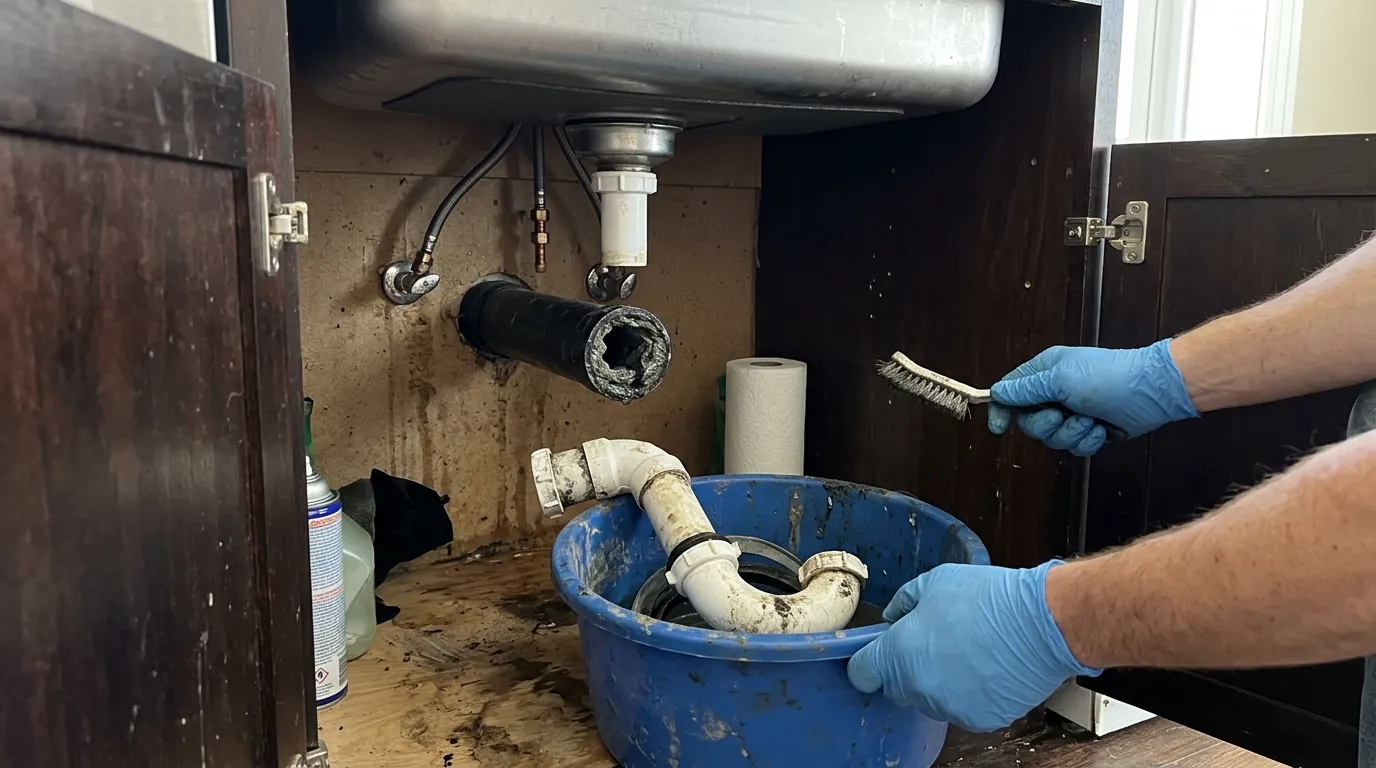
For a single slow drain, we start at the fixture. That usually means pulling the trap or the stopper, clearing what is in it, and running a small cable (a drain snake) through the fixture's drain line to the branch. For a kitchen sink, we check the disposal and the dishwasher connection while we are there, since both drain through the same pipe.
Most single-fixture clogs are a short visit, and same-day service is available. If the same drain clogs again within a few months, there is usually a reason further down: a grease build-up in the branch, scale, or a pipe with too little slope.
Skip the bottle of chemical drain cleaner. It rarely clears a real clog, it can damage pipes, and it makes the job dangerous for whoever opens the drain next. Our guide on why chemical drain cleaners fail explains why.
What Clearing a Main Line Clog Involves
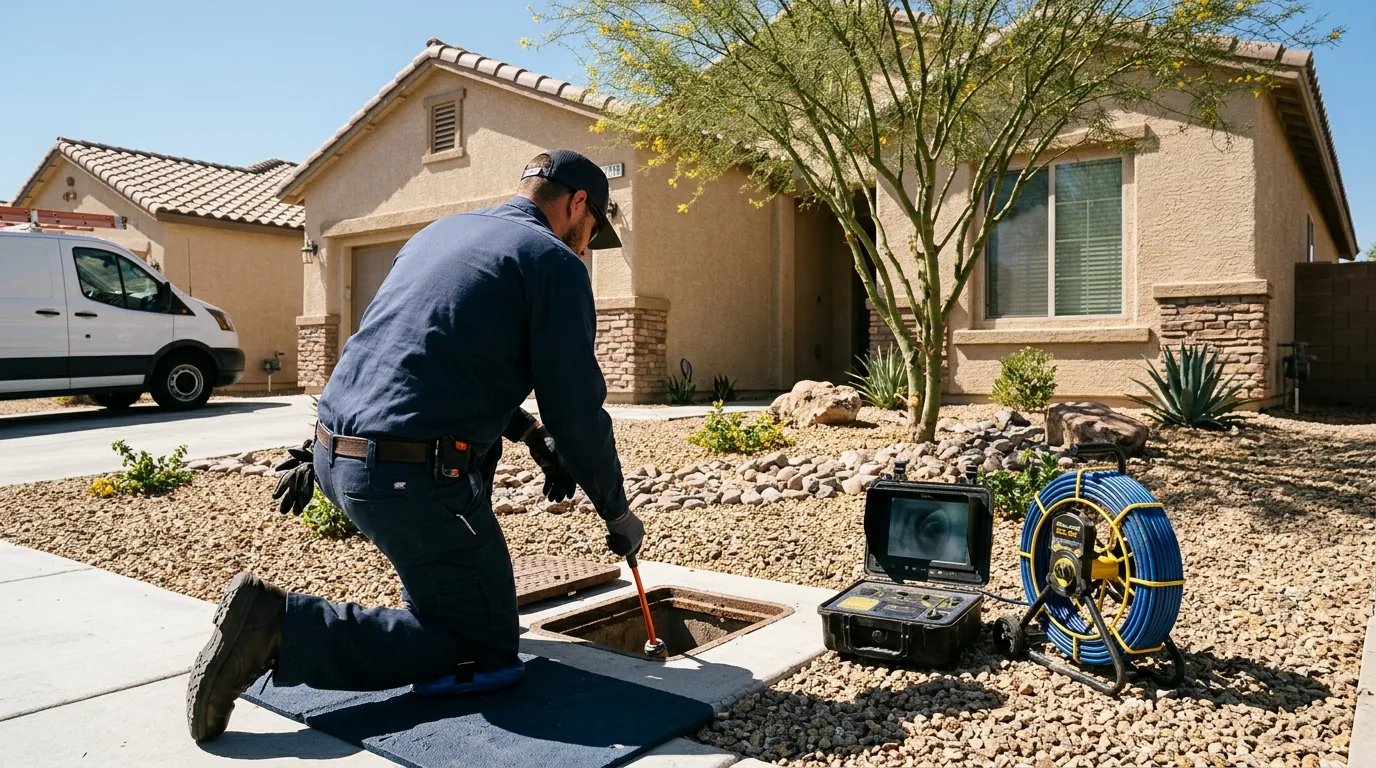
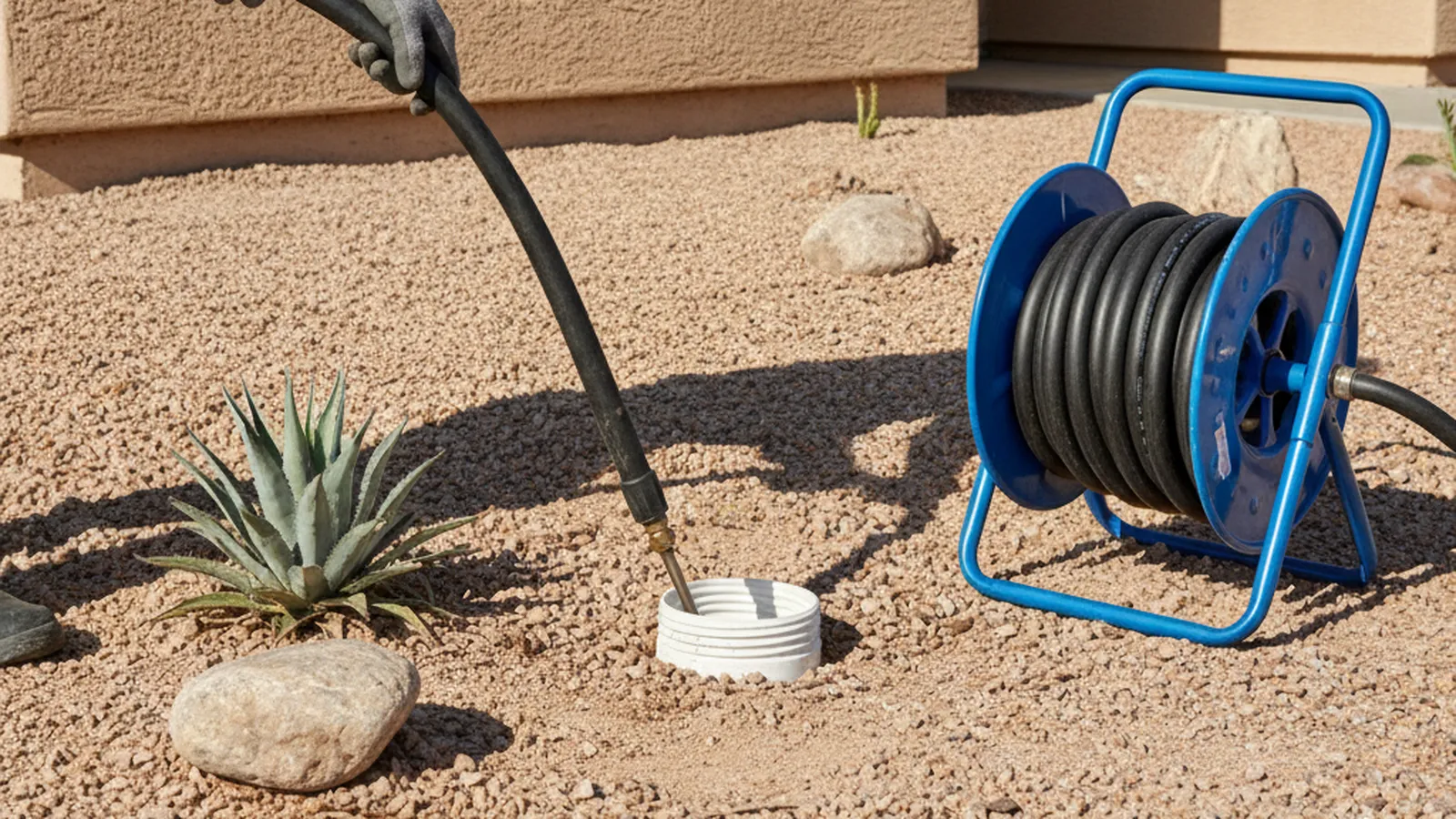
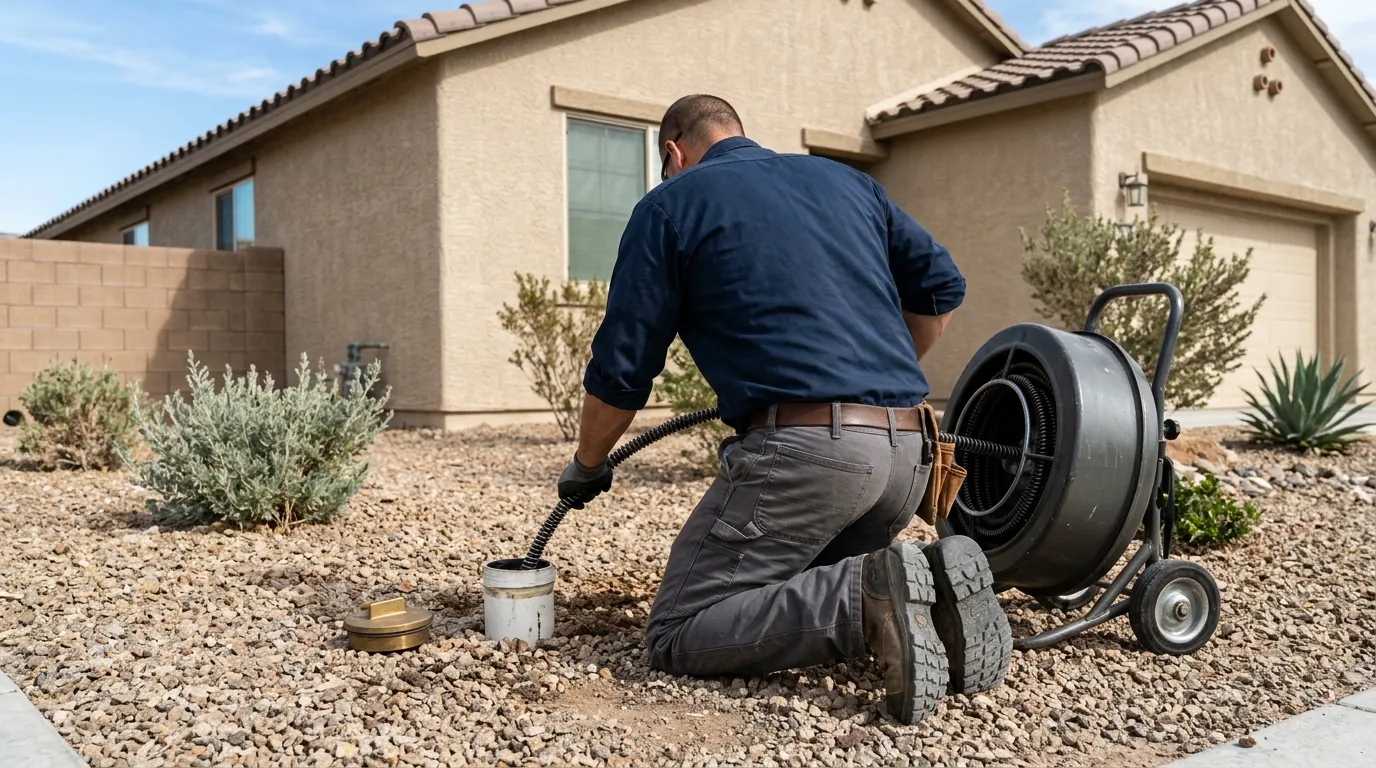
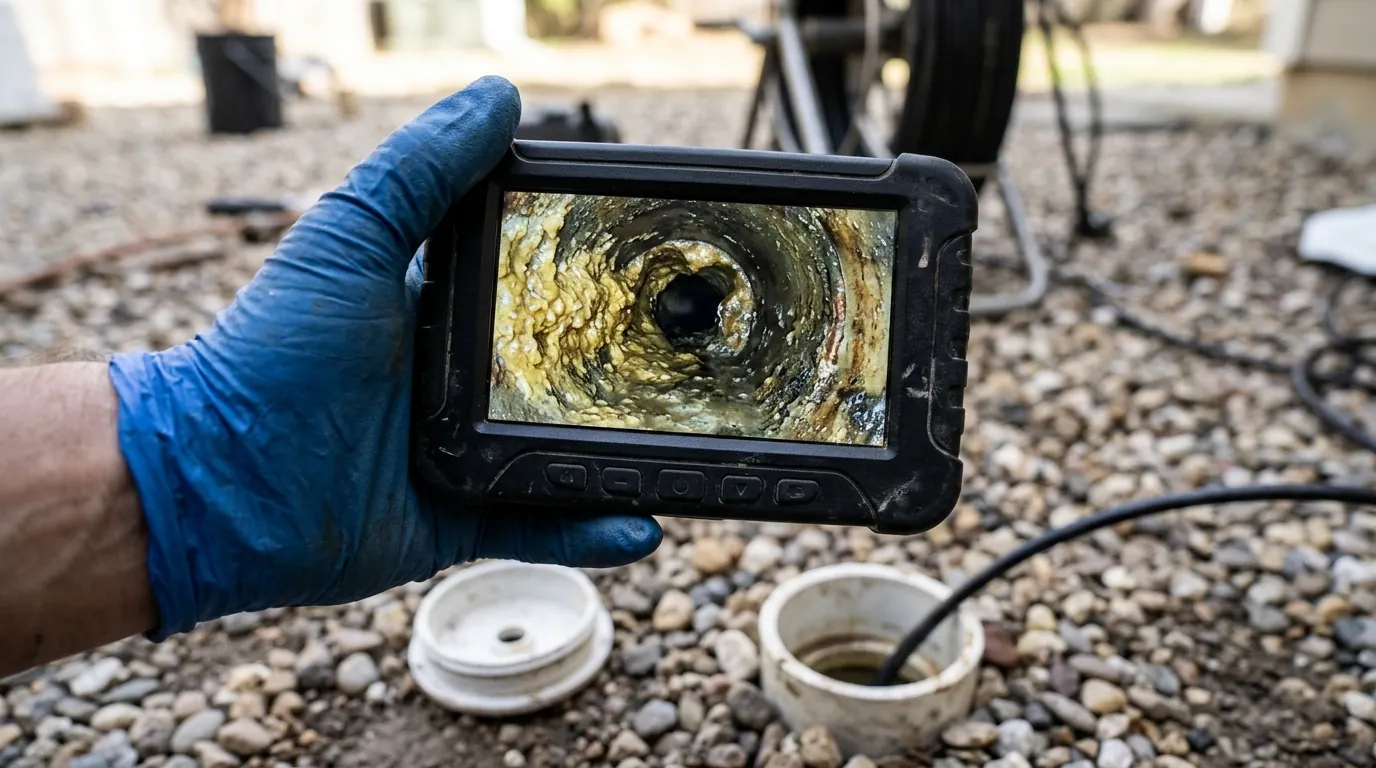
A main line is cleared from the outside cleanout, not through a sink. The cleanout is a capped pipe standing a few inches above the ground, usually near the foundation or along the side yard, often in the gravel or a planter bed. From there, we run a larger cable to break through the blockage and get the house draining again.
What happens next depends on what caused it:
- Grease or scale build-up along the pipe wall often calls for hydro jetting, which scours the full width of the pipe instead of punching a hole through the middle. Our post on hydro jetting vs. snaking compares the two.
- Roots, a repeat clog, or a line that clogged without an obvious cause is a good reason to look inside with a sewer camera inspection. The camera shows whether the pipe is sound, where the roots are getting in, and whether a section has sagged or broken.
- A broken or bellied section needs a repair, not another cleaning. That is sewer repair work, and the camera footage tells you how much of the line is involved.
What Sets the Cost
We don't publish a flat price for drain cleaning, because the job varies. What moves the price is:
- Which line is clogged. A single fixture drain is a smaller job than the main.
- Access. A main line with an easy outside cleanout is quicker than one that has to be reached by pulling a toilet or through the roof vent.
- The cause. A soft grease clog clears in one pass. Roots or heavy scale may need jetting and a camera check.
- What the camera finds. If the pipe itself is damaged, the cost is in the repair, not the cleaning.
You get a free, upfront estimate before any work starts, so you know which of these you are paying for.
What to Tell Us When You Call
A few details help us bring the right equipment the first time:
- Which drains are slow or backing up, and whether it is one fixture or several.
- Whether water comes up anywhere when another fixture runs.
- Whether anyone has used a chemical drain cleaner on it (this matters for safety).
- Where your outside cleanout is, if you know.
- How old the house is and whether this has happened before.
Frequently Asked Questions
Can a kitchen sink clog be a main line problem? Yes, if other drains are also slow or the kitchen backs up when the washing machine drains. On its own, a slow kitchen sink is usually grease and food in the sink's own line.
Why does my shower back up when I flush the toilet? Water from the toilet cannot get past a blockage in the main line, so it rises at the lowest drain in the house, which is usually the shower or tub. That points to a main line clog.
Is a main line clog my responsibility or the city's? Usually yours. The City of Las Vegas puts the sewer line between the house and the public main on the homeowner. Our post on who is responsible for the sewer line in Las Vegas explains where the split usually falls.
Should I use a plunger on a main line clog? No. Plunging pushes water into a line that has nowhere to send it. Stop running water and call.
Get Your Clogged Drain Cleared
American Brothers Plumbing is a locally owned, family-operated plumbing company, licensed, bonded and insured (NV License #0082700). We clear sink, tub, shower and main line clogs across Las Vegas, Henderson, Summerlin and North Las Vegas, with same-day service available and free, upfront estimates. See our clogged drain cleaning service or call (702) 704-1776 and tell us which drains are acting up.
Need a Plumber in Las Vegas?
Our licensed team is ready to help, with same-day service and free estimates.
Call (702) 704-1776