Las Vegas Sewer Line: Who Is Responsible?
By American Brothers Plumbing · 2026-09-10 · 6 min read
If sewage is backing up in your Las Vegas home, the pipe causing it is almost certainly yours. The City of Las Vegas states plainly that "it's the homeowners' responsibility to maintain and repair the sewer lines between the sewer main and the home" — everything from your foundation out to the public main belongs to you.
That single pipe is called the sewer lateral, and it is the most expensive piece of plumbing most homeowners never think about until the day it fails. Knowing where your responsibility begins saves the wasted phone calls that usually come first.
Where the Line Is Actually Drawn
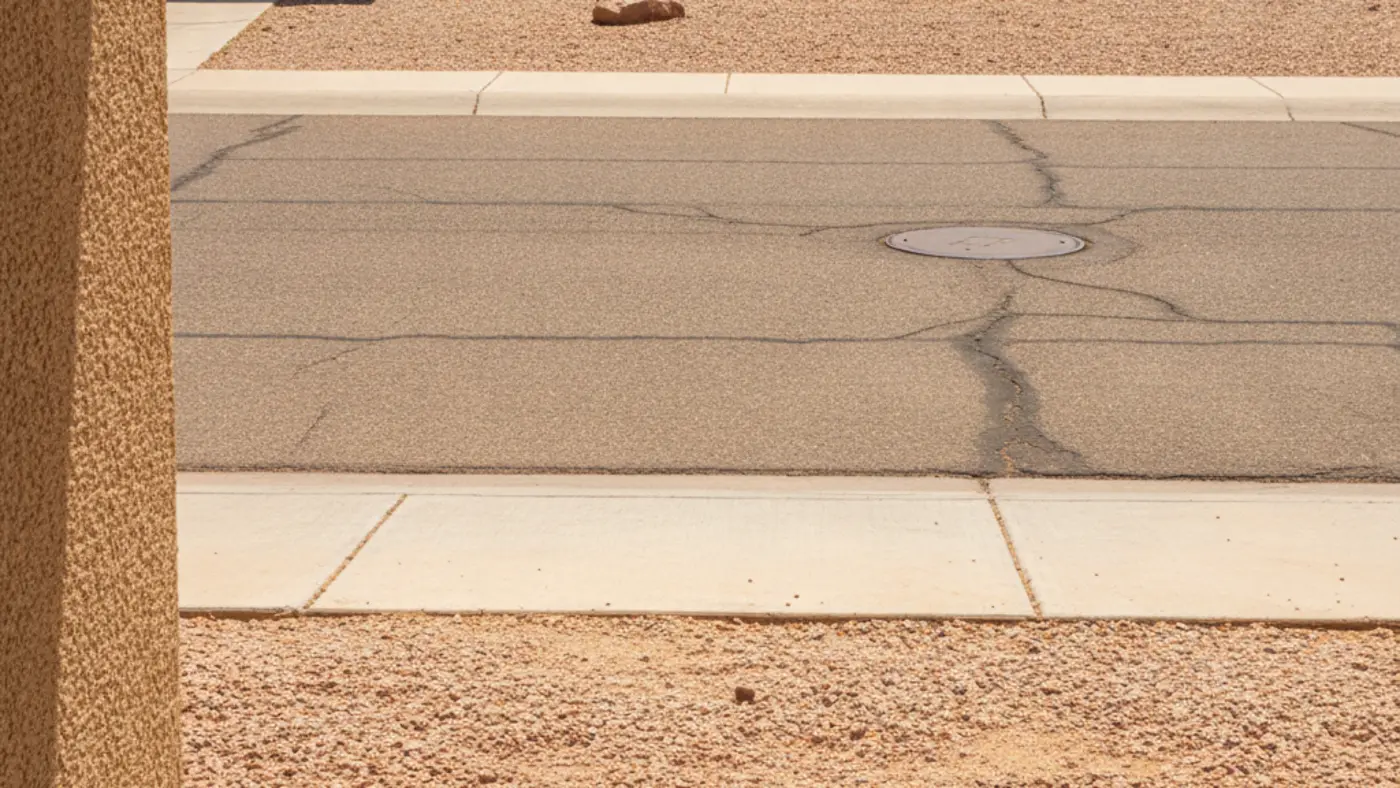
Your property's plumbing runs downhill from every fixture into one collector pipe that leaves the house, crosses under the yard, and ties into the public sewer main buried in the street. The public main is maintained by the wastewater utility. The lateral connecting your home to it is private property, and so is every foot of it — including the portion running under the sidewalk and out beneath the road.
Homeowners get this wrong for an understandable reason. In this valley, drinking water and wastewater come from different bodies, and your sewer charge is not part of your water bill. So when a backup happens and the homeowner calls the water utility, they reach an organization that has nothing to do with the pipe in question, and lose a day doing it.
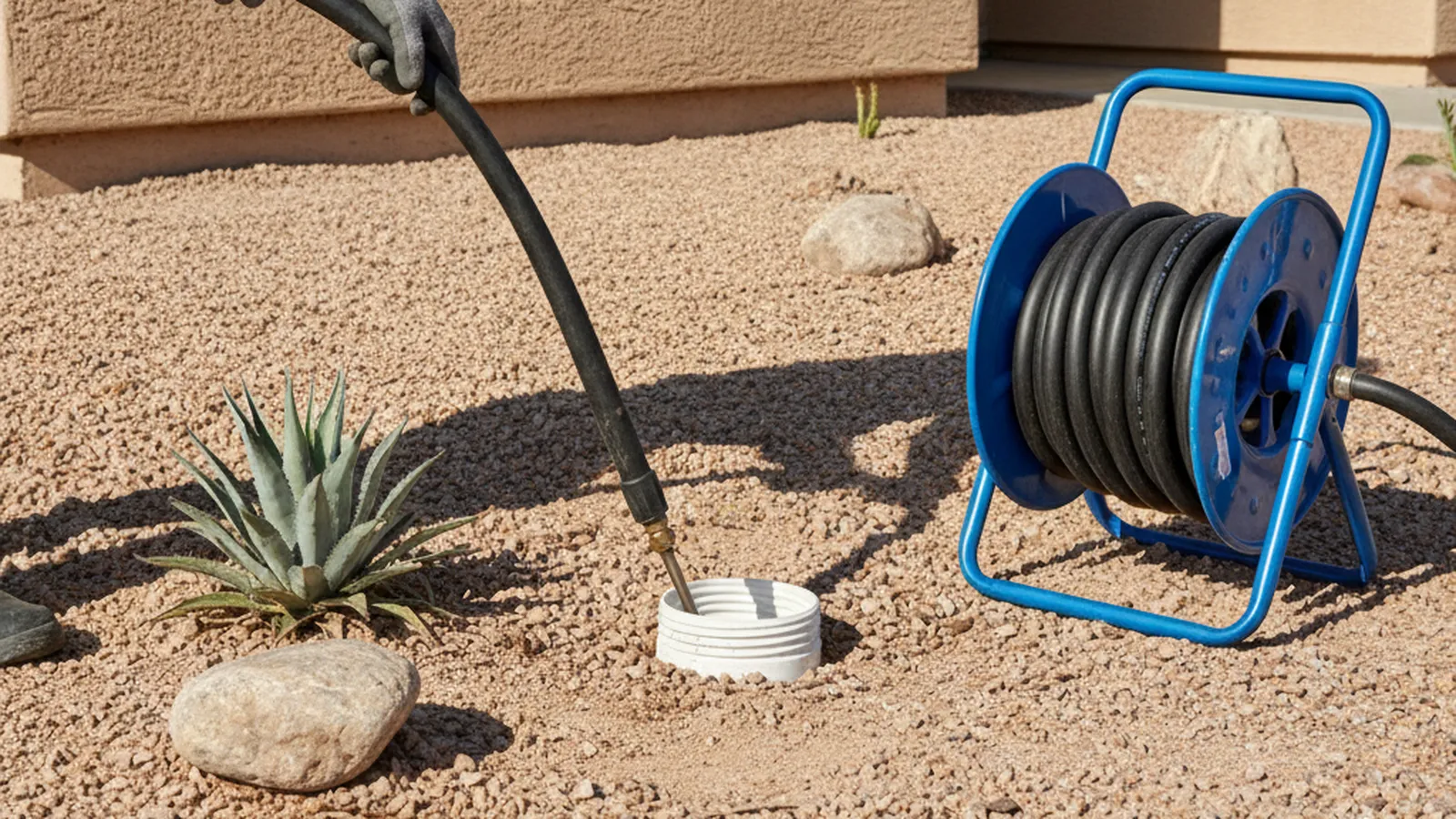
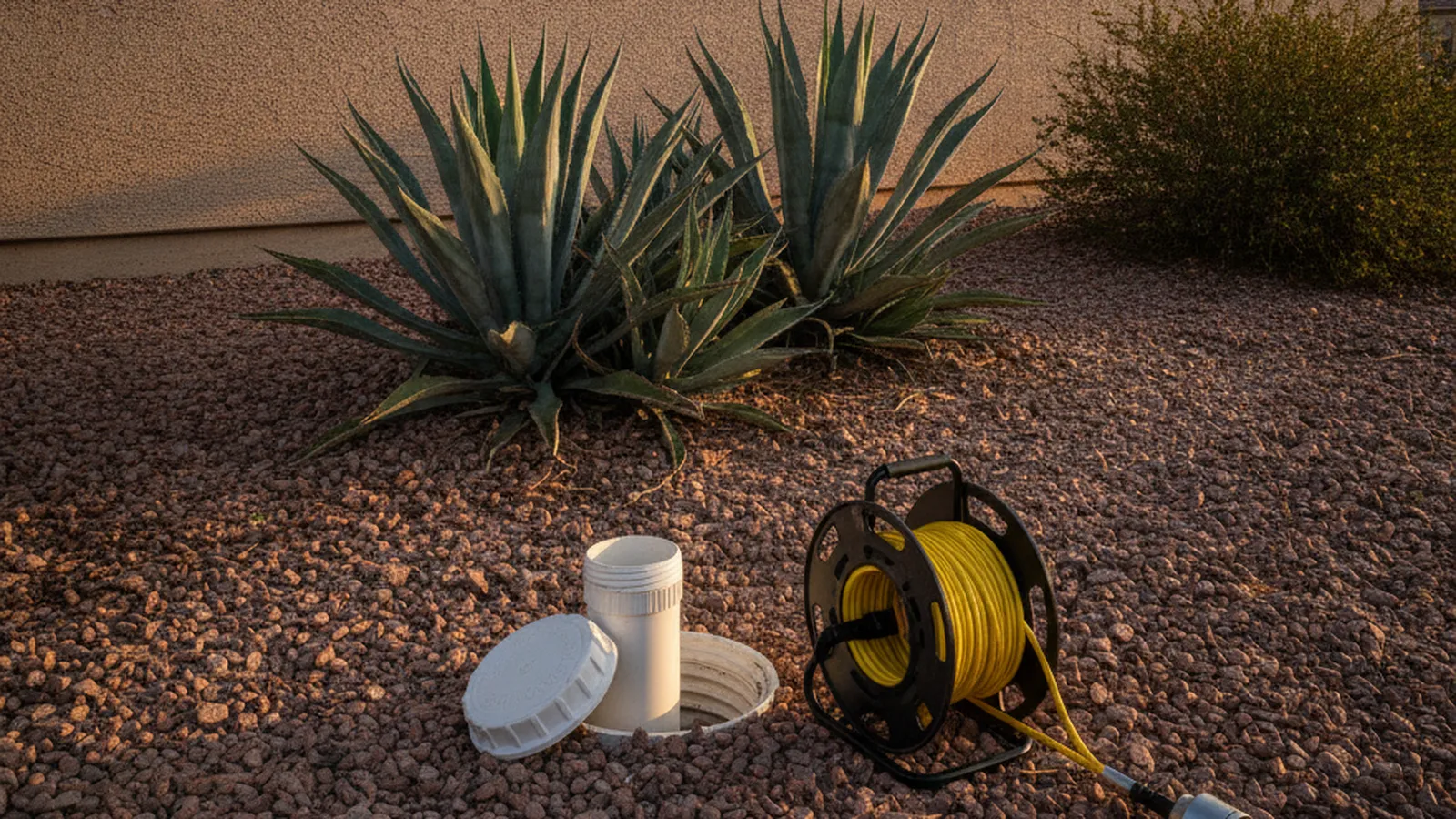
The practical reference point is the cleanout — the capped pipe standing a few inches above grade, usually near the foundation or along the side yard. It is the access point a plumber uses to run a cable or a camera, and if your house does not have one, installing one is the cheapest sewer work you will ever pay for.
What a Failed Lateral Costs
The City publishes a figure, and it is worth knowing before the estimate arrives: "Repair costs for broken, leaking or clogged lines can be between $1,300 to upwards of $4,000."
That range covers a lot of ground. A single blockage cleared through an existing cleanout sits at the low end. A collapsed section under a driveway, requiring excavation and resurfacing, sits at the top or beyond it. What moves a job from one end of that range to the other is almost never the pipe itself — it is what has been built on top of it.
Two things follow from that. First, a lateral is worth diagnosing early, while the problem is still a restriction and not a collapse. Second, the cost of finding out is small next to the cost of guessing wrong.
Why Laterals Fail Here
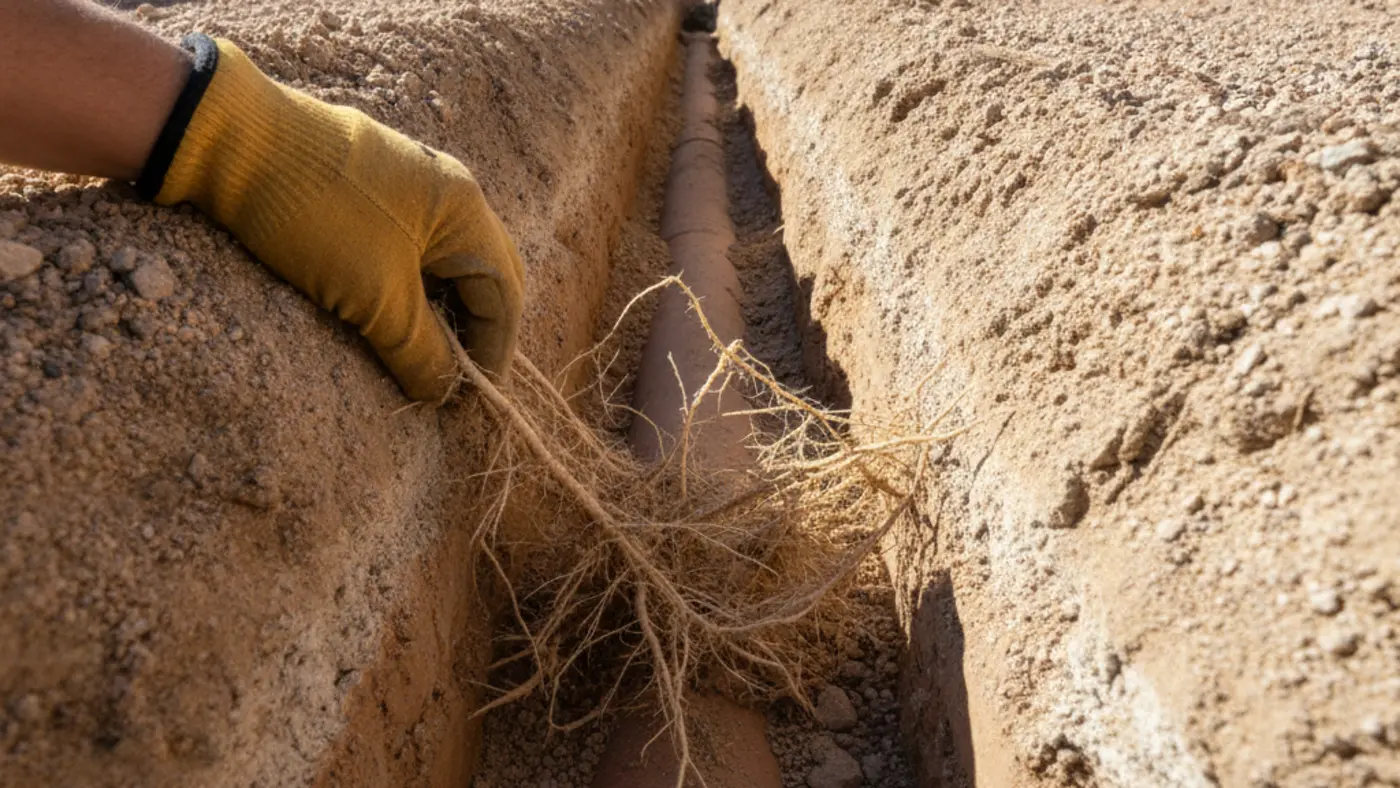
The City lists the causes directly: "root invasion, ground shifting, fluctuating temperatures, age, and more." Each of those has a local shape.
Roots. Desert landscaping does not mean root-free. Trees planted in a yard with almost no natural soil moisture will send roots a long way toward the only reliable water source available, and a sewer lateral with a hairline crack is exactly that. Roots enter at the joint, thicken, and turn a small defect into a full obstruction over several seasons.
Ground shifting. Soil movement puts a lateral under bending loads it was never designed to carry. A pipe that has shifted rarely announces itself; it develops a low spot, or a belly, where waste stops flowing freely and solids settle. The homeowner experiences this as a drain that needs clearing more and more often.
Age. If your home was built before the valley's growth boom, the lateral may not be modern PVC. Older laterals were built from cast iron or clay, both of which corrode or crack at the joints with time. When a plumber asks the age of the house before quoting, this is why.
Temperature swings. The daily range here is extreme, and buried pipe expands and contracts against fittings that do not move with it.
How to Tell It Is the Lateral, Not the Fixture
One slow drain is a fixture problem. The lateral announces itself differently, and the tell is that more than one fixture misbehaves at once:
- The toilet gurgles when the washing machine drains
- Water backs up into a shower or tub when a toilet is flushed
- The lowest drain in the house — a floor drain, a downstairs shower — is the first to overflow
- Every drain in the house has slowed over the same period
- There is a soft, persistently damp patch or a smell in the yard along the run to the street
That last one matters. A lateral leaking underground can wet the soil for months before anything appears indoors, and in a home built on a slab the symptoms overlap with a slab leak — which is a supply-side problem and a different repair entirely. Sorting one from the other is a diagnostic step, not a guess.
Look Before You Dig
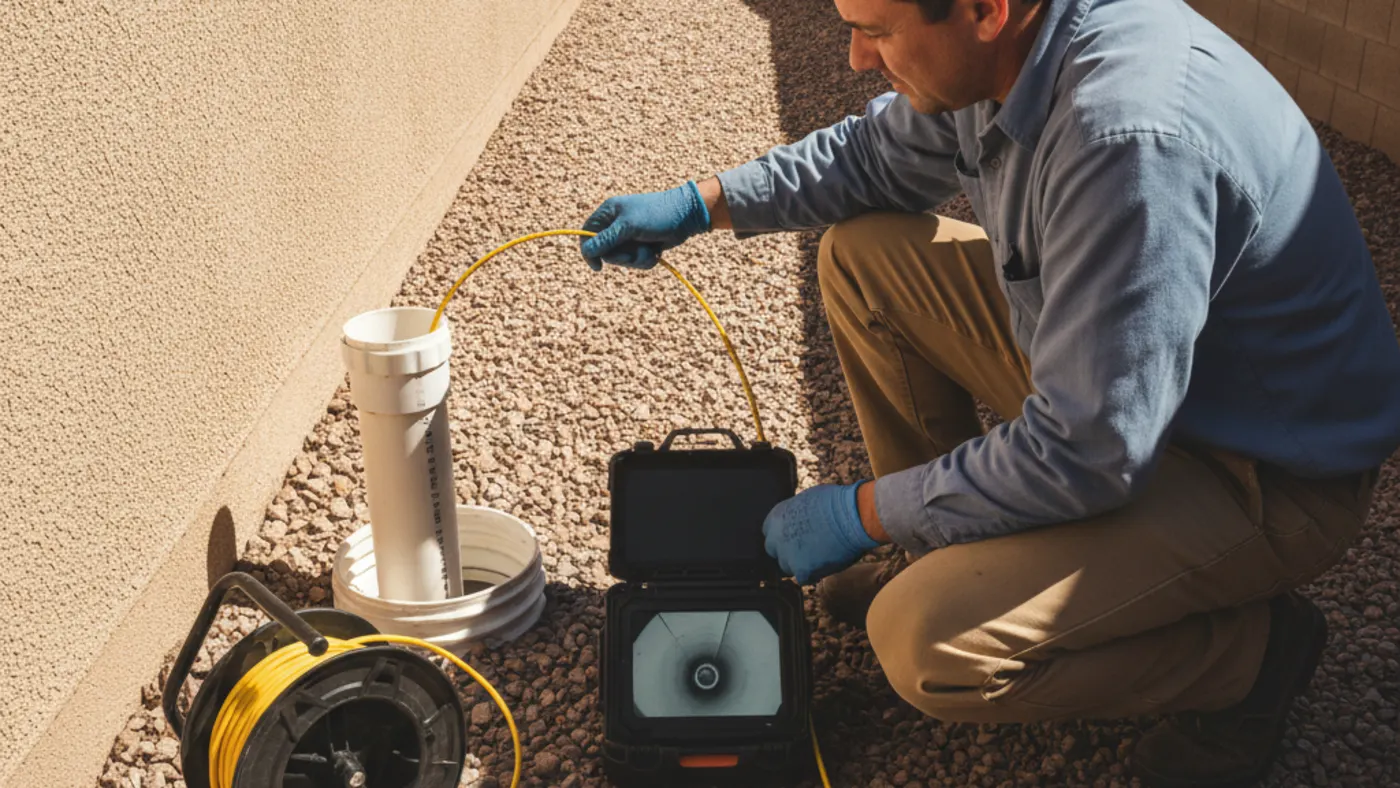
The reason to put a camera down the line before any excavation is that the three most likely causes — roots, a belly, a collapse — look identical from inside the house and call for three different repairs. A sewer camera inspection shows which one you have, and where along the run it sits, so the work is priced against a known defect instead of an assumption.
It also settles the responsibility question definitively. If the camera reaches the main and the defect sits inside your property line, the repair is yours. That is a conversation worth having with evidence in hand.
From there the options separate cleanly. A blockage clears with proper drain cleaning — mechanical, not chemical, since caustic drain products do nothing to roots and shorten the life of older pipe. A localized break can often be repaired in a single spot rather than replaced end to end. A lateral that has bellied or collapsed over a long run needs sewer repair or replacement, and modern trenchless methods can frequently do that without taking up the whole driveway.
When to Call
If drains across the house have slowed together, if a fixture backs up when a different one drains, or if there is a wet patch in the yard between the house and the street, the lateral is the first thing to rule out — and it does not improve on its own.
American Brothers Plumbing has served Las Vegas, Henderson and the surrounding Clark County communities for over 20 years. We will camera the line, show you what is actually down there, and give you a free estimate before any work starts. Call (702) 704-1776.
Source: City of Las Vegas, Department of Public Works. Sewer line responsibility and repair costs
Need a Plumber in Las Vegas?
Our licensed team is ready to help, with same-day service and free estimates.
Call (702) 704-1776