
Gas Line Leak Signs in Las Vegas Homes
By American Brothers Plumbing · 2026-09-16 · 6 min read
If you think there is a gas leak in your Las Vegas home, leave right away, don't touch light switches or anything else that could spark, and call 911 and Southwest Gas once you are outside. After the utility makes the area safe, any repair to the gas piping on your side of the meter is the homeowner's job, and that work belongs with a licensed plumber.
This guide covers how a gas leak usually shows itself, what to do in the first few minutes, and why the buried line out to your pool heater or BBQ island is probably yours to maintain.
The Signs of a Gas Leak
Natural gas has no smell of its own. Utilities add an odorant so a leak is hard to miss, which is why most people describe it as rotten eggs or sulfur. That smell is the most common warning, but it is not the only one.
- Smell: a rotten egg or sulfur odor indoors, near an appliance, or outside near the meter.
- Sound: a hiss or whistle near a gas appliance, a connector, or a pipe.
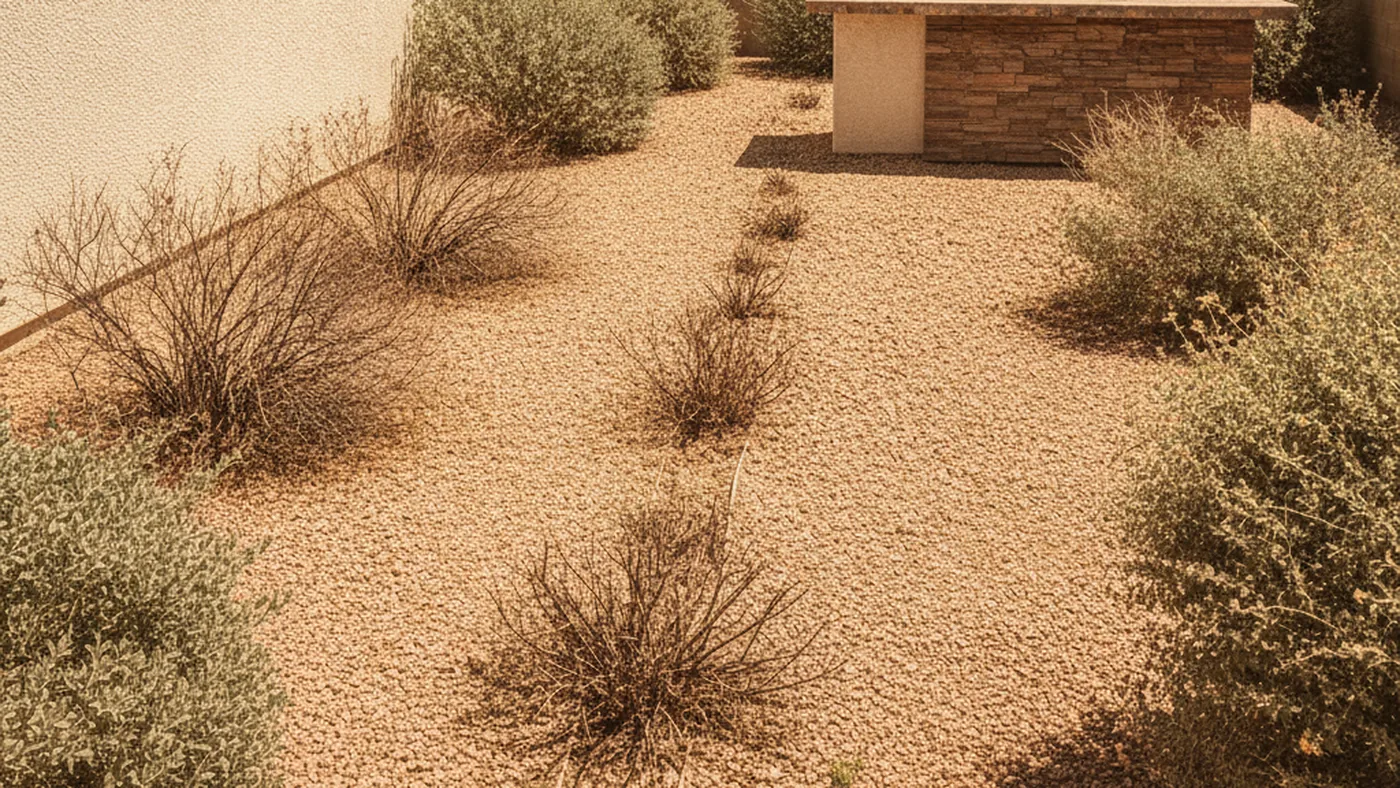
- In the yard: a strip of plants that has died for no obvious reason above the path of a buried line, or bubbles rising through standing water.
- At an appliance: a burner flame that is weak or burning yellow instead of blue, or a pilot light that keeps going out. These don't prove a leak, but they are worth having checked.
Don't talk yourself out of what your nose is telling you. If the smell is strong, or it comes with hissing, treat it as a leak until someone qualified says it isn't.
What to Do Right Away
Order matters here. Work through these steps and don't go looking for where the leak is.
- Get everyone out. Take people and pets out of the house and away from the building. Leave the door open behind you.
- Don't create a spark. Leave light switches, thermostats and appliances alone. Don't light anything, and don't use the garage door opener or start a car in the garage.
- Call from outside. Once you are well away from the house, call 911 and Southwest Gas, the natural gas utility for the Las Vegas valley.
- Stay out until you're cleared. Don't go back in, even for a moment, until emergency responders or the utility tell you it is safe.
Only once the utility has made the site safe does a repair come into the picture. That repair is where the ownership question starts to matter.
The Gas Line Past Your Meter Is Yours
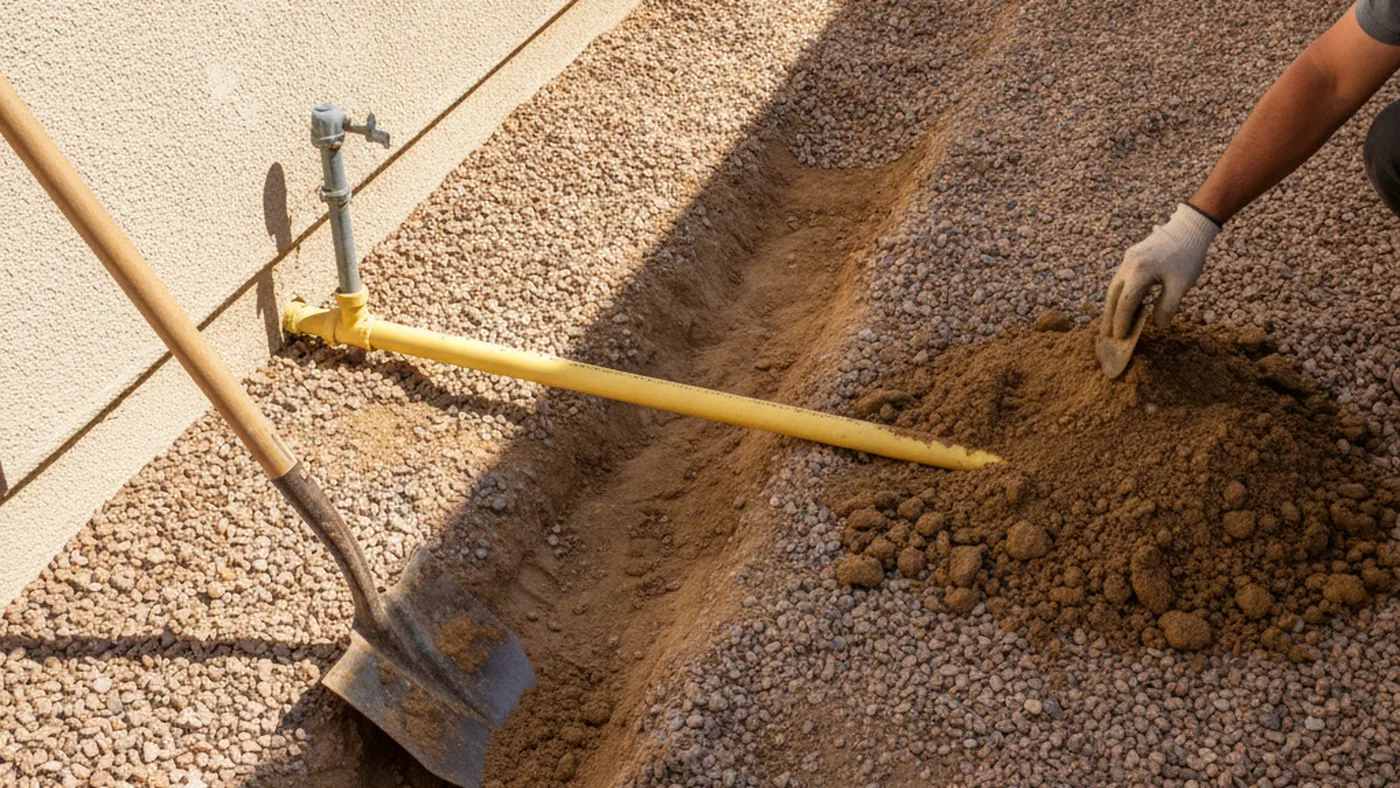
Many valley homes have gas piping running underground after it leaves the meter: out to a pool or spa heater, a BBQ island, a fire pit, or a detached casita. A lot of homeowners assume the gas company looks after that line. Often it doesn't.
Federal pipeline safety rules cover exactly this. Under 49 CFR 192.16, a gas operator that does not maintain a customer's buried piping has to notify the customer, and the notice has to say that "the operator does not maintain the customer's buried piping" and that "if the customer's buried piping is not maintained, it may be subject to the potential hazards of corrosion and leakage."
The same rule spells out what that piping needs. It should be "periodically inspected for leaks," "periodically inspected for corrosion if the piping is metallic," and "repaired if any unsafe condition is discovered." It also warns that "when excavating near buried gas piping, the piping should be located in advance, and the excavation done by hand," which matters before you dig for a new tree, a paver patio or a pool remodel.
The rule names who can help: "the operator (if applicable), plumbing contractors, and heating contractors can assist in locating, inspecting, and repairing the customer's buried piping." Your utility's customer notice will say what it does and does not maintain at your address. If you have never seen yours, it is worth asking.
It is the same principle as the sewer line from your house to the main: the pipe runs through your yard, so the upkeep usually falls to you.
Where Gas Leaks Tend to Start
Most household gas leaks don't start in the middle of a straight run of pipe. They start where something connects, moves or wears.
Appliance connectors. The flexible connector behind a range, dryer or gas water heater gets pushed, kinked and pulled every time the appliance moves. A gas water heater replacement is a good time to have that connector and its shutoff valve replaced as well.
Fittings and valves. Threaded joints and shutoff valves can loosen or corrode over the years.
Buried lines to outdoor equipment. Lines to pool heaters, BBQ islands and fire pits are out of sight and easy to damage with a shovel or a landscaping stake. Metallic pipe underground can also corrode, which is exactly the hazard the federal notice describes.
How a Plumber Finds and Fixes It
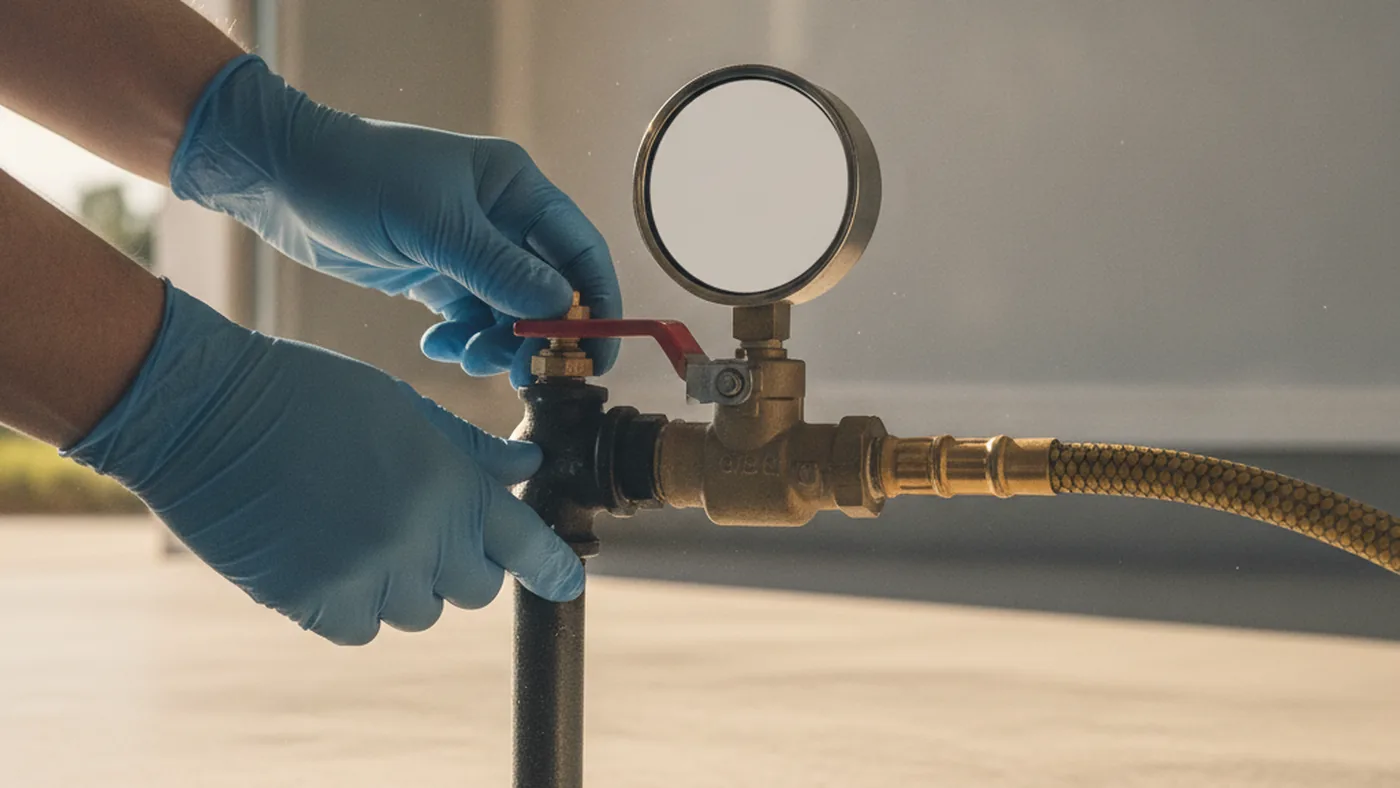
A proper gas line repair has three parts, and none of them are guesswork.
First, locate the leak. A plumber uses a combustible gas detector along the pipe and at each fitting, then confirms suspect joints with a leak detection solution that bubbles where gas escapes.
Second, repair or replace the damaged section. That could be a single connector or valve, or a length of buried pipe dug out by hand and replaced.
Third, pressure-test the system. The line is pressurized and watched on a gauge to confirm it holds before the gas goes back on and the appliances are relit and checked.
Getting Your Gas Line Checked
If the utility has shut off your gas because of a leak on your side of the meter, or you are planning to dig near a buried line, get the piping inspected before anything else happens.
American Brothers Plumbing has served Las Vegas, Henderson and the surrounding Clark County communities for over 20 years. We locate, repair and pressure-test residential gas lines, and every job starts with a free estimate. See our gas line repair and installation service, or call (702) 704-1776.
Source: 49 CFR § 192.16, Customer notification, via Cornell Law School Legal Information Institute. Read the regulation
Need a Plumber in Las Vegas?
Our licensed team is ready to help, with same-day service and free estimates.
Call (702) 704-1776