Gas Line Replacement in Las Vegas: When Old Gas Pipe and Connectors Should Go
By American Brothers Plumbing · 2026-11-18 · 7 min read
Most gas line problems in a Las Vegas home are fixed by replacing one short section of pipe, a fitting or an appliance connector, not the whole system. A larger gas line replacement makes sense when the pipe is corroded along its length, the appliance connectors are old uncoated brass, or the line is too small for the appliances now on it.
If you smell gas right now, stop reading and follow the steps in our guide to gas leak signs and what to do: get everyone out, then call 911 and Southwest Gas from outside. Replacement is a decision for after the utility has made the house safe.
Repair or Replace: What Usually Decides It
A gas line repair and a gas line replacement use the same skills. The difference is how much of the piping is in poor shape.
A repair is usually enough when:
- A leak is found at one fitting, union or valve, and the pipe either side is sound
- An appliance connector is leaking or kinked, and the rest of the line is fine
- A buried line was nicked by a shovel or post-hole digger in one spot
A section or full replacement is worth discussing when:
- Rust or pitting shows along exposed pipe on the side of the house, in the garage or in the attic, not just at one joint
- A buried line has leaked more than once, or the leak survey finds corrosion in several places
- The home still has old uncoated brass appliance connectors
- You are adding a gas appliance and the existing line can't carry the load
- A remodel or addition means the pipe has to move anyway
We pressure-test the system before recommending anything. If a single repair will hold, that is what we quote.
Old Brass Appliance Connectors
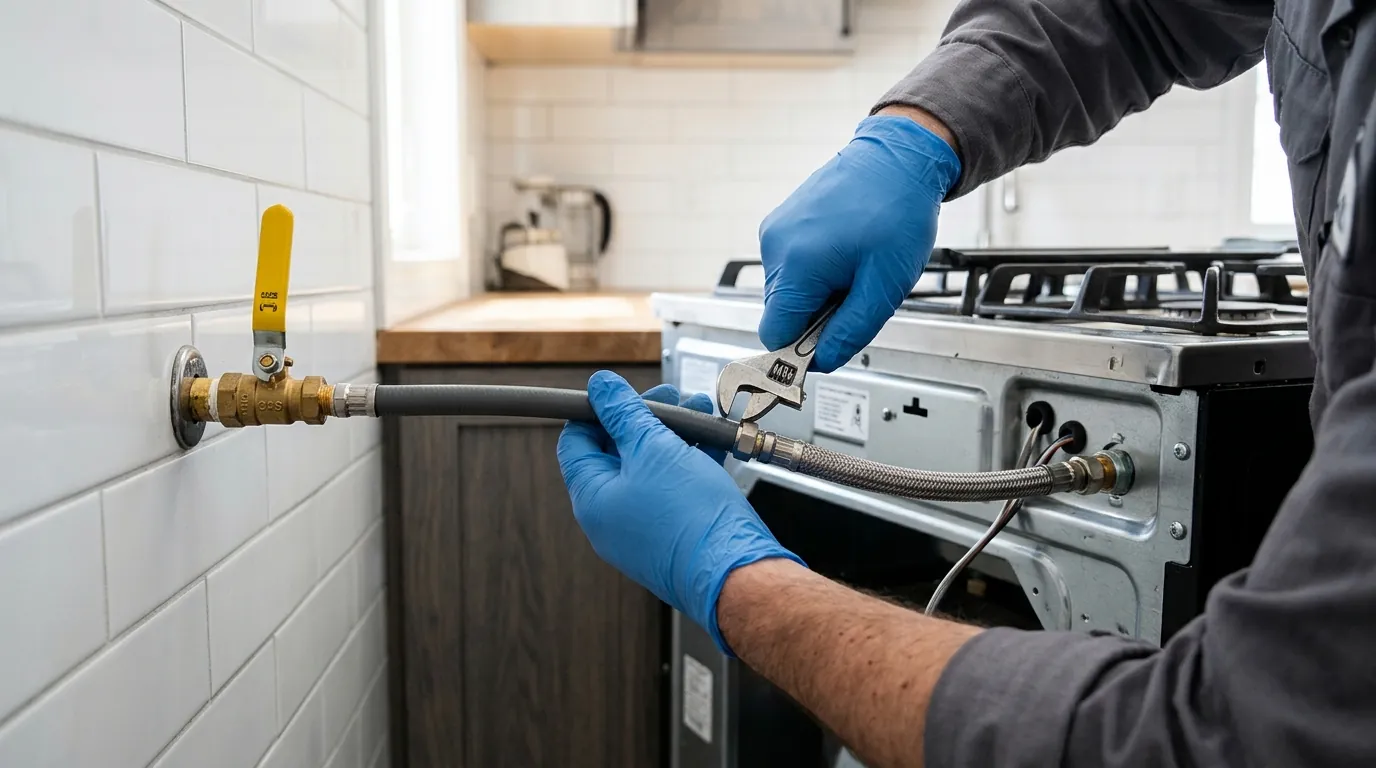
The flexible connector between the gas valve and the appliance is the part of the system most often overlooked. Older homes in the valley can still have uncoated brass connectors behind a range, dryer or water heater.
The U.S. Consumer Product Safety Commission has warned about these older connectors more than once, saying they "are made of brass, are uncoated, and can crack or break." Moving the appliance, even to clean behind it, is when a weak connector is most likely to fail.
Modern connectors are coated or stainless steel. Replacing one is a small job, and it makes sense whenever the appliance itself is replaced or pulled out. If you aren't sure what you have, leave the appliance where it is and have a plumber look.
Corroded Pipe Outside and Underground
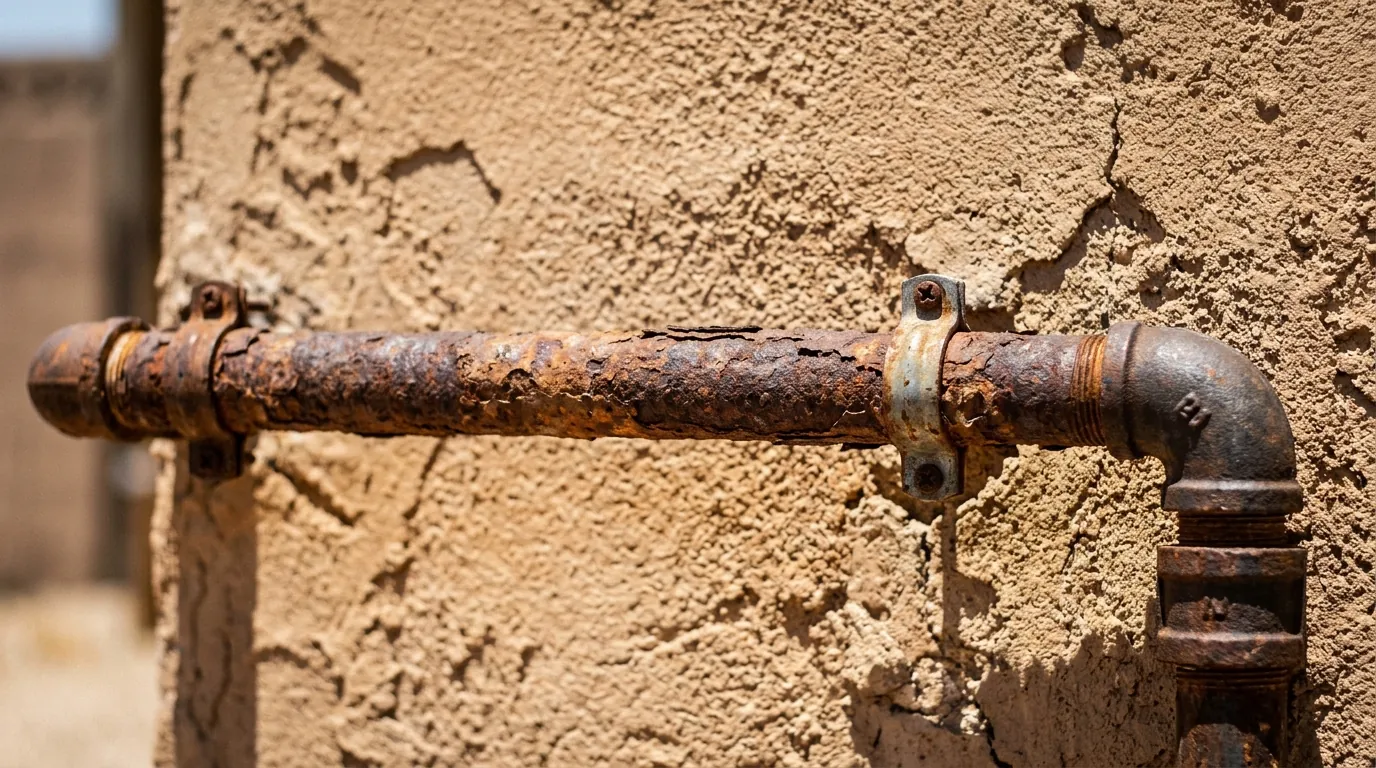
Gas piping in most valley homes is steel. Indoors it can last a very long time. Outside, it is a different story. Exposed pipe on a sunny wall, at the meter riser or on the roof to a rooftop unit picks up surface rust where the paint has failed. Buried steel pipe corrodes faster where the coating was damaged when it went in, or where sprinklers keep the soil wet.
Signs a run of pipe is near the end:
- Flaking rust or pitting along the pipe, not just at the joints
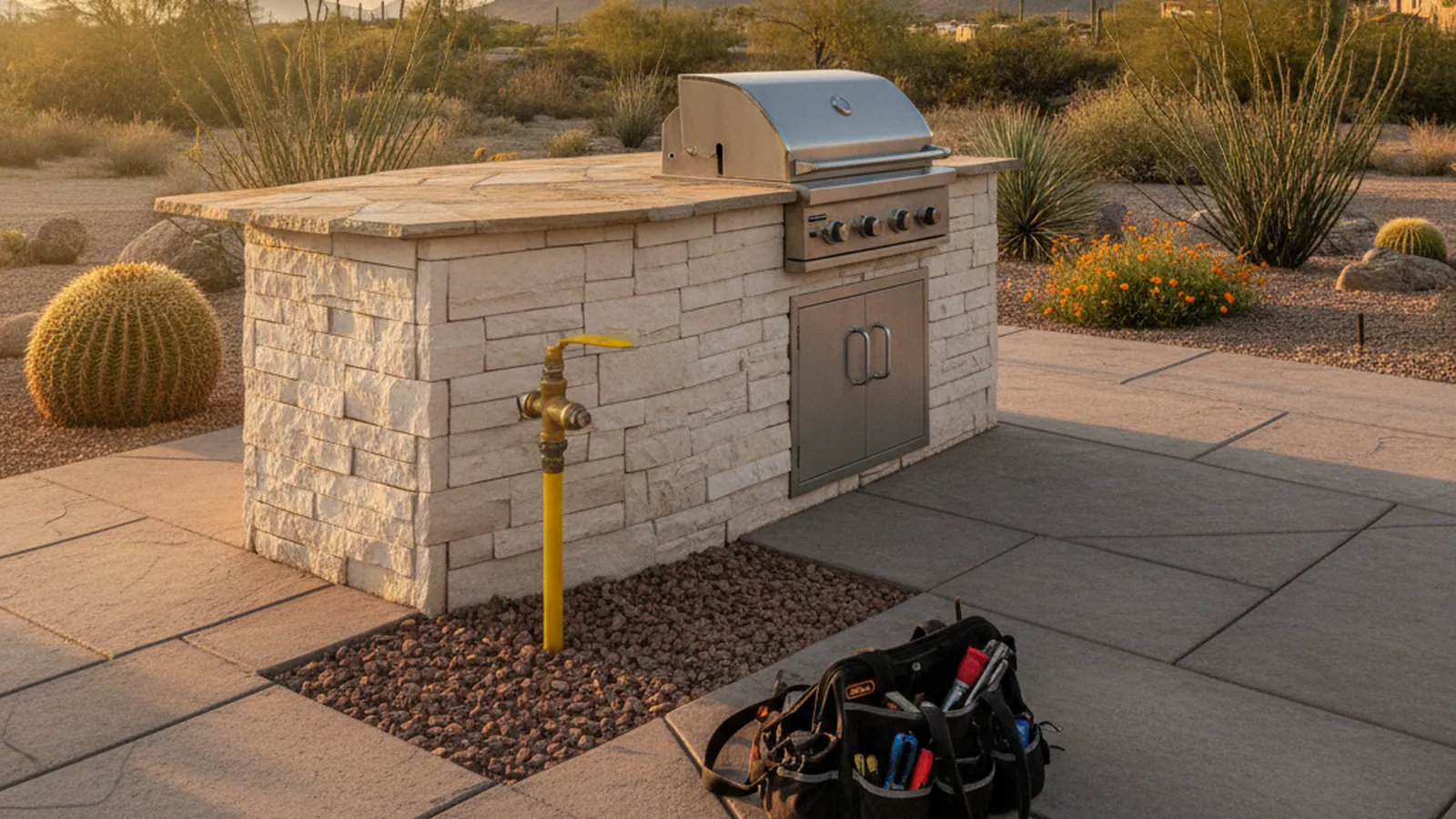
- Repeated leaks on the same buried line, such as the one to a pool heater or BBQ island
- Paint that keeps bubbling off exposed pipe on the same wall
- A leak survey that finds more than one weak spot
The gas company maintains its own line up to the meter. The piping after the meter, including buried lines to a pool heater, fire pit or casita, is usually the homeowner's. Our gas leak signs post explains that responsibility in more detail.
When the Line Is Too Small
A gas line that works fine today can be too small tomorrow. Each appliance draws a set amount of gas, measured in BTUs, and the pipe has to carry the total for everything that might run at once, over the full length of the run.
This comes up most when a homeowner adds:
- A tankless water heater, which draws far more gas at full output than a tank
- A gas range in a kitchen that used to be electric
- A pool or spa heater, or an outdoor kitchen
- A second water heater or a gas dryer
An undersized line can starve appliances when several run together: weak burner flames, a tankless unit that throws error codes on cold mornings, or a pool heater that won't light while the dryer is going. The fix is usually replacing part of the main run with larger pipe, not just adding a branch. Our gas line installation cost guide covers how sizing and route set the price of new work.
What a Gas Line Replacement Involves
The steps are the same whether we are replacing one connector or a long buried run:
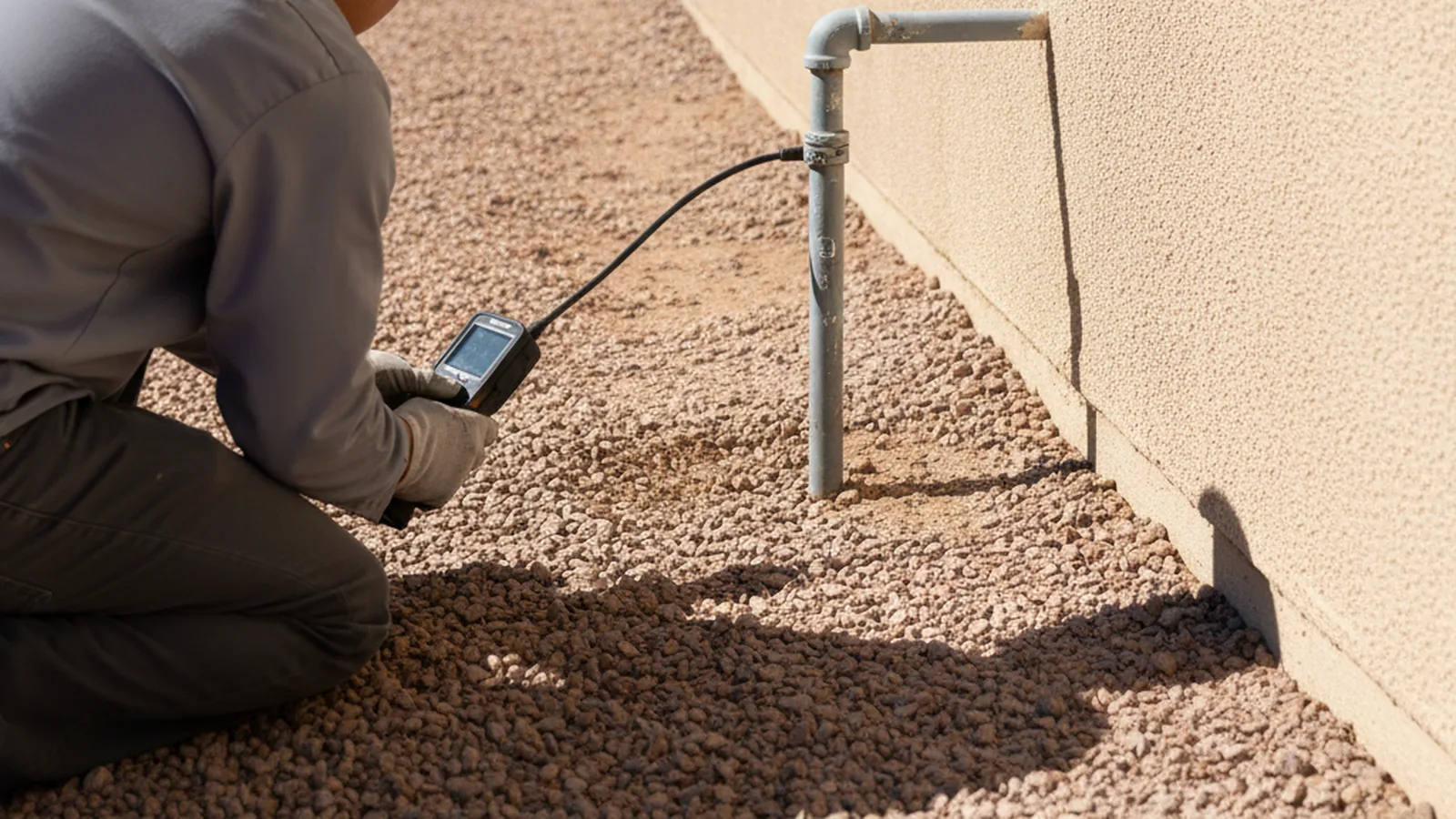
- Find the problem. We check the system with a combustible gas detector and a pressure test, then confirm the weak spots.
- Plan the route. Sometimes the new line follows the old one. Sometimes a new route through the garage or attic avoids digging up a patio. We explain the options and the trade-offs.
- Permit where needed. Replacing gas piping usually needs a permit and an inspection. We handle that paperwork with the local building department.
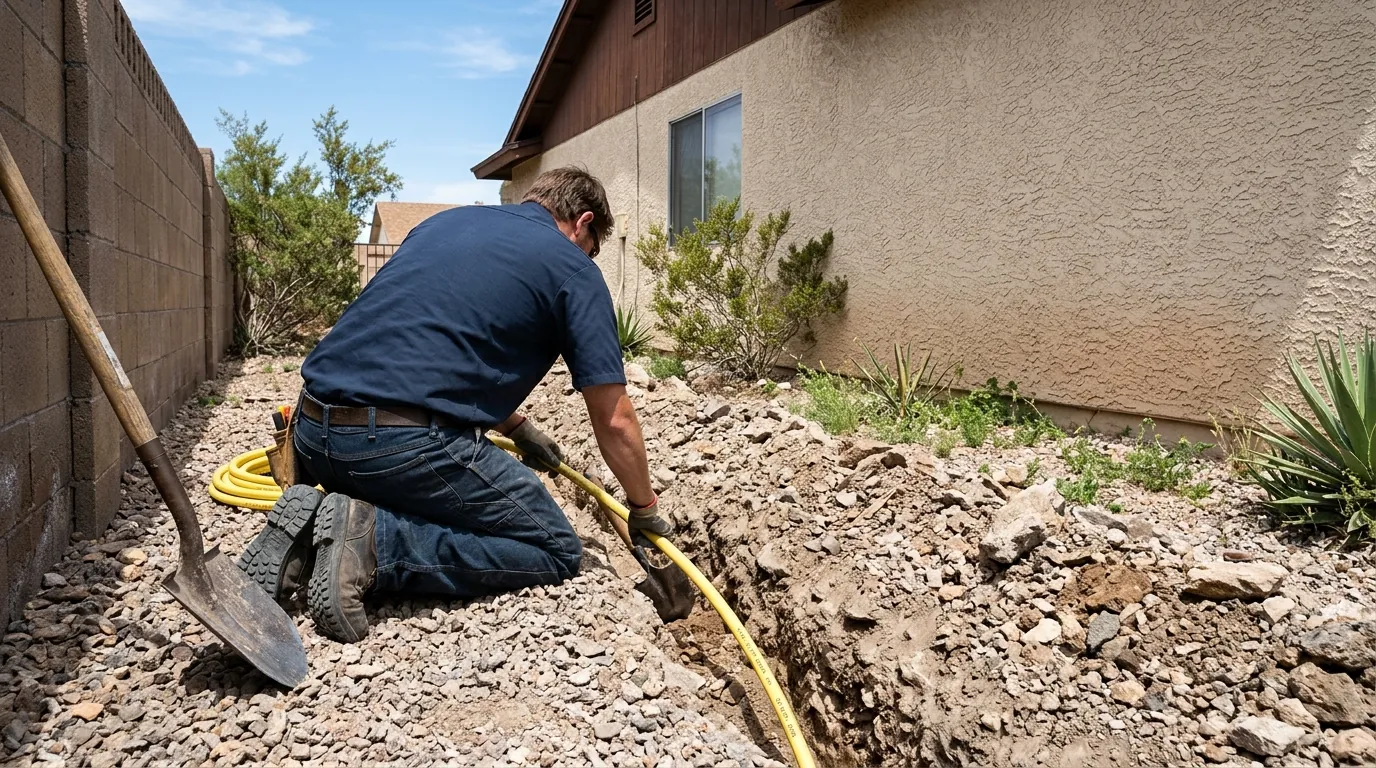
- Locate before digging. For buried lines, the area is marked through 811 before any trench is opened, and digging near existing gas pipe is done by hand.
- Replace and connect. The damaged section is removed and new pipe, fittings and connectors go in, sized for the appliance load.
- Pressure-test and relight. The new piping is tested before the gas goes back on. Then every appliance is relit and checked.
A connector swap takes well under an hour. Replacing a section of exposed pipe is usually done the same day. A long buried run, or a job that needs an inspection before the gas can be restored, takes longer, and we tell you that before work starts.
Questions to Ask Before You Agree to a Replacement
- Was the whole system pressure-tested, and where exactly is the problem?
- Can the damaged section be repaired on its own?
- Is the new pipe sized for every gas appliance, including ones I plan to add?
- Does the job need a permit and inspection, and who arranges it?
- Will my appliance connectors be replaced too?
- How long will the gas be off?
A good answer to each of these comes from a test, not a guess.
Frequently Asked Questions
Do I need to replace all of my gas lines if one section leaks? Usually not. Most leaks are at one fitting, valve or connector. A full replacement only makes sense when the pipe is corroded in several places or too small for your appliances.
How do I know if I have an old brass gas connector? Look without moving the appliance. Older brass connectors are a dull gold colour with no coating. If you can't see it, ask your plumber to check when the appliance is next serviced or replaced.
Who is responsible for a buried gas line in my yard? The gas company maintains its own line to the meter. Piping past the meter, including buried lines to a pool heater, BBQ or fire pit, is usually the homeowner's.
Can I replace a gas line myself? No. Gas piping work in Nevada should be done by a licensed contractor, and it is pressure-tested and often inspected before the gas is turned back on.
Get a Free Estimate for Gas Line Repair or Replacement
American Brothers Plumbing is a locally owned, family-operated plumbing company, licensed, bonded and insured (NV License #0082700). We repair and replace gas lines and appliance connectors across Las Vegas, Henderson, Summerlin and North Las Vegas, with same-day service available and free upfront estimates. Financing is available for larger jobs. See our gas line installation and repair service or call (702) 704-1776.
Need a Plumber in Las Vegas?
Our licensed team is ready to help, with same-day service and free estimates.
Call (702) 704-1776