Repiping Cost in Las Vegas: What Sets the Price and Timeline
By American Brothers Plumbing · 2026-10-30 · 7 min read
The cost of repiping a Las Vegas home depends mostly on how many fixtures the new lines have to reach, which pipe material you choose, and how much wall and ceiling has to be opened and patched to route it. A single-story home with an open attic is a very different job from a two-story home with finished ceilings, even at the same square footage.
So the useful question is not "what does a repipe cost" but "what will mine involve." Here is what goes into the price, how long the work takes, and how to tell whether two quotes are actually for the same job.
Why Valley Homes End Up Needing a Repipe
Most repipes start with a pattern: a second or third leak in a year, falling water pressure, or discolored water at the first draw. Our post on whether to repipe or repair covers how to read those signs and which pipe materials fail first.
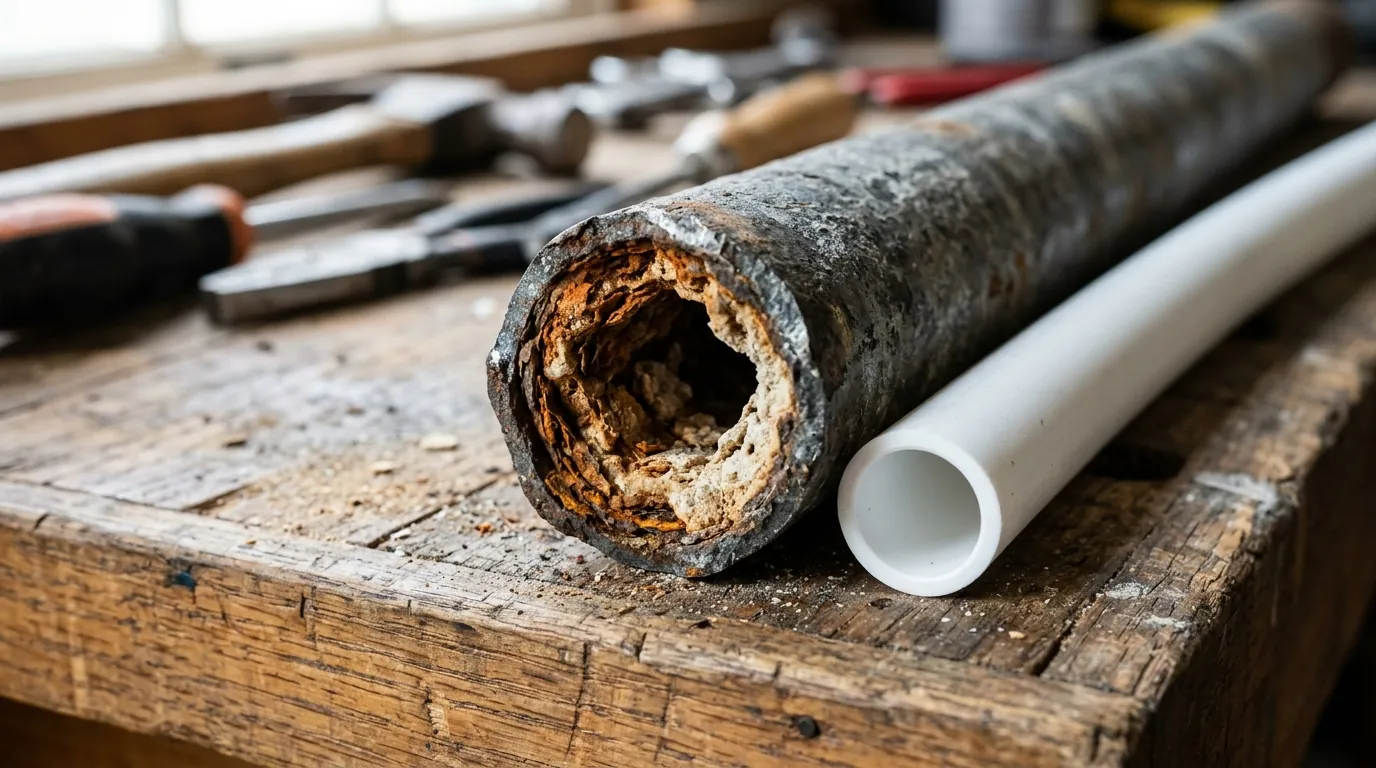
Our water plays a part. The Las Vegas Valley Water District puts local hardness at 291 parts per million, or 17 grains per gallon, which it classifies as "very hard," and notes that white particles in the water can be mineral deposits or scale that have formed on piping or plumbing fixtures. In older galvanized steel, scale and internal rust narrow the pipe over the years, which is why pressure drops slowly across the whole house rather than at one tap.
What Sets the Price
1. How many fixtures the new lines serve. Every sink, toilet, shower, tub, hose bib, ice maker and appliance connection is a run of pipe and a connection to make. A home with three bathrooms, a laundry room and a wet bar has far more of them than a two-bathroom home of the same size.
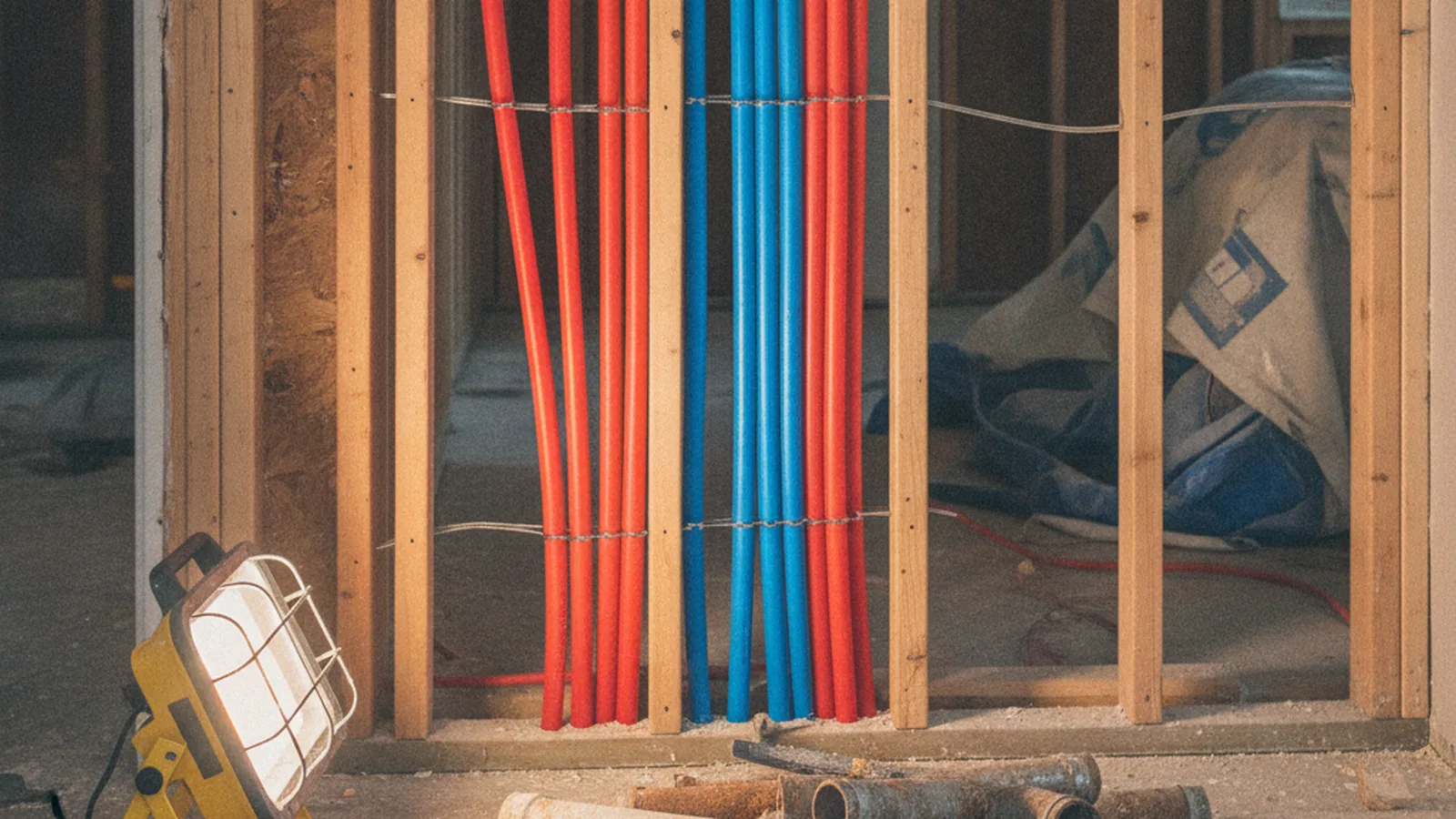
2. Pipe material. We usually repipe with PEX, a flexible plastic pipe that resists scale from our hard water and can be routed in long runs with fewer fittings. Copper is also an option. It costs more in material and labor, and some homeowners still prefer it. The quote should name the material and say why it was chosen.
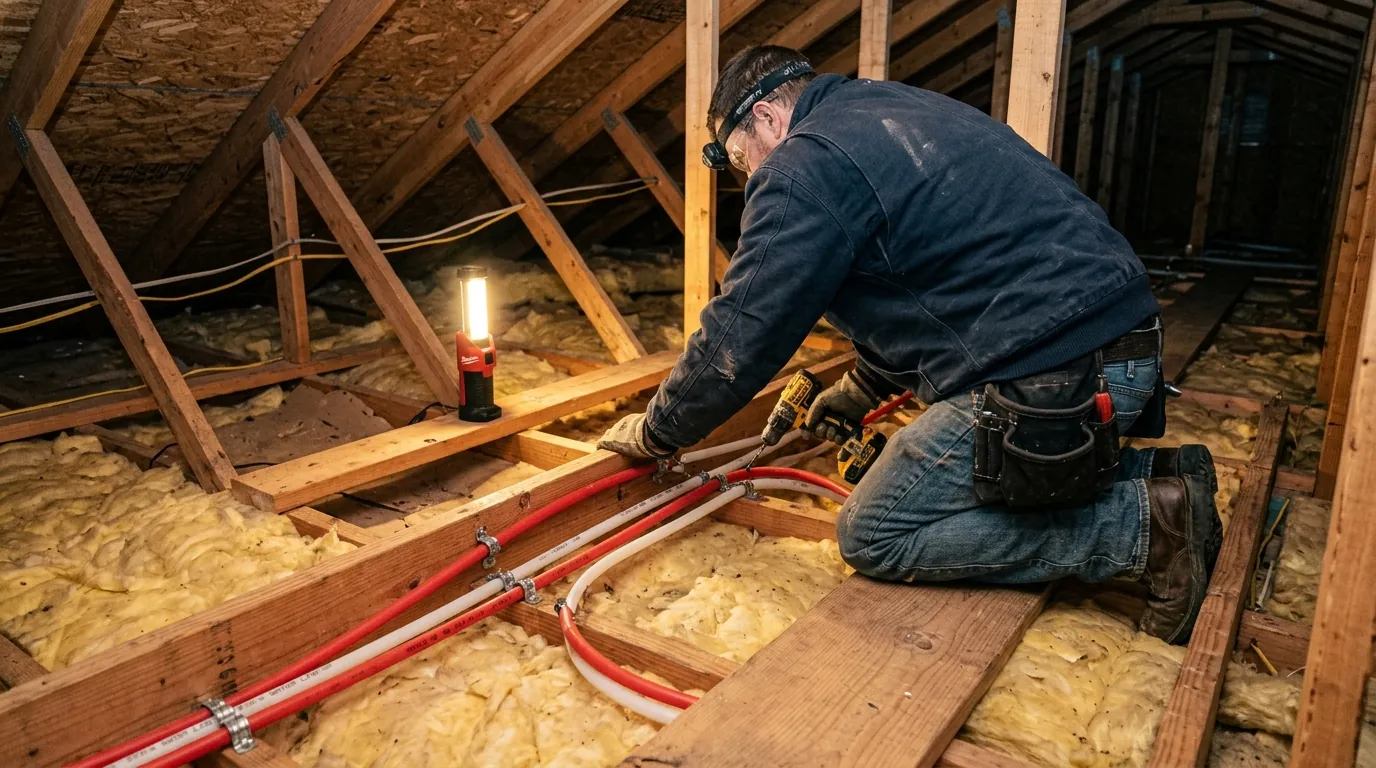
3. Routing and access. Many valley homes are built on a concrete slab, so the original supply lines may run under the floor. A repipe usually reroutes the new lines overhead through the attic and down inside the walls, which avoids breaking up the slab. An accessible attic over a single story makes this quicker. A second story, a low or crowded attic, or finished ceilings with no attic above add time.
4. Wall and ceiling openings and patching. New lines have to drop down to each fixture, so small openings are cut in drywall at each point. Ask whether the quote includes patching those openings, and whether it includes texture and paint or stops at patched drywall. This is one of the biggest differences between quotes.
5. Whole-house or partial repipe. If only one area of the house has failing pipe, such as a single branch or the lines to one bathroom, a partial repipe can make sense. Our inspection tells you whether that is a real saving or just a delay before the next leak.
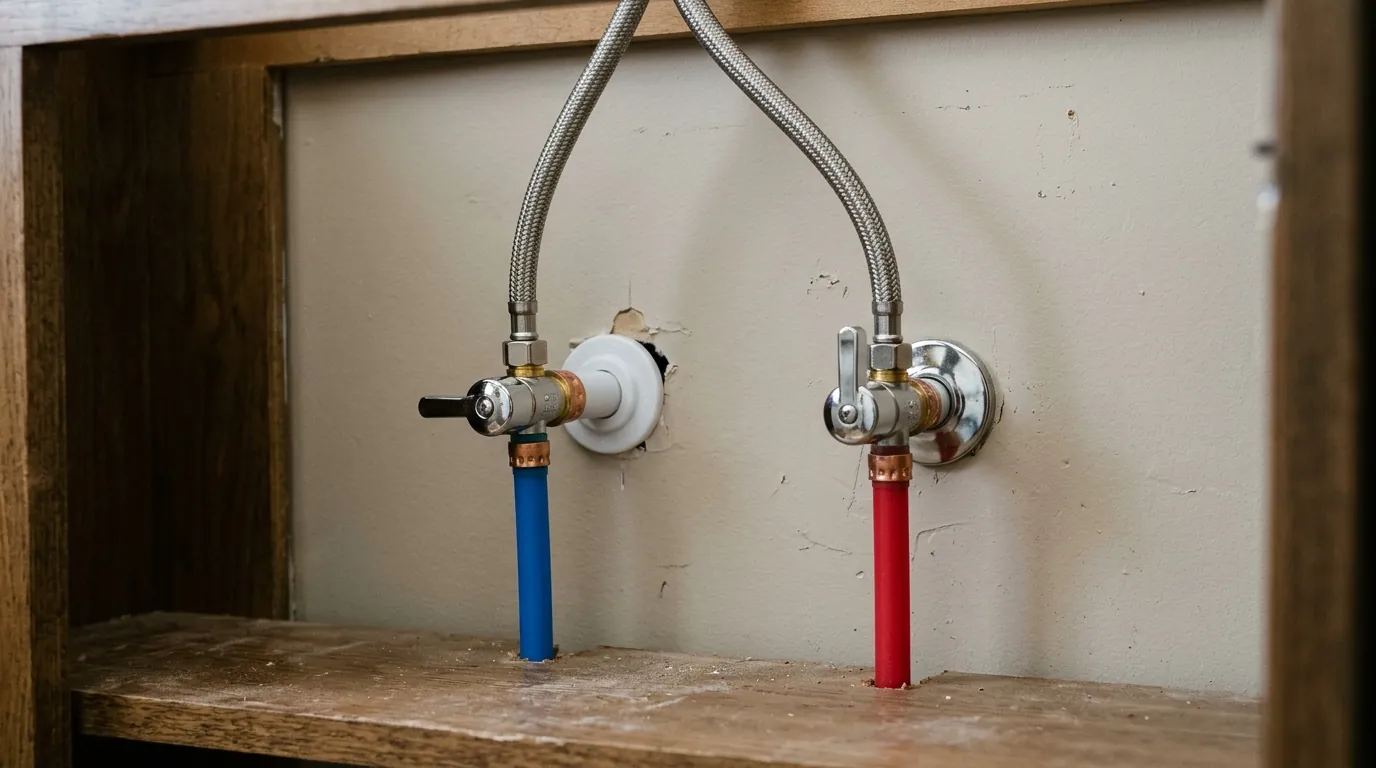
6. What else gets replaced. Shut-off valves at each fixture, the main shut-off, a pressure regulator or a water heater connection are often worth replacing during a repipe, since the walls are already open. Each should be listed on the quote so you can decide.
PEX or Copper for a Las Vegas Repipe
Both materials do the job. The differences are in cost, installation and how they handle local conditions:
| PEX | Copper | |
|---|---|---|
| Material and labor | Lower | Higher |
| Fittings needed | Fewer, because it bends around corners | More, because every turn needs a fitting |
| Hard water | Resists scale buildup | Can collect scale over time |
| Installation | Long continuous runs through the attic | Rigid lengths joined in place |
| Where it can go | Indoors, out of direct sunlight | Indoors and exposed locations |
For most valley homes we recommend PEX, because it costs less to install, needs fewer joints inside the walls and handles our hard water well. Copper still makes sense for homeowners who want it, or for short exposed sections where PEX should not sit in the sun. Whichever you choose, the price difference is set mostly by the labor of routing and joining the pipe, not just the material.
How Long a Repipe Takes
A whole-house repipe in a typical single-family home is usually a matter of days, not weeks. The work generally runs in this order:
- Assessment and quote. We inspect the existing pipe, the attic and the fixtures, and price the job with the material and routing set out.
- Protecting the house. Floors and furniture near each opening are covered before any drywall is cut.
- Running the new lines. The new pipe is run to each fixture first, then the house is switched over, which keeps the time with the water off short.
- Switching over and pressure testing. Fixtures are moved to the new lines and the whole system is pressure tested before the walls are closed.
- Patching. The access openings are repaired to the level the quote describes.
Many families stay in the home while the work is done. Ask your plumber when the water will be off and for how long, so you can plan around it.
Repiping vs Repeated Leak Repairs
A single leak repair always costs less than a repipe. The comparison that matters is the total over the next few years. When the pipe itself is failing, each repair fixes one spot while the rest of the system keeps aging, and every leak adds the risk of water damage inside a wall or under the floor.
If you have already had a slab leak, the choice gets sharper. Our guide to slab leak repair options compares a spot repair, a reroute and a full repipe, and explains when each one makes sense. If you are not sure where water is going, start with leak detection so the decision is based on facts.
How to Compare Repiping Quotes
Two quotes for "a repipe" can describe very different jobs. Before you compare prices, check that each one states:
- The pipe material and size for the main lines and the fixture branches
- Every fixture and appliance connection included
- Whether new shut-off valves are included at each fixture
- How the lines will be routed (attic, walls, under the slab)
- What patching is included, and whether texture and paint are part of it
- Whether permits and inspections are included
- How long the water will be off, and the expected number of working days
A quote that leaves these out is not cheaper, it is just less complete.
How to Get an Accurate Estimate
You will get a clearer estimate if you can tell us:
- The age of the home and whether it is one or two stories.
- The number of bathrooms, and any extra connections such as a wet bar, ice maker or outdoor kitchen.
- What you have noticed: leaks, low pressure, discolored water, and how often.
- What the existing pipe looks like where it is visible, such as under sinks or at the water heater.
- Whether there is attic access over most of the house.
Book a Repiping Assessment
American Brothers Plumbing is a locally owned, family-operated plumbing company, licensed, bonded and insured (NV License #0082700), repiping homes across Las Vegas, Henderson, Summerlin and North Las Vegas. Estimates are free and upfront, and financing is available. See our whole-house repiping service or call (702) 704-1776 to book an assessment.
Need a Plumber in Las Vegas?
Our licensed team is ready to help, with same-day service and free estimates.
Call (702) 704-1776