Tankless Water Heater Flush in Las Vegas: How Often and What It Involves
By American Brothers Plumbing · 2026-11-09 · 5 min read
In Las Vegas, we recommend flushing and descaling a tankless water heater about once a year, and sooner if the household uses a lot of hot water or the unit is already showing signs of scale. Our very hard water leaves mineral deposits inside the heat exchanger, and a yearly flush clears them before they cut hot water flow or shorten the unit's life.
The exact interval for your model is in the manufacturer's manual, and it is worth checking, because warranty terms often refer to it. Here is why the valley's water makes the flush matter, the signs one is overdue, and what a professional visit involves.
Why Tankless Units Scale Up Faster Here
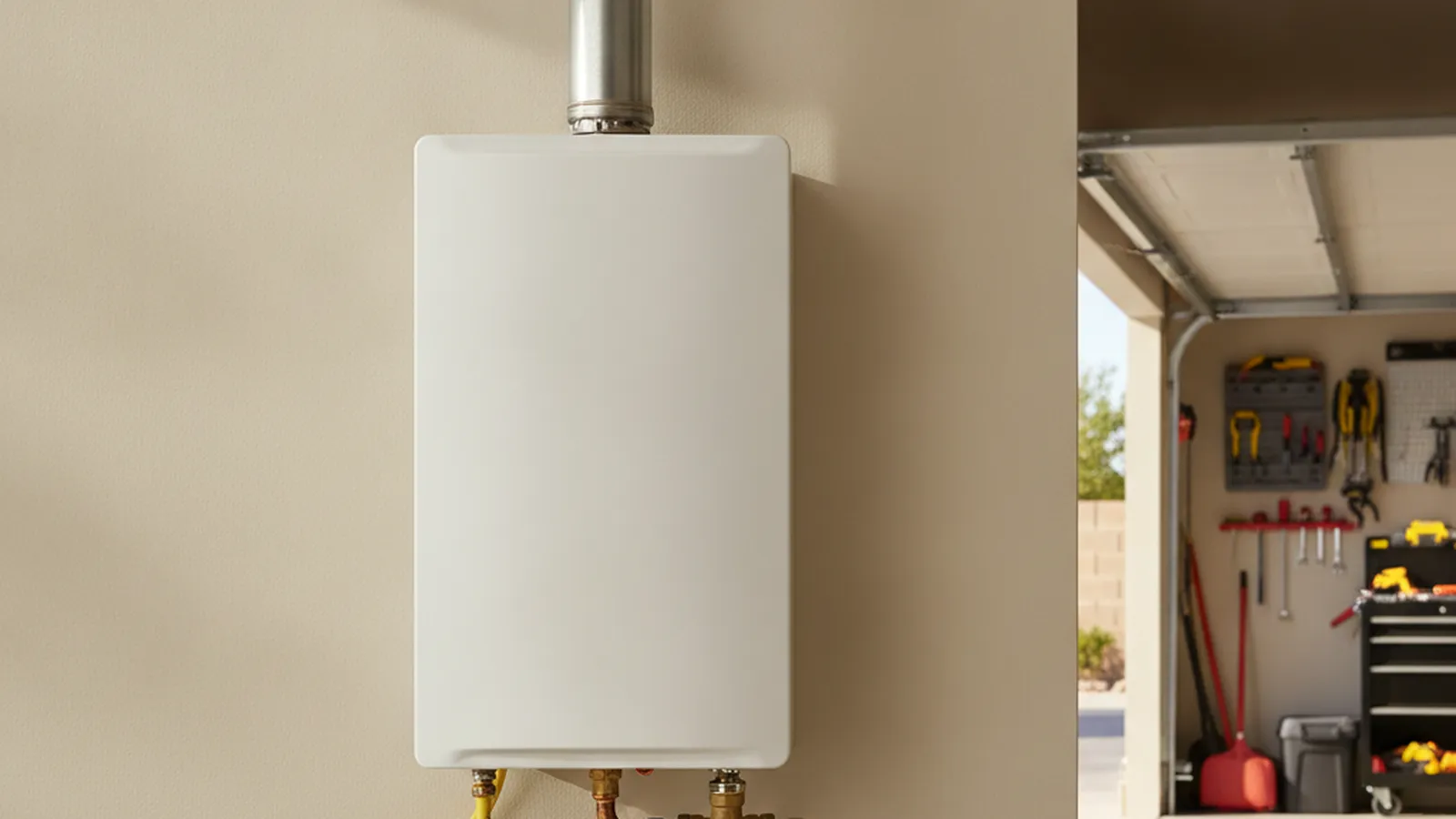
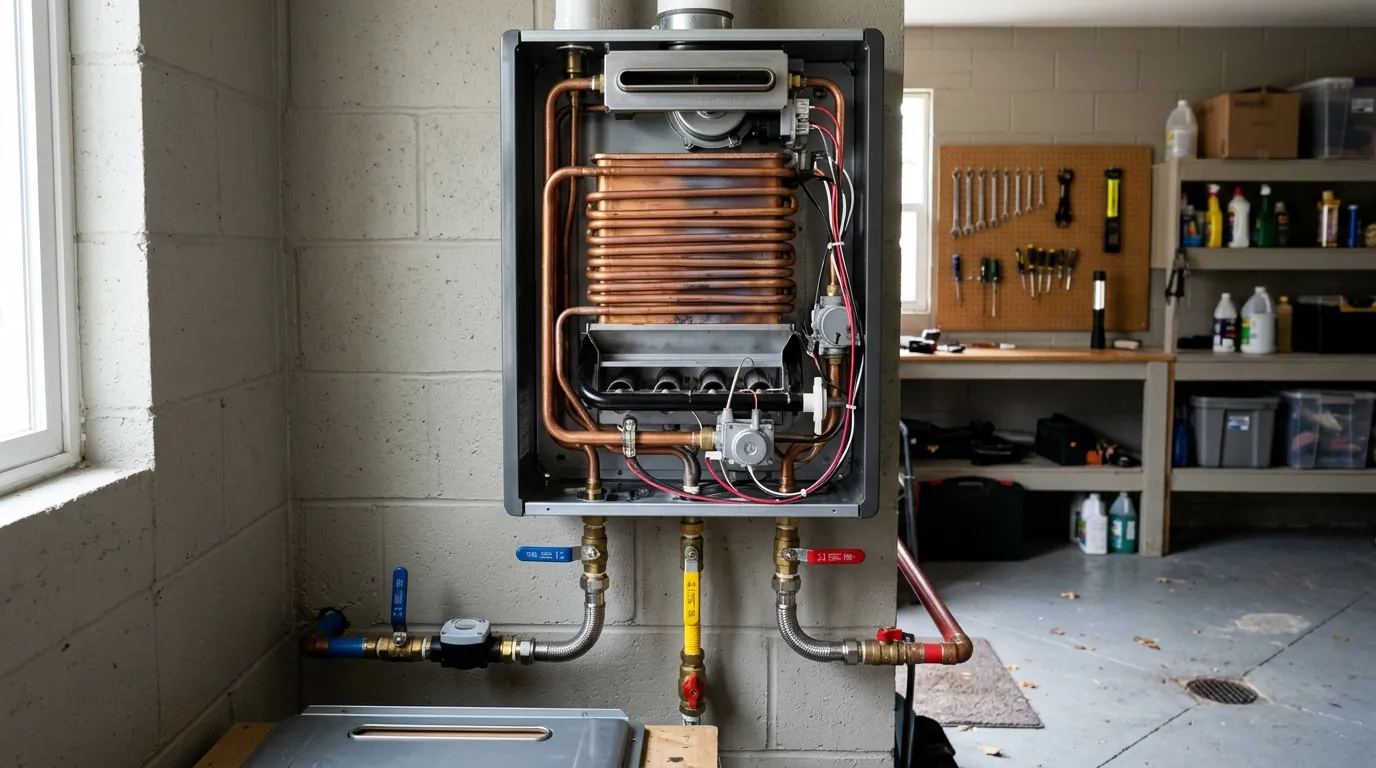
A tankless heater warms water as it passes through a narrow heat exchanger. When hard water is heated, the calcium and magnesium in it come out of solution and stick to hot surfaces as scale. In a tank heater, much of it settles as sediment in the bottom of the tank. In a tankless unit, it coats the inside of the heat exchanger's small passages.
Our water is among the hardest you will find. The Las Vegas Valley Water District puts it at 291 parts per million, or 17 grains per gallon, which it classifies as "very hard." It notes that white particles in the water can be mineral deposits or scale that have formed on piping or plumbing fixtures. Inside a tankless heater, that scale acts as insulation: the burner has to work harder to heat the same water, and the passages get narrower every month.
Signs Your Tankless Heater Is Overdue for a Flush
- Hot water that swings between hot and lukewarm during a shower, especially when a second tap is opened.
- Lower hot water flow than the unit used to give, even though cold water pressure is fine.
- An error code on the display that points to overheating, flow or scale. Check the manual: several brands have a specific code for scale buildup.
- New noises such as rumbling, ticking or a kettle-like sound from the unit.
- Longer waits for hot water, or the unit shutting off during a long shower.
- No record of a flush in the last year, or ever.
None of these is proof on its own. A failing flow sensor, a partly closed valve or a clogged inlet filter can cause the same symptoms, which is why the first step of a service visit is to check the unit, not just flush it.
What a Professional Flush Involves
A descaling visit for a gas tankless heater usually goes like this:
- Check the unit first. We read any error codes, check the gas supply, venting and condensate line, and look for leaks at the connections.
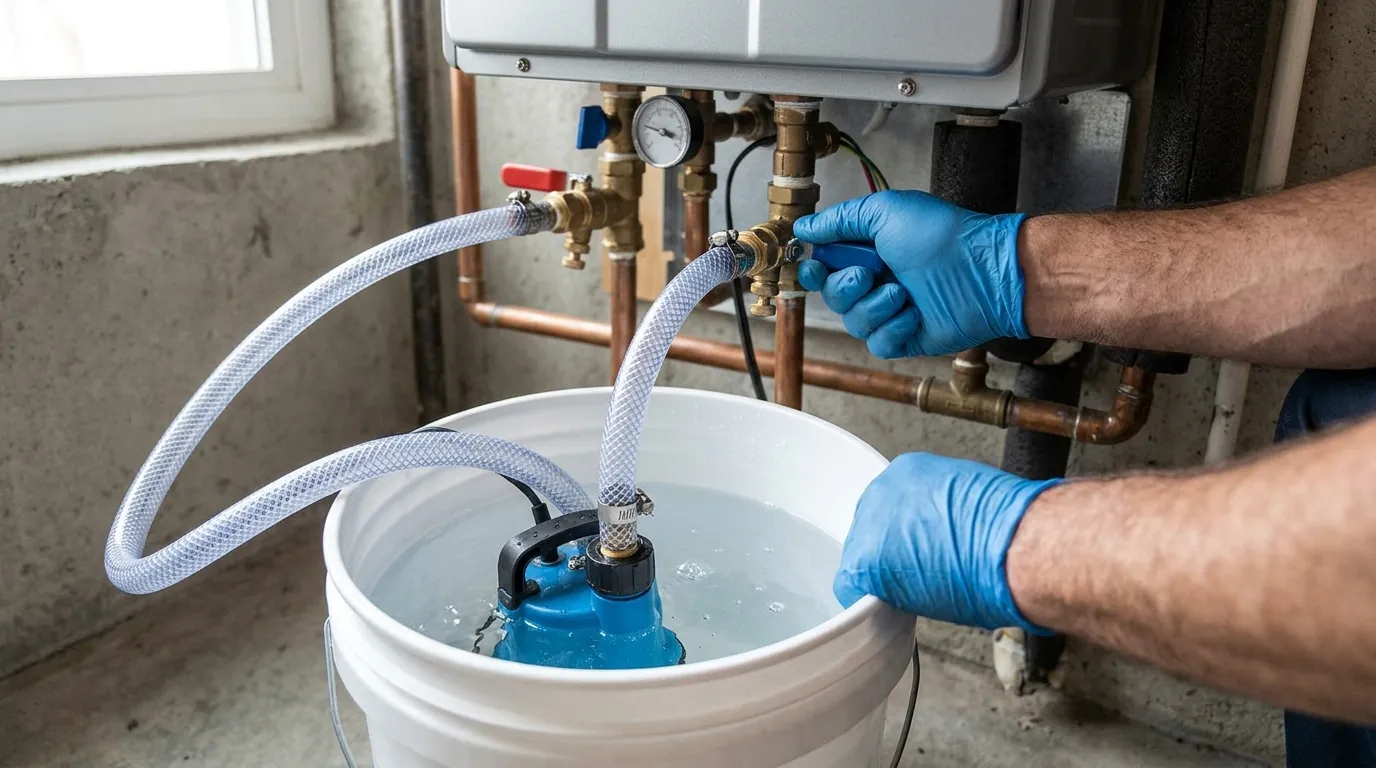
- Shut off and isolate. Power and gas are turned off, and the unit is isolated with its service valves, the pair of valves with small purge ports on the hot and cold lines.
- Circulate the descaling solution. A small pump connected to the service valves circulates a descaling solution through the heat exchanger and back to a bucket, for the time the manufacturer specifies. This dissolves the scale without opening the unit.
- Rinse. The solution is drained and clean water is flushed through until it runs clear.
- Clean the inlet filter. The small screen on the cold water inlet catches scale flakes and debris and is cleaned and refitted.
- Restore and test. Water, gas and power come back on, and we run the hot water to check temperature, flow and the display for errors.
If your unit was installed without service valves, the flush is harder and slower. Adding a set during the visit makes every future flush quicker, so it is worth asking about.
Can You Flush It Yourself?
Many manufacturer manuals describe descaling as owner maintenance, and handy homeowners do it with a pump kit. If you try it, follow your model's manual exactly, use a solution it approves, and make sure the gas and power are off before you open any valve.
Where a professional visit pays off is in the checks around the flush: venting and gas connections, the condensate line on high-efficiency units, the inlet filter and error history, and the honest answer to whether a unit with heavy scale and repeated errors is worth keeping. If yours is approaching the end of its life, our guide to tankless water heater installation in Las Vegas covers what a replacement involves.
Should You Add a Water Softener?
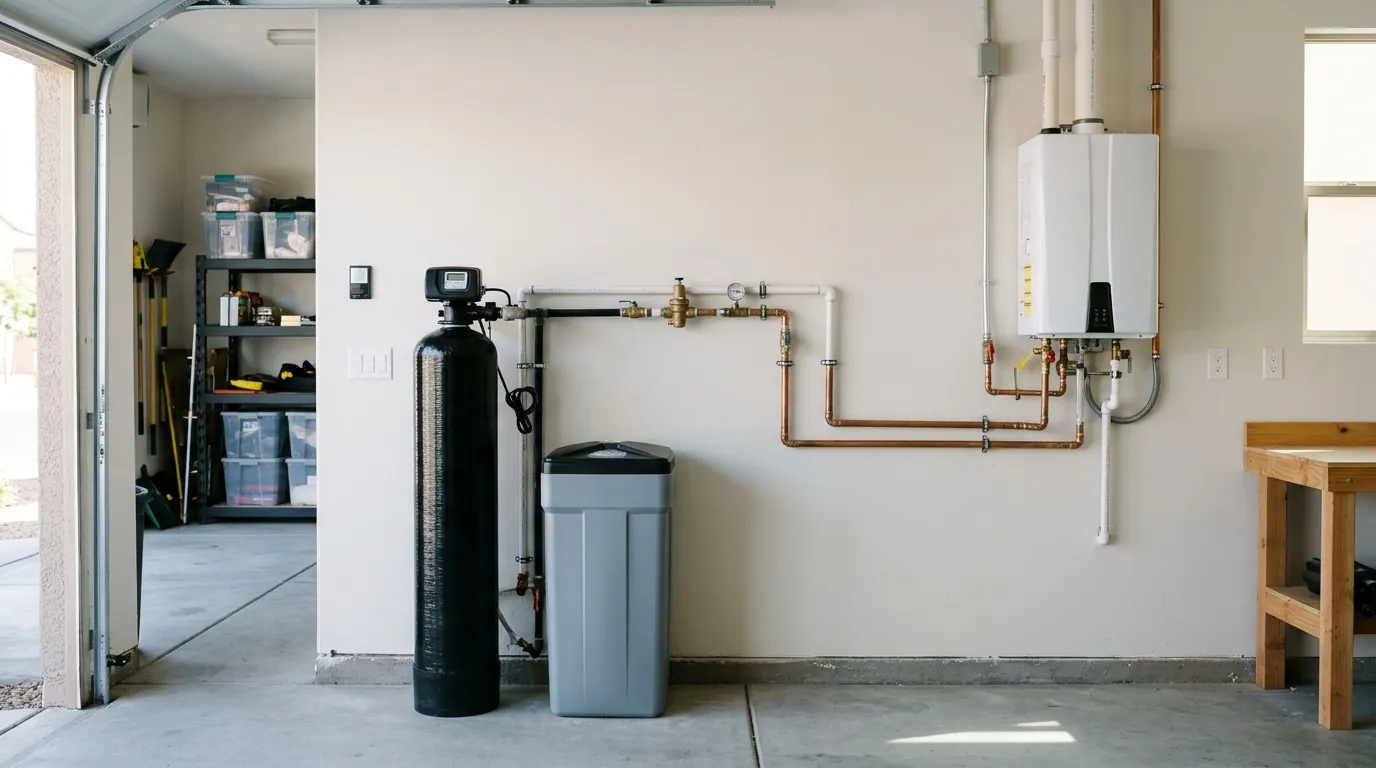
A softener removes the hardness minerals before they reach the heater, which slows scale buildup in the tankless unit and across the home's fixtures. It does not replace maintenance entirely, and it is a larger purchase than a yearly flush, so it makes the most sense for homes that also see spotting, scale on faucets and short appliance life.
Our post on water softeners vs filtration explains which system treats hardness and which treats taste, and our water treatment service installs both. If you are still deciding whether tankless suits your home at all, read the benefits of a tankless water heater.
What About a Tank Water Heater?
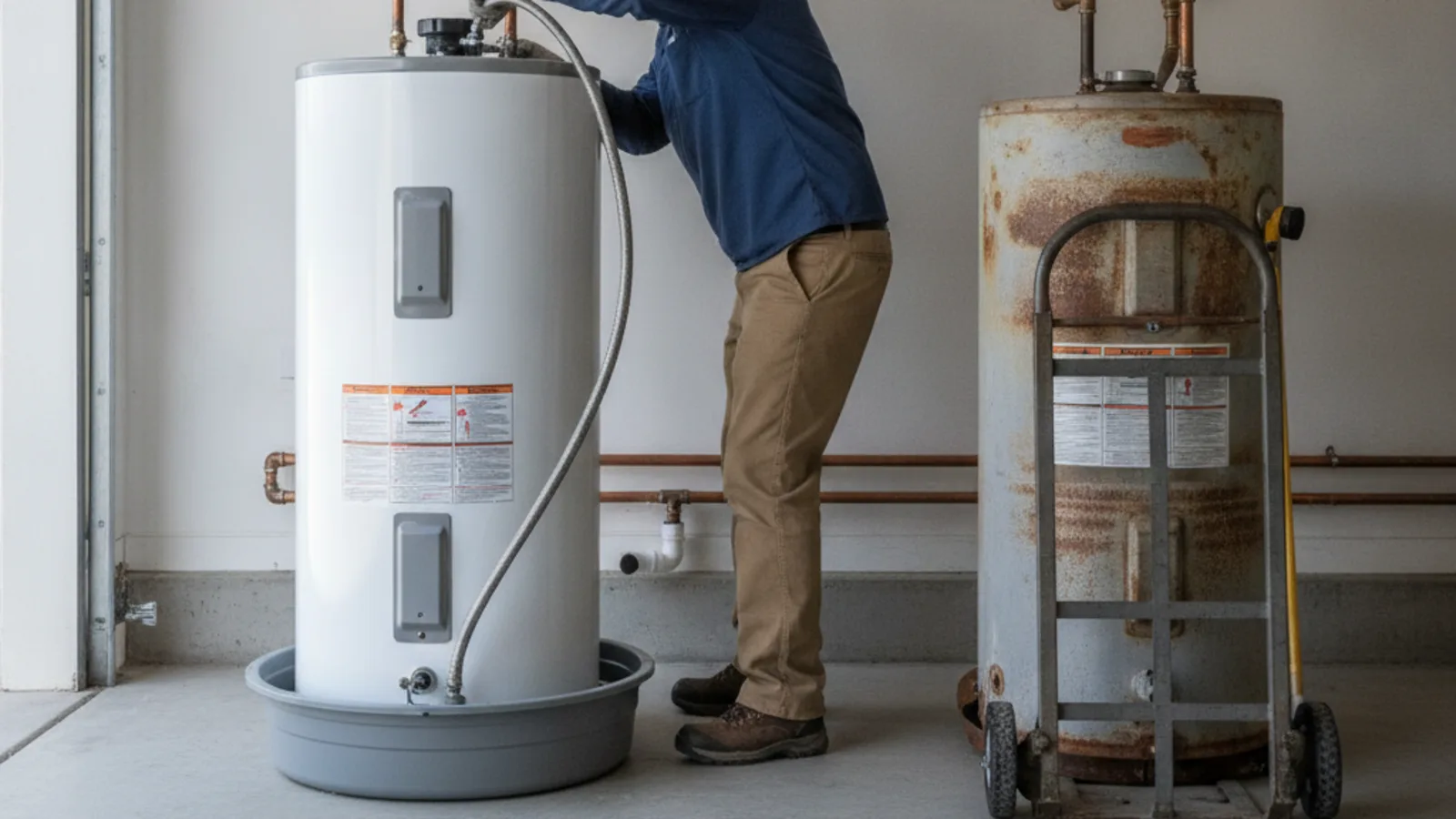
Tank heaters need maintenance too. Sediment collects in the bottom of the tank, and the anode rod that protects the steel wears away faster in hard water. We recommend an annual flush and anode rod check for tank units as part of our water heater repair and installation service.
Book a Tankless Flush
American Brothers Plumbing is a locally owned, family-operated plumbing company, licensed, bonded and insured (NV License #0082700). We flush, descale and repair tankless water heaters across Las Vegas, Henderson, Summerlin and North Las Vegas, with same-day service available and a free, upfront estimate before any work begins. See our tankless water heater service or call (702) 704-1776 to book a flush.
Need a Plumber in Las Vegas?
Our licensed team is ready to help, with same-day service and free estimates.
Call (702) 704-1776