High Water Pressure in Las Vegas Homes
By American Brothers Plumbing · 2026-09-05 · 6 min read
High water pressure is water pressure above 80 psi, and it is one of the most common hidden causes of plumbing failure in Las Vegas homes. If your pipes bang when a tap shuts, your toilets run for no reason, or you have replaced the same supply line twice, the problem is often not the fixture at all: it is the pressure being forced through it.
Most homeowners treat strong pressure as a sign of a well-built house. But every component in your plumbing system, from the braided line behind your washing machine to the cartridge in your kitchen faucet, is built and tested to hold a specific pressure. Push past it and those parts do not fail immediately. They fail early, quietly, and usually while nobody is home.
What Counts as Too Much Pressure
The number is not a matter of opinion. Uniform Plumbing Code Section 608.2 states that "where static water pressure in the water supply piping is exceeding 80 psi (552 kPa), an approved-type pressure regulator preceded by an adequate strainer shall be installed and the static pressure reduced to 80 psi (552 kPa) or less."
That matters locally, because Clark County adopts the Uniform Plumbing Code. The 80 psi ceiling is not a national suggestion that other places follow. It is the standard your own home was permitted under, and the Southern Nevada amendments to the code leave that section untouched.
In practice most plumbers aim lower than the maximum. Between 50 and 70 psi gives you a shower that feels strong while leaving real headroom below the limit. Anything over 80 psi on a gauge is a system wearing out faster than it needs to.
Why Las Vegas Homes Run High
Municipal water systems do not deliver one uniform pressure across a city. The valley climbs from the floor up into the foothills, and the utility has to push water hard enough to reach the highest homes in a given pressure zone. Houses sitting at the bottom of that zone receive whatever pressure was necessary to serve the top of it, which is frequently far more than they need.
This is why the problem clusters in and below the elevated communities. Homes around Summerlin, Centennial Hills and Anthem sit on terrain that forces the system to work at higher pressures, and neighboring properties absorb the consequences.
What High Pressure Actually Destroys
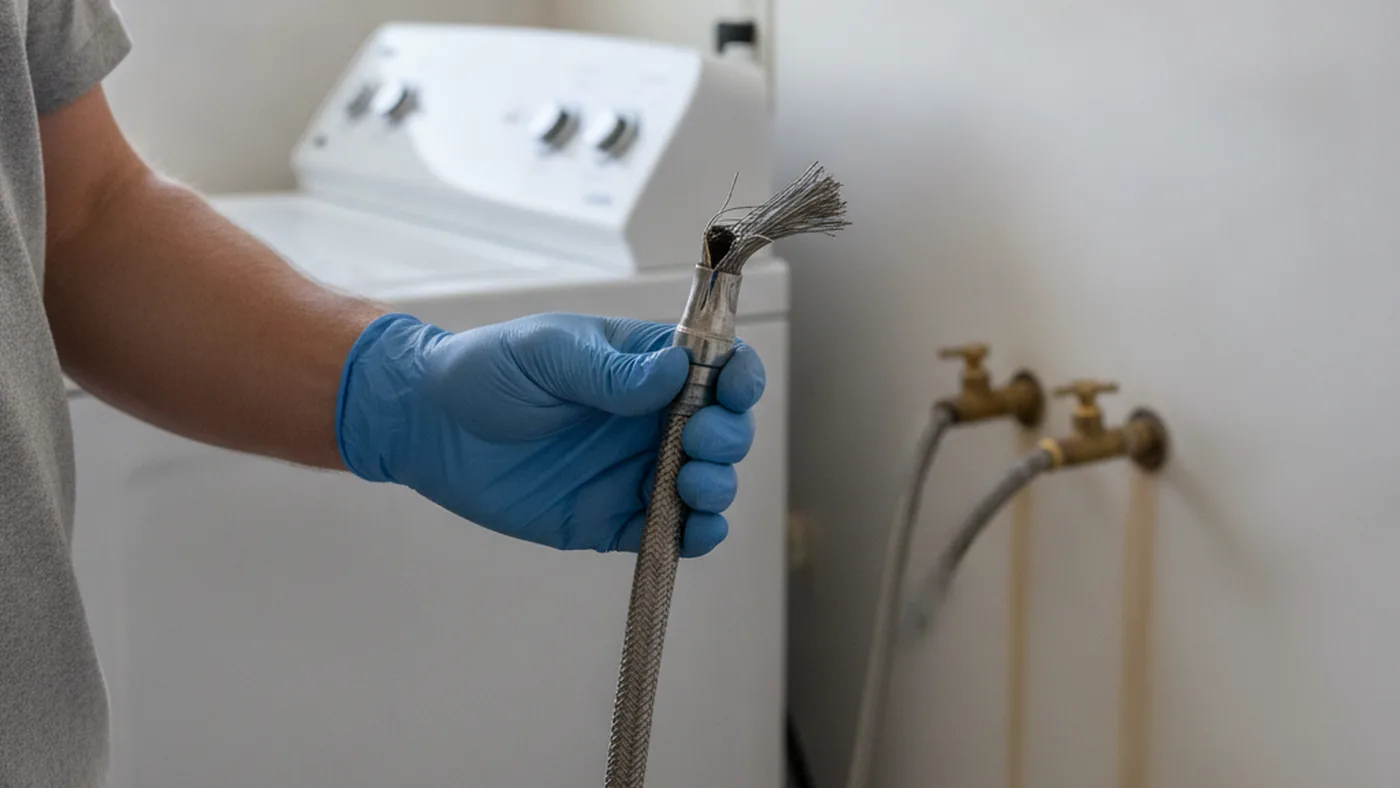
The damage is rarely dramatic at first, and it follows a predictable order.
Supply lines go first. The braided flex lines feeding toilets and washing machines are the weakest link in the system. Under sustained pressure they harden, then split. A supply line that lets go behind a washing machine while the family is out is one of the most expensive water losses a home can suffer.
Water heaters age fast. If your temperature and pressure relief valve drips, most homeowners assume the valve is faulty. Often it is doing exactly what it was built to do: venting a system that is over pressure. Sustained high pressure stresses the tank and shortens its life well before the warranty suggests it should end. Test pressure before approving any water heater repair and installation work, because replacing the tank without fixing the pressure just restarts the same clock.
Fixtures wear out. Faucet cartridges, fill valves and shower diverters begin to leak and stick. When a homeowner tells us they have replaced the same faucet twice in four years, pressure is the first thing we check.
Buried and in-wall lines take the strain. This is where high pressure gets expensive. Every joint in the house is held under constant load, and the valley's hard water is already narrowing and roughening those lines from the inside. Scale reduces the pipe's effective diameter, pressure rises against the restriction, and a line that might have seeped for years instead splits. That combination is a common path to a slab leak repair call, and in older homes it is one of the clearest arguments for whole-home repiping rather than another patch.
How to Test Your Own Pressure
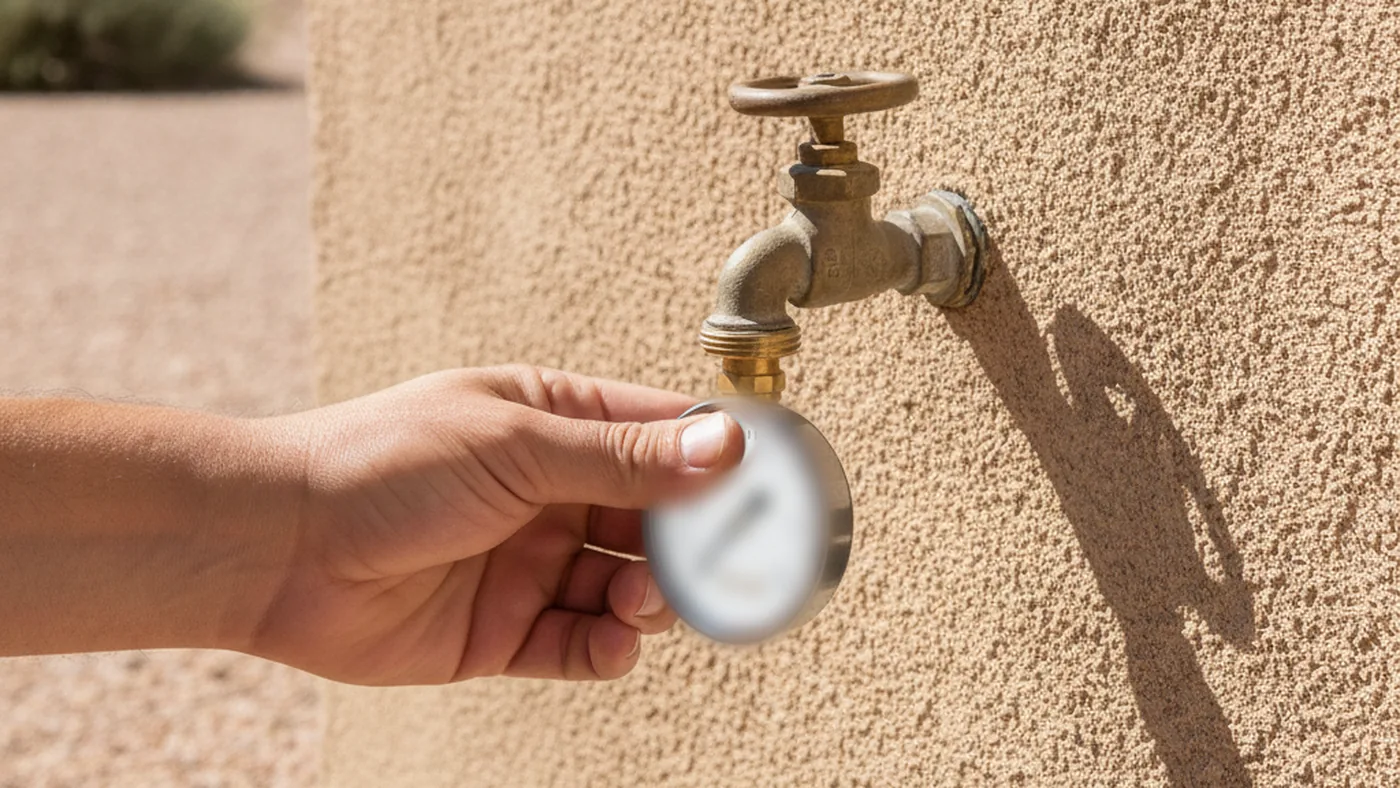
This is a ten-minute check, and the gauge costs about ten dollars at any hardware store.
- Buy a water pressure gauge with a standard hose thread fitting.
- Turn off every fixture and appliance in the house, including any irrigation timer and the ice maker.
- Screw the gauge onto an outside hose bib, ideally the one closest to where the water line enters the house.
- Open that bib fully and read the dial. This is your static pressure.
- Leave the gauge attached overnight if you can. Pressure often climbs after midnight when demand across the neighborhood drops, and a house that reads 75 psi in the afternoon can sit at 95 psi at three in the morning.
Under 80 psi, you are within code. Between 80 and 100, you have a problem worth solving now. Above 100 psi, you are running your plumbing well outside what its components were built for.
The Pressure-Regulating Valve, and Why Yours May Have Failed
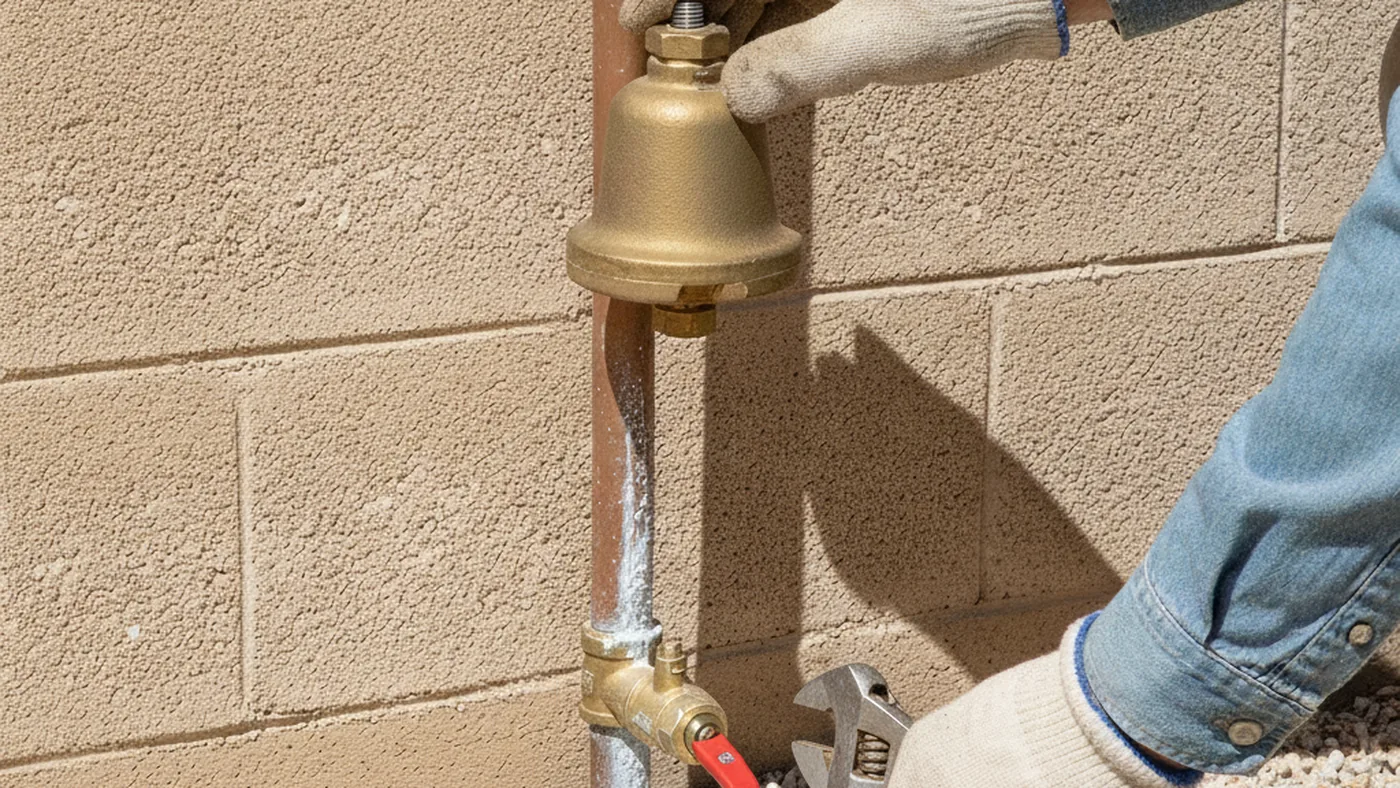
The fix is a pressure-regulating valve, also called a PRV. It is a bell-shaped brass fitting installed where the main water line enters the property, usually near the shut-off, and its job is to take whatever the street delivers and hand your house a controlled, lower pressure.
The point homeowners rarely hear is that a PRV is a wear part, not permanent infrastructure. It contains a diaphragm and spring, and in hard water those components scale up and lose their ability to regulate. Service life typically runs ten to fifteen years, and shorter where water is aggressive.
A failing PRV announces itself in a few ways:
- Pressure that reads high even though a regulator is definitely installed
- Pressure that swings noticeably between morning and night
- Water hammer, the banging sound in the walls when a tap or appliance valve shuts
- Sudden pressure loss instead of high pressure, since a failed diaphragm can stick either way
If your house has no PRV at all and tests above 80 psi, installing one brings the property back in line with the code it was permitted under, and it is a modest job next to the failures it prevents.
When to Get It Checked
If you have replaced a supply line, watched a relief valve drip, or heard your pipes hammer in the last year, test your static pressure before spending money on the symptom. A gauge reading takes minutes and tells you whether you are fixing a fixture or treating the cause.
If the number comes back over 80 psi, or the reading swings overnight, that is the point to bring in a licensed plumber. American Brothers Plumbing has served Las Vegas, Henderson and the surrounding Clark County communities for over 20 years, and we will test your pressure, tell you whether your regulator is doing its job, and give you a free written estimate before any work starts. Call (702) 704-1776.
Source: Uniform Plumbing Code Section 608.2, Excessive Water Pressure. Read the code section
Need a Plumber in Las Vegas?
Our licensed team is ready to help, with same-day service and free estimates.
Call (702) 704-1776