
Las Vegas Mobile Home Plumbing Guide
By American Brothers Plumbing · 2026-09-18 · 5 min read
Mobile and manufactured home plumbing differs from a site-built house in three ways. The supply and drain lines run exposed under the floor instead of through a slab, the home is built to a federal code with its own plumbing rules, and repairs need fittings that match the pipe already there. Get those three right and most problems in a Las Vegas manufactured home are straightforward to fix.
Get them wrong and a simple under-floor leak turns into a soaked bottom board, a soft bathroom floor and a second repair a few months later.
Pipes Under the Floor
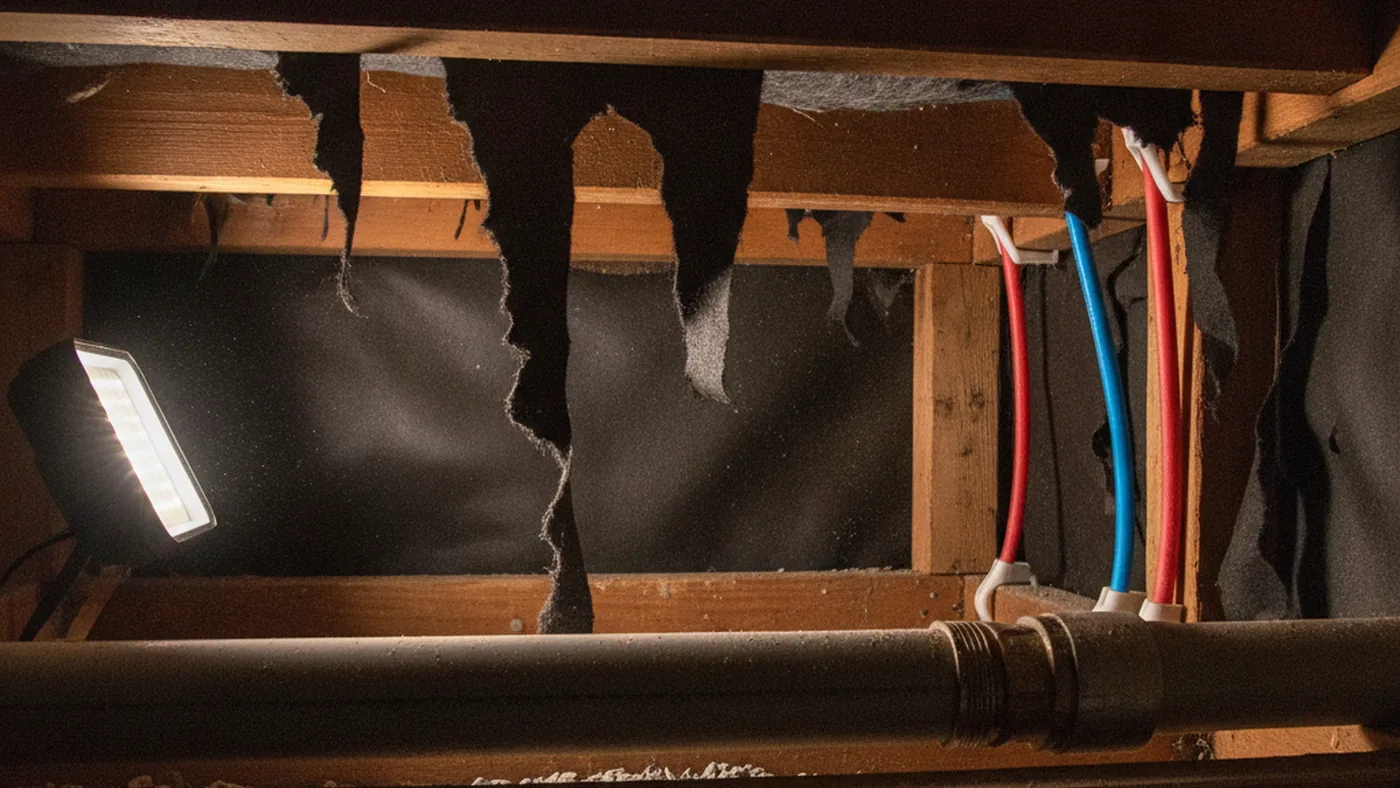
In most valley homes built on a slab, water lines are buried in concrete or hidden in walls. In a manufactured home the water supply and drain lines run under the floor, in the space enclosed by the skirting and usually above a fabric or plastic bottom board that keeps out pests and holds insulation.
That layout has an upside and a downside.
The upside is access. A plumber can reach most of the system by removing a skirting panel and working from the crawlspace. Nobody has to jackhammer a slab or open a finished wall.
The downside is exposure. Pipes under the home are more exposed to temperature swings, pests and physical damage. A leak also tends to hide. Water collects in the bottom board instead of reaching the ground, so the first sign is often something else:
- A floor that feels soft near a bathroom, kitchen or laundry
- Dripping sounds from under the home
- A bottom board that sags or bulges
- Pressure at the taps that drops for no clear reason
If you notice any of these, shut off the water at the main valve and get the underside inspected before the floor structure absorbs more water.
Built to a Different Code
Site-built homes in Clark County follow the locally adopted plumbing code. Manufactured homes are built to the federal Manufactured Home Construction and Safety Standards, 24 CFR Part 3280, and the plumbing section has requirements that directly affect how the home should be connected and cared for.
Two of those requirements matter more in Las Vegas than almost anywhere else: water pressure and freeze protection.
Water Pressure and the 80 psi Design Limit
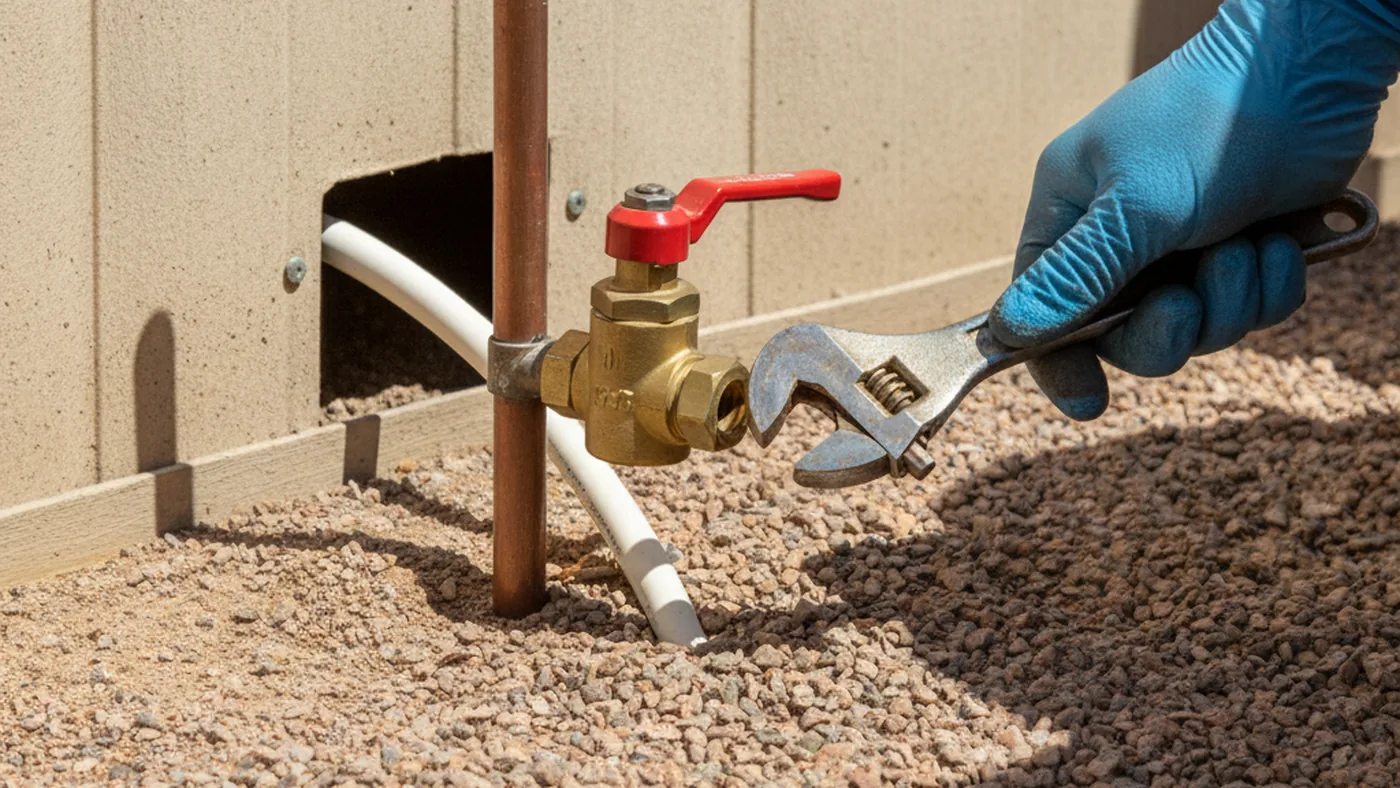
The federal standard requires the manufacturer's installation instructions to state that "the manufactured home has been designed for an inlet water pressure of 80 psi," along with "a statement that when the manufactured home is to be installed in areas where the water pressure exceeds 80 psi, a pressure reducing valve should be installed."
In other words, the plumbing inside your home was designed around 80 psi coming in. When pressure runs higher, the extra load lands on the supply connections, fixture valves and water heater.
Many homes in the valley see high incoming pressure, a problem we cover in detail in our guide to high water pressure in Las Vegas homes. For a manufactured home the fix is the same one the standard names: a working pressure reducing valve at the inlet. If your home has one, have it checked. These valves wear out, and a failed one lets full street pressure straight into the home.
Freeze Protection and Heat Tape
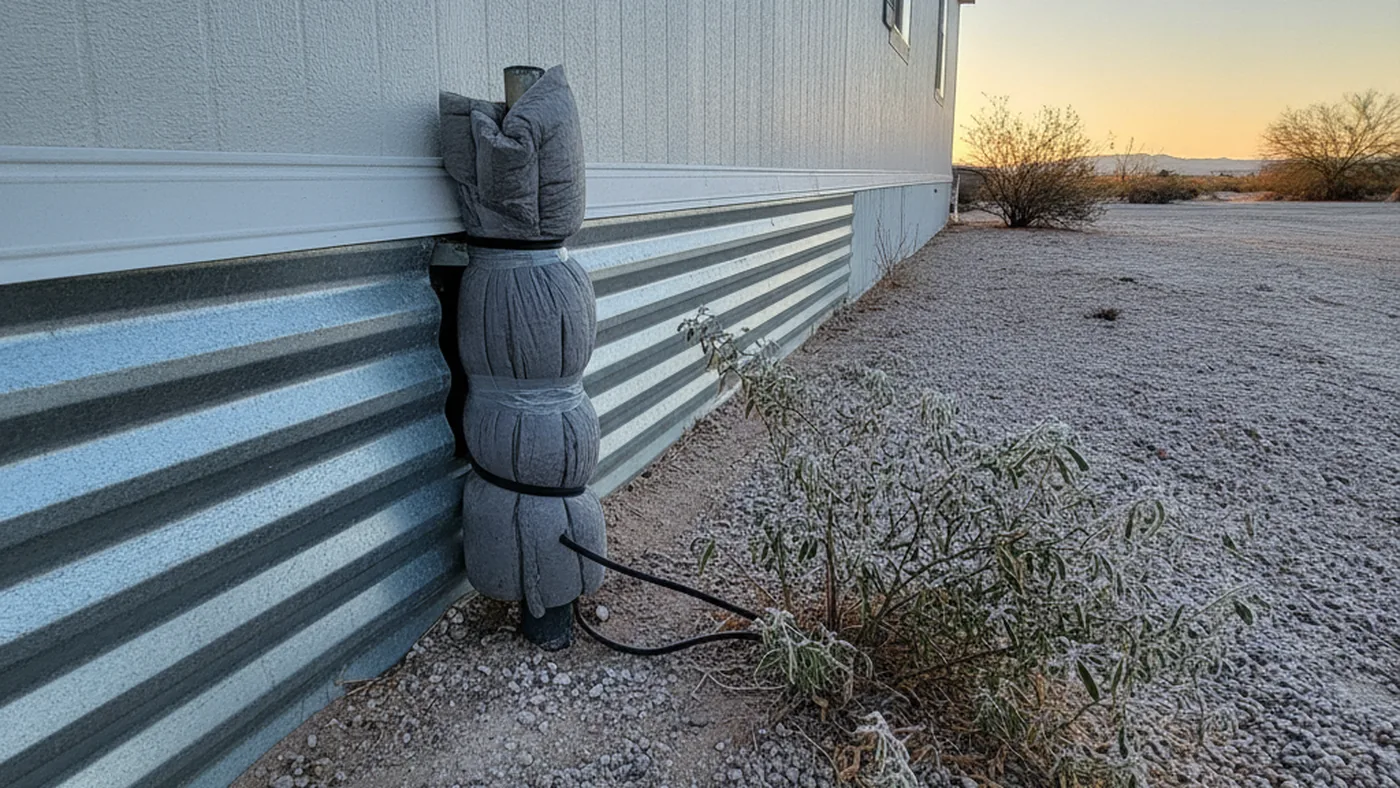
Freezing is not what most people associate with Las Vegas, but winter nights here do dip below freezing from time to time. The most exposed pipe on a manufactured home is usually the water inlet rising out of the ground into the underside of the home.
The federal standard says that "all piping and fixtures subject to freezing temperatures shall be insulated or protected to prevent freezing, under normal occupancy." It also requires the installation instructions to state that "if the heat tape or pipe heating cable is used, it must be listed or certified for its intended purpose."
In practice, that means:
- Keep the inlet insulated. Replace torn or missing pipe insulation, and keep skirting panels closed so cold air doesn't blow across the pipes.
- Use listed heat tape only. If your inlet has a heating cable, make sure it is a listed product, that it is plugged in, and that the outlet works before the first cold night.
- Plan for an empty home. The standard is written around normal occupancy. A home left empty through the winter with the heat off is more exposed, so shut off and drain the water, or have the protection checked, before you leave.
Repair or Repipe?
Before any repair, a plumber should identify what the existing supply pipe is made of. Manufactured homes have been plumbed with several different materials over the years, and the fittings used for a repair have to be compatible with the pipe already in place. Mismatched fittings are a common cause of the same leak coming back.
A spot repair makes sense when the rest of the line is sound and the leak is from one joint, one fitting or one damaged section.
A repipe makes sense when leaks keep appearing in different places, when the existing pipe is an older material that is hard to source compatible fittings for, or when a single freeze has split the line in several spots. Because the lines are reachable from underneath, a manufactured home repipe is usually far less disruptive than one in a slab-built house.
Getting It Fixed
If you have a soft floor, a drip under the home, low pressure, or a pipe that froze last winter, have the underside inspected before the damage spreads into the floor structure.
American Brothers Plumbing has served Las Vegas, Henderson, North Las Vegas and the surrounding Clark County communities for over 20 years. We work under manufactured homes regularly, carry fittings for the pipe we find there, and start every job with a free estimate. See our mobile home plumbing service, or call (702) 704-1776.
Source: Manufactured Home Construction and Safety Standards, 24 CFR § 3280.609 and § 3280.603, via Cornell Law School Legal Information Institute. § 3280.609 · § 3280.603
Need a Plumber in Las Vegas?
Our licensed team is ready to help, with same-day service and free estimates.
Call (702) 704-1776