Slab Leak Repair Cost in Las Vegas: What Sets the Price
By American Brothers Plumbing · 2026-11-27 · 8 min read
Slab leak repair cost in Las Vegas depends mostly on four things: how hard the leak is to pinpoint, whether the pipe is repaired through the concrete or rerouted around it, what flooring sits on top, and how much water damage is already there. Two homes with the same leaking pipe can end up with very different bills because of those four things, so a fair quote always starts with finding the leak exactly.
This guide explains what drives the price, how the repair options compare, what insurance usually does and doesn't pay for, and how to compare quotes.
Why Slab Leaks Cost More to Fix Than Other Leaks
Most homes in the Las Vegas valley sit on a concrete slab, with the water lines running underneath it. When one of those pipes leaks, the plumbing repair itself is often small. The cost comes from finding a leak you can't see and reaching a pipe under several inches of concrete and your finished floor.
Waiting doesn't make it cheaper. The U.S. Environmental Protection Agency's WaterSense program says the average household's leaks "can account for more than 9,300 gallons of water wasted every year", and a pressurized line under a slab runs whether anyone is home or not. The longer it runs, the more flooring, drywall and soil under the slab it reaches.
1. Finding the Leak
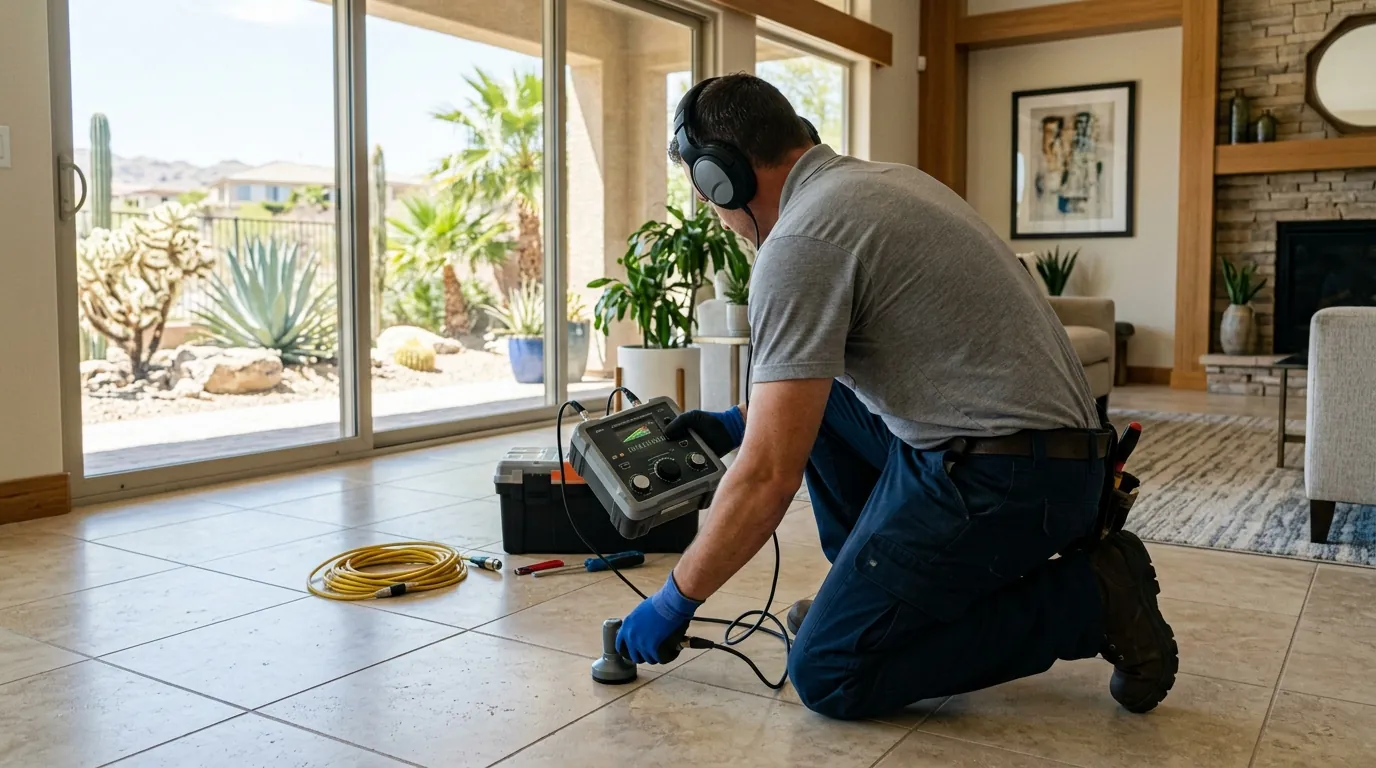
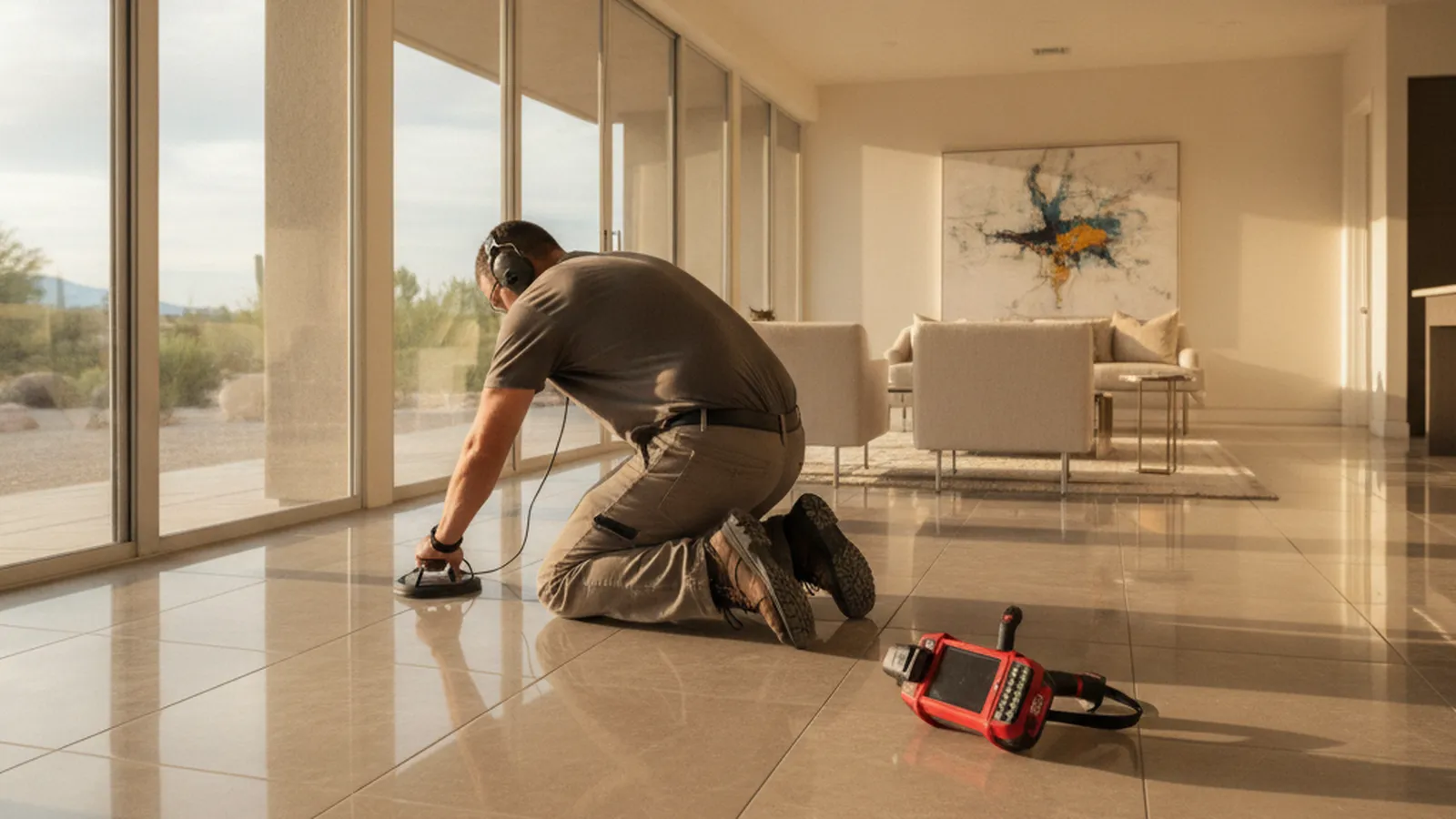
Every honest slab leak quote starts here. Before anyone breaks concrete, the leak needs to be located to within a small area. That usually means:
- Confirming the leak with the water meter and isolating the hot or cold side
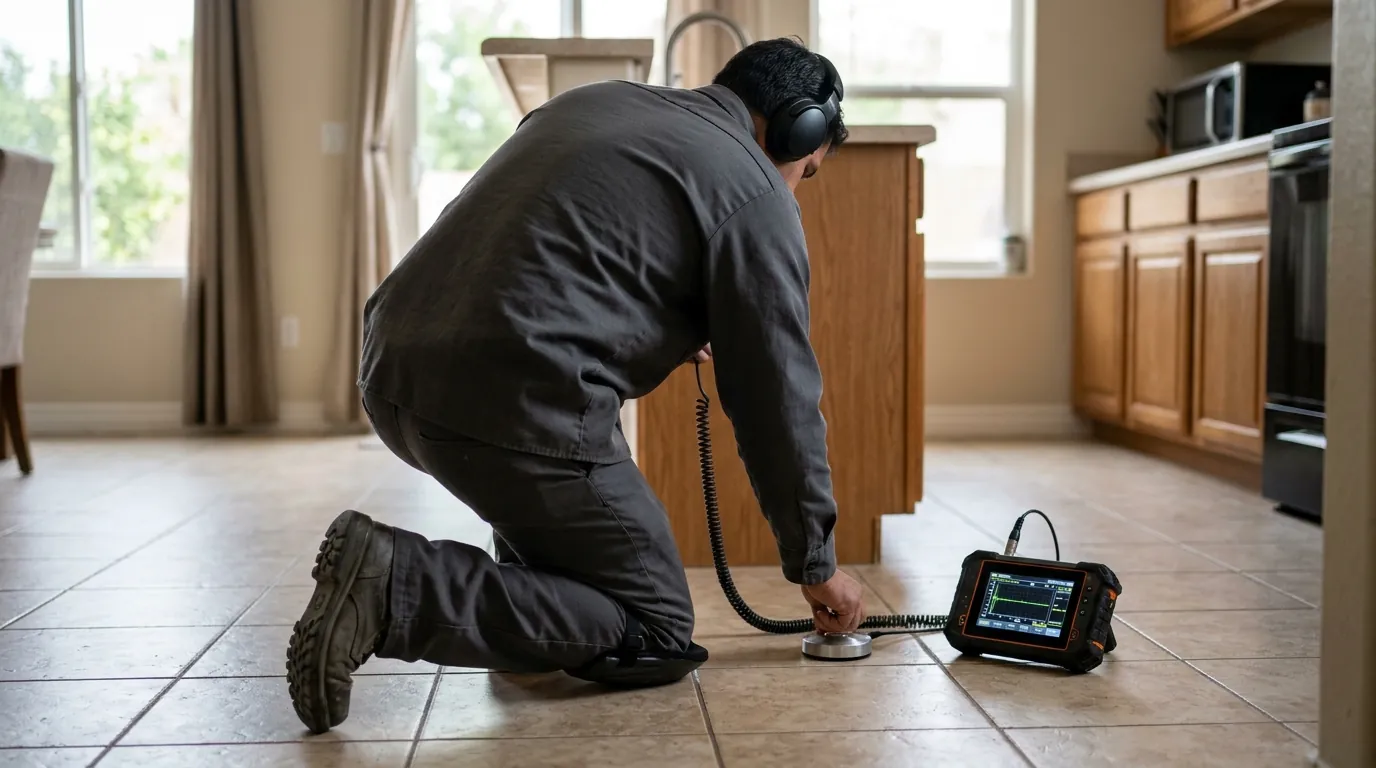
- Listening for the leak with acoustic equipment
- Using thermal imaging to find warm spots on a hot water leak
- Pressure-testing lines to narrow it down
A leak on a straight run under an open room is quicker to find than one under a kitchen island or near the water heater, where several lines cross. That time is part of the cost. Our leak detection cost guide covers this step in more detail.
2. Spot Repair or Reroute
Once the leak is found, there are usually two ways to fix it, and they price differently.
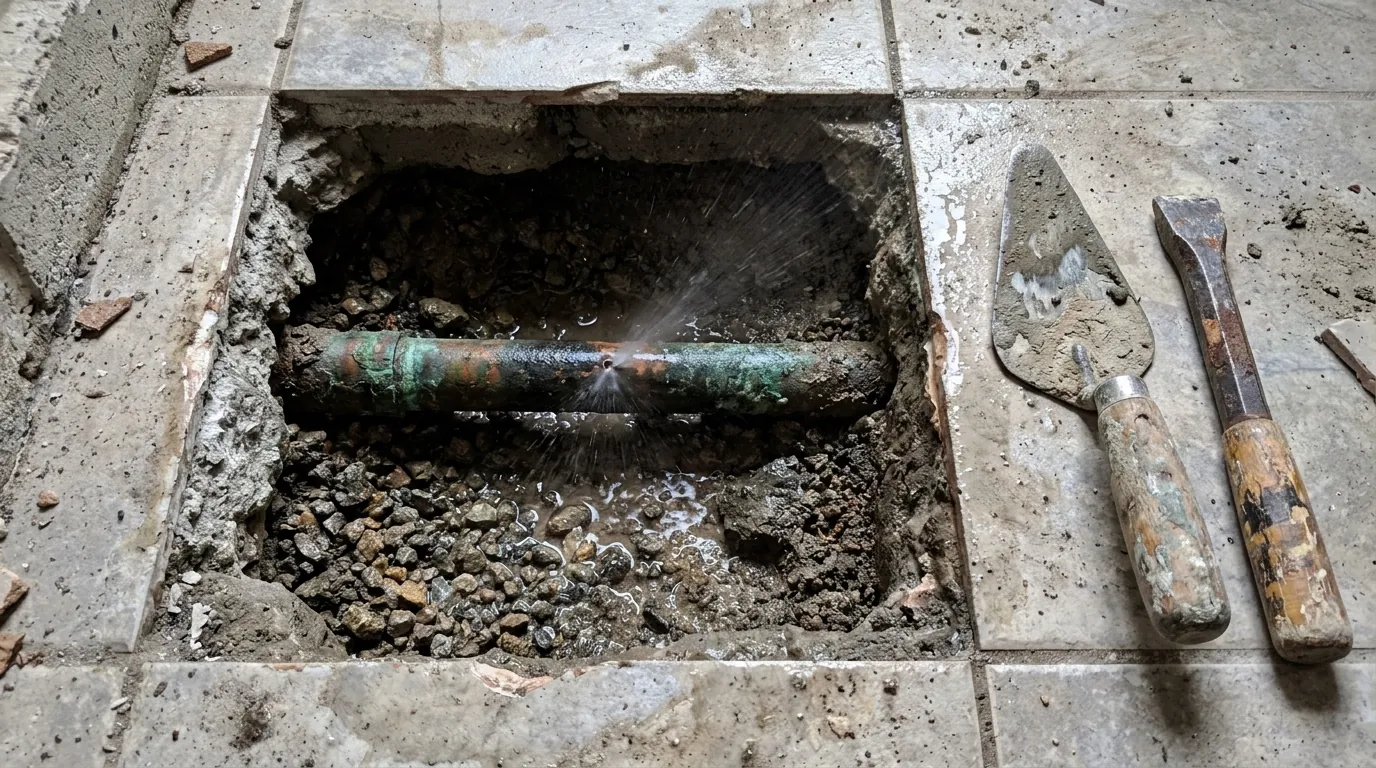
Spot repair through the slab. The floor and concrete are opened over the leak, the damaged section of pipe is replaced, and the slab and floor are patched. It makes sense when the leak is in an easy place to reach, the rest of the pipe is in good shape, and the floor on top is easy to patch.
Rerouting the line. The leaking line is cut off under the slab and a new PEX line is run through the walls or attic instead. There is no concrete to break, and that line can't leak under the slab again. It makes sense when the leak sits under expensive flooring or cabinets, or when the pipe has already leaked in more than one place.
When the home has had several slab leaks, a whole-house repipe can become the better value. Our post on slab leak repair options compares all three, and the repiping cost guide covers a full repipe.
3. Floors, Cabinets and What Sits on Top
The floor is often the biggest variable in a slab leak bill, even though it has nothing to do with the plumbing.
- Carpet can be pulled back and relaid, so access is fairly simple.
- Tile has to be cut out, and matching tile can be hard to find years later.
- Hardwood or luxury vinyl may need a larger section replaced to blend in.
- Cabinets, islands and showers over the leak make a direct repair much more involved.
This is the main reason a reroute often costs less overall than a spot repair, even though it involves more new pipe. Ask any company you are comparing whether floor restoration is in their price or something you arrange separately.
4. Water Damage Already Done
A slab leak caught early may need only the plumbing repair. One that has been running for weeks can bring:
- Wet drywall and baseboards that need drying or replacing
- Swollen cabinet bases or lifted flooring
- Mold where moisture has sat behind walls
- Soil movement under the slab in more serious cases
Drying and repairing that damage is usually separate work from the plumbing. Watch for the early signs (a water bill that jumps, the sound of running water with every tap off, warm spots on the floor) and act on them. Our guide to the signs of a slab leak lists them all.
Why Valley Homes See Repeat Slab Leaks
Las Vegas water is very hard, and many older valley homes have copper lines under the slab. Over years, a mix of hard water, pipes rubbing against concrete or gravel, and soil conditions can wear pinholes in that copper. When one section has worn through, others nearby are often thin too.
That matters for cost. A spot repair on a home that has already had two slab leaks is often money spent on the first of several repairs. A reroute or a repipe costs more on the day but can be the lower total cost over the next few years. A good plumber will tell you when that trade-off applies to your home and when it doesn't.
What About Insurance?
Policies vary, so read yours and call your insurer before work starts. Many homeowners policies pay toward the cost of getting to the leak, such as breaking and restoring the floor, and toward the water damage it caused, but not the plumbing repair itself. Some exclude damage from a leak that has been running for a long time.
Keep the leak detection report and photos of the opened area. They show where the leak was and what it damaged, which is what an adjuster will ask for.
How to Compare Slab Leak Repair Quotes
Two quotes for "slab leak repair" can describe very different jobs. To compare them fairly, ask each company:
- Has the leak been located exactly, and how? A quote without a located leak is a guess.
- Is this a spot repair, a reroute or a repipe, and why that one?
- What does the price include? Detection, concrete work, the pipe repair, permits, and floor and drywall restoration are often priced separately.
- Who patches the slab and the floor? If it isn't the plumber, find out who it is and what that costs.
- What happens if they find more damage once it's open? You want to know how changes will be priced before work starts.
- Are they licensed in Nevada? Ask for the license number. Ours is NV #0082700.
Keeping the Cost Down Before the Repair
A few things you can do yourself keep the bill and the damage smaller while you wait for the appointment:
- Check the water meter. Turn off every tap and appliance and watch the meter for a few minutes. If it still moves, note it for the plumber.
- Know where your main shutoff is. If water is coming up through the floor, shutting it off stops the damage spreading. Our guide to shutting off your water shows where to find it.
- Turn off the water heater supply if the leak is on the hot side. A hot water slab leak keeps the heater running and adds to your gas or power bill.
- Move rugs and furniture off damp or warm areas, and take photos before anything is moved, for the insurance claim.
- Don't open the floor yourself. Breaking tile or concrete in the wrong place adds restoration cost without finding the leak.
Frequently Asked Questions
Is it cheaper to reroute a slab leak or repair it through the floor? It depends on where the leak is and what is on top of it. A leak under carpet in an open room can be cheaper to repair directly. A leak under tile, hardwood or cabinets is often cheaper to reroute once the floor work is counted.
Does homeowners insurance cover slab leak repair? Many policies pay toward accessing the leak and the water damage, but not the pipe repair itself. Check your own policy and talk to your insurer before work starts.
How long does slab leak repair take? A reroute or direct repair is usually done in one to three days. A whole-house repipe takes longer, and drying out any water damage can add time.
Can I wait to fix a slab leak? It isn't worth it. The leak keeps running under pressure, raises your water bill and spreads damage under the floor and into walls. The repair rarely gets cheaper.
Get a Free Estimate for Slab Leak Repair in Las Vegas
American Brothers Plumbing is a locally owned, family-operated plumbing company, licensed, bonded and insured (NV License #0082700). We locate the leak first, explain whether a direct repair, a reroute or a repipe makes sense for your home, and give you a free upfront estimate before work starts. Financing is available for larger jobs, and same-day service is available across Las Vegas, Henderson, Summerlin and North Las Vegas. See our slab leak repair in Las Vegas service or call (702) 704-1776.
Need a Plumber in Las Vegas?
Our licensed team is ready to help, with same-day service and free estimates.
Call (702) 704-1776